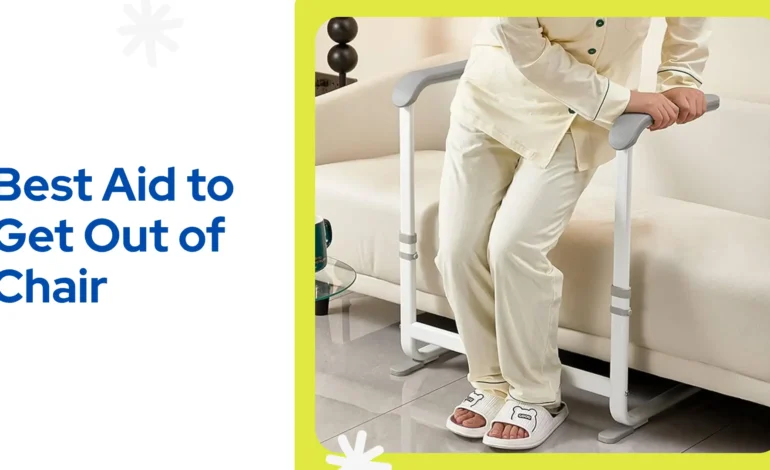
Aid to Get Out of Chair: Top Devices & Safe Standing Tips
Did you know that nearly one in three adults over 65 struggles to stand from a chair safely?
An aid to get out of chair is a tool that helps people stand up safely. It is useful for seniors, people with disabilities, and anyone recovering from surgery.
It also supports those living with arthritis. These aids help them rise from low seating without strain or risk of falling.
Use a stable chair-rise assist device. Examples include chair-assist frames, lift cushions, or armrest grips. These devices support your body weight and give extra leverage.
In this guide, we’ll cover the types of chair stand assist devices, tips for choosing the right one, step-by-step standing techniques, safety considerations, top-rated products, and expert advice.
Henceforth, let’s get started!
Understanding Chair Stand Assist Devices
Chair stand assist devices are specialized mobility aids designed to help individuals move safely from sitting to standing.
By supporting part of the user’s body weight and improving leverage, these devices reduce strain on weak legs, improve balance, and make standing easier and safer.
They are especially important for seniors, people with disabilities, those recovering from surgery, or individuals with arthritis.
According to a study published on PubMed, many older adults struggle with the sit-to-stand (STS) motion due to reduced muscle strength and balance issues, and STS-assist devices can significantly reduce the effort required from leg and back muscles.
Common types include,
1. Manual Stand-Assist Frames / Grab Bars: Sturdy frames or handles that provide leverage for safe standing.
2. Lift Cushions / Inflatable Seat Aids: Cushions that gently raise the user to a standing position, easing transitions.
3. Powered / Motorized STS Devices: Electric lifts that assist those with very limited strength or mobility.
4. Robotic or Exoskeleton Aids: Advanced devices offering mechanical assistance for safe sit-to-stand movement.
Types of Aid to Get Out of a Chair
When it comes to standing safely from a chair, a variety of assistive devices are available.
1. Lift Chairs / Power Recliners
Motorized recliners gently tilt or lift the seat and help users rise safely with minimal effort.
These are ideal for seniors or individuals recovering from surgery.
2. Stand‑Assist Devices
Frame-based aids or safety rails, such as the Vive Stand Assist, attach to chairs or sofas to provide stable handgrips.
They help users push themselves up while maintaining balance.
3. Portable Chair Lift Assists
Lightweight lift seats, often gas- or air-powered, sit atop regular chairs.
Devices like the Carex Upeasy Seat Assist offer up to 70% lift support and enable smooth transitions without permanent installation.
4. Arm Support Frames / Rails
Sturdy rails installed beside or on chairs provide leverage for safe standing.
Users can lean and push with their arms, improving stability and reducing strain on legs and back.
5. Cushioned Lift Pads
Inflatable or pneumatic pads gradually raise the seat, helping users stand safely.
For example, the SitnStand Lift Assist inflates in small increments, ensuring a controlled and comfortable lift.
6. Mechanical Spring‑Assisted Seats
Spring-assisted chairs provide natural upward force without electricity.
It supports the user’s weight during the stand-up motion.
7. Smart Electric Assist Platforms
Advanced powered devices use sensors and motors to adjust the lift based on the user’s weight.
Clinical studies show these can significantly decrease strain on leg and back muscles.
Step-by-Step: Aid to Get Out of Chair
Follow these proper steps and reduce fall risk.
Techniques Without Devices
Step 1: Sit Correctly
Sit near the front edge of the chair with feet flat on the floor, shoulder-width apart, and the stronger foot slightly forward.
Step 2: Engage Core and Arms
Place your hands on armrests or thighs, lean slightly forward, and push with arms while activating core and leg muscles.
Step 3: Practice Strength and Balance
Perform regular sit-to-stand exercises and simple balance training to strengthen legs and core, which reduces fall risk.
Step 4: Seek Assistance
If a caregiver is present, use a clear cue to coordinate movements.

Using Chair Stand Assist Devices
Step 1: Position the Device
Place a stand-assist frame, lift cushion, or powered chair securely in front of the chair and ensure brakes or supports are engaged.
Step 2: Maintain Proper Foot and Body Placement
Keep feet flat and well-positioned on footplates or floor, lean slightly forward, and hold handles or armrests for stability.
Step 3: Lift Safely
For cushions or powered devices, inflate or activate gradually while keeping balance. Use armrests as needed, and sit down slowly when finished.
Step 4: Ensure Stability Throughout
Maintain a centered posture and controlled movement. Correct technique and setup significantly reduce the risk of falls.
Having a caregiver present can make a significant difference, especially for seniors with balance issues.
For users who have fallen or are struggling to stand independently, trained caregivers can assist safely.
Techniques for how to help an overweight elderly person off the floor often involve using a combination of leverage, lift aids, and proper body mechanics to reduce strain on both the caregiver and the individual.
With Gracious Hearts Inc., trained caregivers are also available to assist safely with standing, positioning, and device setup.
How to Choose the Right Aid to Get Out of a Chair?
Following these steps helps ensure safety, comfort, and long-term usability.
1. Assess Mobility and Physical Strength
Evaluate the user’s leg and core strength, balance, and grip. Some devices require moderate effort, while others provide full mechanical support.
Powered lifts or pneumatic cushions are ideal for those with limited strength or balance challenges.
Gracious Hearts Inc. provides professional caregivers who are trained to evaluate needs and assist with the safe use of lift cushions, rails, and powered chairs.
2. Confirm Weight Capacity and Safety
Select a device that supports at least 20 – 25% more than the user’s body weight. For heavier individuals, bariatric models with reinforced frames are recommended.
Ensure devices meet safety standards such as ISO 7176‑19 (stability) and IEC 60601‑1 (electrical safety).
3. Check Chair Compatibility
Measure seat height, depth, and width to ensure a proper fit. Lift cushions and frames should adjust to the chair’s dimensions.
Gradual inflation or adjustable heights reduce tipping risks.
4. Prioritize Ergonomics and Adjustability
Look for adjustable height, arm grips, and cushioned handles. Devices should accommodate changes in posture, strength, or mobility over time.
For powered models, smooth lift speed, low noise, and battery reliability enhance usability.
5. Factor in Portability, Budget, and Support
Lightweight, foldable options are ideal for multi-room use, while stationary models suit dedicated spaces.
Balance cost against essential features like stability and adjustability.
Top‑Rated Chair Assist Devices
Here are some of the most trusted and effective aids to get out of chair devices for seniors.
1. Carex Upeasy Seat Assist – Portable Chair Lift Cushion
The Carex Upeasy Seat Assist is a lightweight (~9 lb) lift cushion that fits on most firm armchairs and very firm sofas.
It uses a self‑powered hydro‑pneumatic gas spring and offers up to 70% lift assistance for users weighing 95 lbs to 220 lbs (Standard) or up to 340 lbs.
The cover is machine‑washable, and no batteries or electricity are required. Its portable design makes it usable in different seating locations.
Key Features
- Self‑powered lift cushion with hydro‑pneumatic gas spring (no electricity/batteries)
- Up to 70% assistance, for users 95–220 lbs (Standard) or up to 340 lbs (Plus)
- Lightweight and portable (~9 lbs) with built‑in handle
- Machine‑washable polyester cover for easy care
- Smooth “LeveLift” technology ensures a stable rise without tipping forward
2. Stander CouchCane – Adjustable Side‑Handle Support Rail
The CouchCane by Stander is an ergonomically designed side‑handle support rail intended for sofas, chairs, or recliners.
It supports up to 250 lbs, features an adjustable grip height (34″ – 40″) and base depth (20″ – 36″), and comes with a four‑pocket organizer pouch.
It installs beneath furniture legs and its low‑profile design blends into living rooms.
Key Features
- Ergonomic grab‑handle for leverage and balance support
- Adjustable base fits furniture with feet 20″ – 36″ apart; handle height adjusts 34″ – 40″
- Supports up to 250 lbs
- Includes saddle bag organizer for remotes or phone
- Low‑profile design fits discreetly beside furniture without cluttering.
3. Vive Stand Assist – Dual‑Handle Rail for Sofa & Chair
The Vive Stand Assist is a sturdy, adjustable aluminum frame designed to wrap around the base of most cushioned chairs, sofas, and recliners.
With dual support handles, it gives users a stable, balanced foundation for standing.
The frame supports up to 300 lbs, and the soft foam grip covers ensure comfortable holding.
Key Features
- Dual handrails for balanced leverage
- Aluminum frame supports up to 300 lbs
- Foam-padded grips for comfort and secure hold
- Adjustable length and width to fit many couch or chair sizes
Frequently Asked Questions (FAQs)
1. What is the safest aid to get out of a chair?
The safest aids are those that provide stable support, proper weight capacity, and ergonomic handles, such as Naipo Chair Stand Assist, Vive Stand Assist, or Carex Upeasy Seat Assist. Clinical research shows that devices with wide bases and dual-hand support reduce fall risk and strain on knees and back.
2. Does Medicare pay for a lift chair?
Medicare generally does not cover standard lift chairs unless prescribed as a medically necessary durable medical equipment (DME) after surgery or for severe mobility issues. Some Medicare Advantage plans may cover partial costs.
3. What is the cheapest aid to get out of a chair?
Budget-friendly options include Vive Stand Assist or basic couch-side handles. These typically cost between $40 – $60. It offers reliable leverage without electrical components. While less expensive, make sure the product meets your weight capacity and stability.
4. Are portable lift assists effective?
Yes, portable lift assists like Carex Upeasy or mechanical lift cushions are effective for providing extra lift without installation. They reduce effort on the knees and lower back, improve posture while standing, and allow independent movement.
5. What aid works best after knee replacement?
After knee replacement, a lift cushion, powered lift chair, or stable chair rail is recommended. Devices like the Carex Upeasy Seat Assist help reduce strain on new joints while standing. Avoid aids that require excessive leg strength or twisting motions, as these can compromise recovery.
6. Can I use these devices without caregiver support?
Many aids are designed for independent use, including stand assist rails, portable lift cushions, and arm support frames. Users should ensure the device is properly installed or positioned and practice safe standing techniques.
In Summary
Finding the right aid can help a person get out of a chair. It can improve independence. It can also increase safety.
Daily comfort is easier to maintain. This is helpful for seniors, people with mobility challenges, or those recovering from surgery.
From stand assist rails and portable lift cushions to powered lift chairs, you should choose a device that matches your strength, chair type, and lifestyle is key to reducing fall risk and protecting joints.
Trusted options like Naipo Chair Stand Assist, Vive Stand Assist, Stander Couch Cane, and Carex Upeasy Seat Assist combine stability, ergonomic design, and ease of use, giving users confidence while standing.
By selecting the right support and using it correctly, you can maintain mobility, prevent injuries, and enjoy daily activities with greater independence.