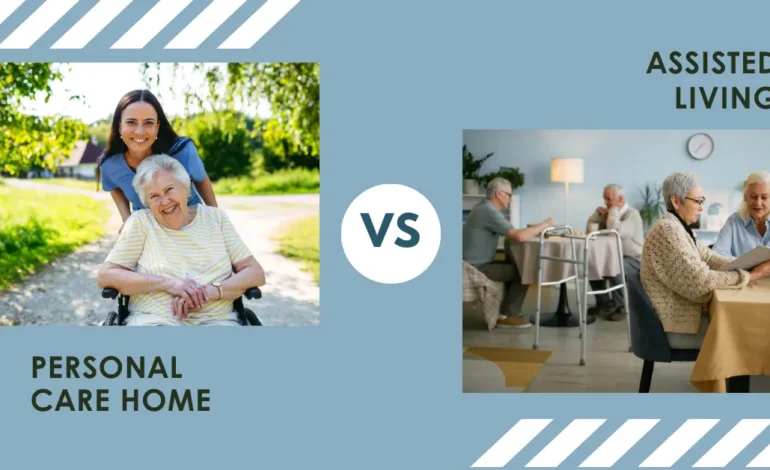
Personal Care Home vs Assisted Living: Key Differences Explained
More than 70% of adults over 65 will need long-term care, yet most families don’t realize how different their options truly are.
Personal care home vs assisted living is one of the most searched comparisons because both support daily living, but not in the same way.
The main difference between a personal care home and assisted living is the level of care. Personal care homes are smaller and feel more like a house. They help with daily needs like meals, bathing, and supervision.
Assisted living communities are larger. They offer more organized support, social activities, and on-site staff to help manage medical care.
In this article, you’ll learn how these options differ in care levels, medical involvement, lifestyle, costs, regulations, and who each is best suited for.
Hence, let’s get started!
What Is a Personal Care Home?
A personal care home, also called a residential care or board-and-care home, is a small senior living option. It’s for people who need regular help with daily activities but don’t require full-time nursing care.
These homes are located in residential neighborhoods and operate within a house-like setting.
Level of Care in a Personal Care Home
One of the defining characteristics of a personal care home is its focus on hands-on, day-to-day support.
Trained caregivers assist residents with Activities of Daily Living (ADLs) such as specialized care for the elderly, including bathing, dressing, grooming, mobility, toileting, and eating.
For families considering at-home or supplemental support, caregivers from Gracious Heart Inc. can provide high-quality ADL support.
This support is provided throughout the day, which allows residents to maintain comfort and dignity while receiving the help they need.
In addition to personal assistance, many personal care homes offer medication management. While these homes do not provide continuous skilled nursing care, they do offer basic medical oversight, wellness monitoring, and close caregiver supervision.
Size, Environment, and Living Arrangements
Personal care homes are intentionally designed to be small and intimate, often licensed for 16 residents or fewer, which allows for a more personalized care experience.
Living arrangements may include private or shared bedrooms, with shared common areas for meals, relaxation, and daily routines.
The environment is quiet, structured, and home-like, making it especially appealing to seniors who may feel overwhelmed in larger assisted living communities.
With fewer residents to care for, staff members can build stronger relationships and more easily recognize changes in health, behavior, or mobility.
What Is Assisted Living?
An assisted living facility is a larger, community-based senior living option designed for individuals who want to maintain as much independence as possible while receiving support for daily activities.
Unlike smaller personal care homes, assisted living communities provide a structured, apartment-style environment with access to on-site staff, wellness programs, and basic medical coordination.
These facilities follow a social model of care that focuses on promoting autonomy, social engagement, and quality of life rather than on intensive medical supervision.
Assisted living is a good option for seniors who need help with daily tasks like bathing, dressing, and taking medication.
At the same time, it allows them to stay independent and enjoy a sense of community and choice in their daily routines.
Level of Care in Assisted Living
Residents receive help with ADLs, but the emphasis is on enabling them to age in place without giving up autonomy.
Many communities offer 24/7 staff availability, including caregivers and, in some facilities, on-site nurses who can assist with routine health checks, medication oversight, and coordination with physicians.
For families seeking extra support, Gracious Heart Inc. can assign professional caregivers to assist residents with ADLs in assisted living communities. It complements the facility’s staff and provides personalized attention and care continuity.
Wellness programs, care plans, and regular monitoring help residents maintain health while staying engaged and active.
Amenities, Social Life, and Lifestyle
Communities offer private or semi-private apartments, with access to shared amenities like dining areas, fitness centers, libraries, and transportation services.
Residents can participate in social activities, hobby groups, exercise classes, and outings, fostering an active, connected lifestyle.
Side-by-Side Comparison: Personal Care Home vs Assisted Living
While they share some similarities, the level of care, independence, environment, and staffing can differ significantly. Below is a structured comparison to help guide your choice.
| Feature | Personal Care Home | Assisted Living Facility |
| Size & Setting | Small, home-like, ≤16 residents | Larger community, apartment-style |
| Care Level | Hands-on help with ADLs; basic medical oversight | Support with ADLs; 24/7 staff, optional on-site nurses |
| Independence | Closer supervision; less autonomy | Encourages aging in place and independence |
| Social Life | Limited activities; quiet environment | Active social programs, fitness, and outings |
| Staffing | Personalized, consistent caregiver attention | Distributed staff; wellness programs; medical support |
| Best For | Seniors needing frequent hands-on care in a calm setting | Seniors seeking support, plus independence and community |
Licensing, Regulations, and State Differences
Understanding licensing and state regulations is essential when choosing between a personal care home and an assisted living facility.
Both are regulated at the state level, and the rules for staffing, safety, resident rights, and care standards can vary significantly based on location.
For example, in Pennsylvania, personal care homes and assisted living communities are licensed separately, each with distinct standards for resident capacity, staff qualifications, and health monitoring.
Especially in places like Phoenix, Arizona, where the rules have specific classifications and oversight. Both types of care settings must be licensed by the Arizona Department of Health Services (ADHS).
In Arizona, the ADHS oversees assisted living and residential care under its Division of Public Health Licensing Services.
Assisted living facilities are formally defined as residential care institutions that provide ongoing personal and supervisory care services.
This includes both Assisted Living Homes (up to 10 residents) and Assisted Living Centers (11 or more residents), each licensed to offer personal care, supervisory care, or directed care.
Arizona does not have a separate statewide license for “personal care homes” like some other states. However, facilities that provide personal care, such as help with daily activities and medication support, must still follow ADHS rules for licensed residential care.
Across Arizona, licensed facilities must undergo regular inspections, maintain staff training and background checks, have written policies for resident care, and ensure physical environments meet safety and accessibility standards.
Families can review inspection histories and licensing status through public ADHS records, such as the AZ Care Check database.
Cost Differences and Affordability
Prices vary depending on location, level of care, and amenities, but having clear, realistic figures helps families plan and budget.
Most residents pay out of pocket or with long-term care insurance, as Medicare rarely covers ongoing housing or personal care.
| Facility Type | Average Monthly Cost | Notes |
| Assisted Living Facility | $6,313 | Includes room, meals, ADL support, medication management, and social programs. |
| Personal Care Home | $3,500 – $5,000 | Smaller, home-like setting with hands-on daily assistance; fewer amenities than large communities. |
| Skilled Nursing Facility | $6,800+ | Higher-level medical care, mostly short-term or for complex needs. |
Tip: Costs vary by location. For example, Phoenix, AZ, assisted living facilities average around $5,800 – $6,500 per month, while smaller residential care homes offering personal care services may range from $3,800 – $4,800 per month.
Who Should Choose Which Option?
Below is a decision-focused guide for seniors and family caregivers.
Personal Care Home: Ideal for Hands-On Support
A personal care home works best for seniors who require frequent, individualized assistance in a calm, small setting. Key Indicators,
- Needs help multiple times daily with bathing, dressing, toileting, or mobility.
Benefits from close supervision due to memory issues, unsteady gait, or chronic conditions. - Prefers a smaller, quieter environment over larger communities.
- Limited interest in large-scale social activities.
Scenario Example
Mrs. Johnson, an 82-year-old with early-stage dementia, needs daily help with bathing and dressing and feels anxious in crowded spaces. A personal care home provides consistent, personalized care with familiar staff she can trust.
Assisted Living: Ideal for Independence with Support
An assisted living facility is suited for seniors who want independence but need occasional support and thrive in a community-oriented environment. Key Indicators,
- Can manage most ADLs but needs reminders or occasional assistance.
- Enjoys social activities, community events, and structured wellness programs.
- Values 24/7 staff availability and optional medical monitoring.
- Wishes to maintain a sense of autonomy in lifestyle.
Scenario Example
Mr. Lopez, 78, can cook, walk, and bathe independently but needs medication reminders and enjoys group exercise and dining events. Assisted living offers the perfect balance of support and engagement.
FAQs
What is the main difference between a personal care home and assisted living?
A personal care home is usually a smaller, residential setting focused on hands‑on daily assistance like bathing, dressing, and basic supervision. Assisted living facilities are larger communities that support daily living while encouraging independence and offering social activities, wellness programs, and structured support.
Is a personal care home cheaper than assisted living?
In many cases, yes. Personal care homes often cost less per month than assisted living because they offer fewer amenities and social programs. Assisted living typically includes meals, group activities, transportation, and wellness services.
Does assisted living provide medical care?
Assisted living facilities do not provide full medical care like a nursing home, but they coordinate health support through on‑site staff, medication management, wellness checks, and sometimes visiting nurses. They help residents with daily tasks while monitoring overall health.
Are personal care homes regulated?
Yes. Personal care homes must be licensed and regulated by state agencies. Regulations vary by state but generally include staff training requirements, safety protocols, and regular inspections to make sure residents are safe.
Which is better for seniors with dementia?
Seniors who need close supervision and consistent hands-on help may do better in a personal care home. Those who can stay active and socially engaged with light support may benefit from assisted living with a memory care program.
Conclusion
Choosing between a personal care home vs assisted living comes down to understanding care needs, independence, social engagement, and costs.
Personal care homes provide hands-on support in a smaller, home-like setting, making them ideal for seniors who need frequent daily assistance.
Assisted living communities focus on independence, community activities, and structured support, perfect for seniors who can manage some tasks but want social engagement and optional medical oversight.
Ultimately, the best choice prioritizes safety, comfort, and emotional well-being. By considering the level of care, amenities, and lifestyle each option offers, families can make a confident, informed decision.
Best of luck!