How to Report a Care Home for Neglect: Step-by-Step Guide
Thousands of seniors in care homes face neglect each year without anyone speaking up. Therefore, knowing how to report a care home for neglect could save a life.
To act immediately, report a care home for neglect by contacting your local adult safeguarding team or social services.
File a formal complaint directly with the care provider and escalate the issue to the national regulator, such as the Care Quality Commission (CQC) in England or CDPH/CCLD in the U.S.
Make sure to provide specific evidence, including dates, detailed descriptions of incidents, and witness information, to strengthen your case.
In this guide, we’ll cover everything you need to know: how to document neglect, reach the right authorities, understand investigation processes, involve law enforcement for criminal abuse, and report concerns to Medicare for certified facilities.
Therefore, let’s get into it!
Signs and Examples of Care Home Neglect
Here’s what to look for:
1. Physical and Health Warning Signs
Malnutrition and Dehydration
Unexplained weight loss, sunken eyes, dry mouth, fatigue, or brittle hair may indicate your loved one isn’t receiving proper food or fluids.
Bedsores (Pressure Ulcers)
Bedsores form when a resident is left in one position for too long without proper care. Because regular repositioning and clean bedding can prevent them, the presence of bedsore.
Frequent Falls or Unexplained Injuries
Bruises, cuts, fractures, or repeated falls without adequate explanation may indicate insufficient supervision, unsafe environments, or a lack of mobility assistance.
2. Hygiene and Living Conditions
Poor Personal Hygiene
Residents who are consistently unwashed, wear soiled clothing, have overgrown nails, or show signs of body odor may not be receiving basic bathing and grooming support.
Unsanitary Living Environment
Dirty rooms, foul odors, soiled bedding, leftover food, or pest infestations are environmental red flags.
3. Medical Neglect
Medication Errors
Missed doses, incorrect medications, or a lack of proper monitoring can lead to serious health consequences.
Untreated Health Conditions
Worsening chronic conditions, untreated infections, unhealed wounds, or neglected dental care indicate inadequate medical attention and supervision.
4. Emotional and Social Signs
Mood Changes and Withdrawal
Depression, anxiety, fear, or sudden withdrawal from social interaction can signal emotional neglect.
Fear or Avoidance of Staff
Residents who avoid caregivers or seem fearful of them may be experiencing emotional or verbal abuse, which is a form of neglect.
Step-by-Step: How to Report a Care Home for Neglect?
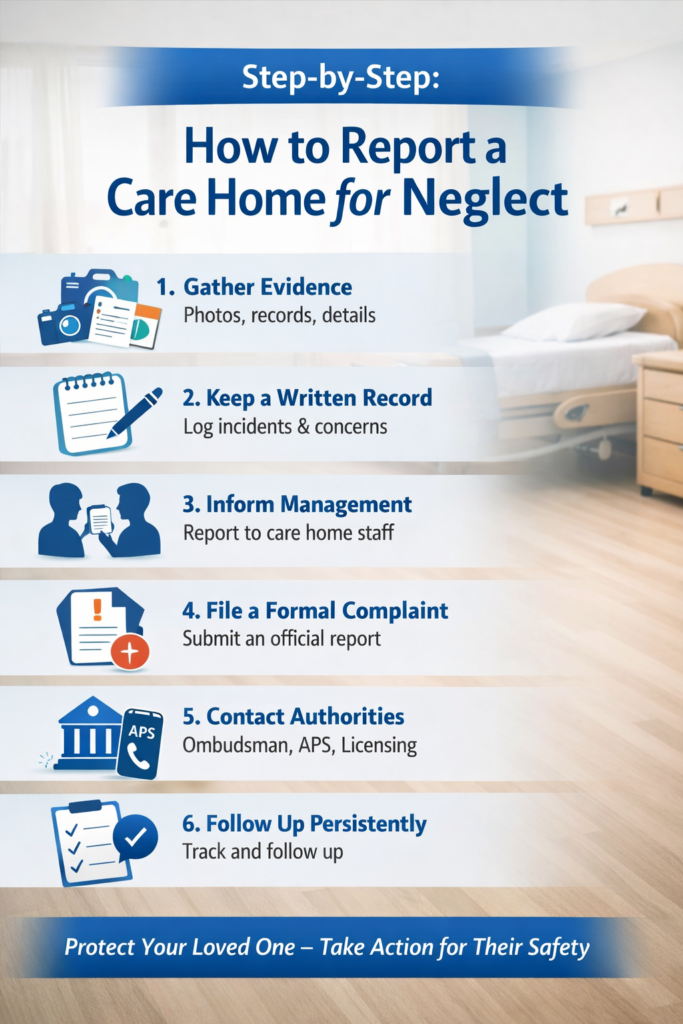
Below is the step-by-step process to help you report neglect with confidence and clarity.
Step 1: Gather Evidence as Early as Possible
Take photos or videos of visible concerns. This may include bedsores, bruises, poor hygiene, dirty bedding, unsafe rooms, signs of dehydration, or unsanitary conditions.
If the resident has been taken to the hospital or seen by another medical provider, keep copies of any medical records, discharge papers, care notes, prescriptions, or treatment summaries.
When documenting how to report a care home for neglect, include:
- Resident’s full name
- Care home name and address
- Names or roles of staff involved
- Dates and times of each incident
- A clear description of what happened
- Photos, videos, or visible signs of harm
- Medical concerns or worsening symptoms
- Names of any witnesses
- Previous complaints or concerns already raised
Step 2: Keep a Written Record
Record each concern as soon as possible while it’s still fresh. Include what you observed, what the staff told you, how the resident looked or felt, and whether the issue was resolved.
If there are ongoing concerns such as missed meals, repeated falls, delayed medical attention, poor hygiene, or lack of supervision, log them individually.
Step 3: Report the Problem to Care Home Management
Before escalating the matter, it’s often helpful to report the issue directly to the care home manager, administrator, nursing supervisor, or safeguarding lead. This creates an official internal record and gives the provider a chance to respond.
Explain the concern clearly and calmly, preferably in writing, and ask for a copy of the home’s complaints procedure.
Step 4: File a Formal Complaint
If the care home does not take appropriate action or if the neglect is serious enough to warrant immediate escalation, the next step is to file a formal complaint.
Keep your complaint factual and organized. Focus on what happened, when it happened, who was involved, and how it affected the resident’s health, safety, or dignity.
Step 5: Contact the Right Authorities
Contact with the long-term care ombudsman. A long-term care ombudsman supports residents in care facilities and helps investigate complaints involving neglect, poor treatment, or resident rights.
You can usually locate your nearest Ombudsman office through your state or local aging services department, or through the National Long-Term Care Ombudsman Resource Center.
If the issue involves quality of care, staffing, safety, hygiene, or neglect, you may also need to report it to your state’s licensing or health authority. Most complaints can usually be filed through one or more of the following:
- Online complaint forms
- Email submissions
- Complaint hotlines
- Faxed complaint forms
- Mailed written complaints
If the neglect affects a vulnerable adult, especially outside a traditional nursing home setting, Adult Protective Services (APS) may also need to be involved.
If the situation involves physical abuse, sexual abuse, assault, theft, or immediate danger, contact police or emergency services right away.
If the care home or nursing facility is Medicare-certified, you may also be able to report quality of care concerns through Medicare complaint channels.
Step 6: Follow Up Until the Complaint Is Taken Seriously
Keep copies of all emails, forms, complaint reference numbers, and responses. If you speak to someone on the phone, write down their name, department, the date and time of the call, and what they told you.
If you don’t hear back within a reasonable time, contact the agency or care provider again.
What Happens After You File a Complaint?
Here’s what usually happens next.
1. Your Complaint Is Reviewed First
After you submit your complaint, the agency or authority will review the details to decide how serious the issue is and who should handle it.
They usually look at whether the resident is currently at risk, whether the problem may involve neglect, abuse, or unsafe care.
Cases involving immediate danger, serious injury, or repeated neglect are usually handled much faster than lower-risk concerns.
2. The Case Is Prioritized Based on Risk
After it is reviewed, it is usually given a priority level based on how serious the situation is.
Complaints about serious harm, severe dehydration or malnutrition, untreated injuries or infections, physical or sexual abuse, or unsafe living conditions are often investigated much faster than less urgent concerns.
3. Investigators May Inspect the Care Home
In some cases, officials may visit the care home without notice, especially if the concern involves neglect, safety, hygiene, or staffing.
During the investigation, they may inspect the resident’s room and care environment, review medical and care records, check how medication is handled, and speak with staff, residents, and sometimes family members.
4. The Evidence Is Compared
Once the investigation begins, the authority will check if the care home followed the rules and care standards it is required to meet.
They may look at things like proper hygiene and personal care, enough food and water, safe supervision, timely medical attention, appropriate staffing, and respectful treatment.
This is where your photos, notes, witness details, and written timeline can be very helpful.
5. The Complaint Will Usually Lead to a Formal Outcome
After the investigation is finished, you will usually receive an official outcome. The complaint may be-
Substantiated: the concern is supported by evidence.
Unsubstantiated: There isn’t enough proof.
Partially substantiated: some concerns are confirmed, but not all.
Substantiated with violations: the complaint is confirmed, and the facility broke care rules.
6. The Care Home May Face Citations, Fines, or a Correction Plan
If a care home is found to be neglectful or unsafe, it can face official action. These may include citations, required corrective steps, a formal improvement plan, follow-up inspections, fines, licensing issues, staff discipline, or even law enforcement involvement in serious cases.
7. You May Receive an Update
If you provided your contact details when filing the complaint, you may receive a written update, letter, or summary of the outcome.
However, it’s important to know that these investigations are often handled confidentially, which means you may not be given every internal detail, staff statement, or piece of evidence reviewed during the process.
FAQs
1. What counts as neglect in a care home?
Neglect can include malnutrition, dehydration, untreated bedsores, unsafe living conditions, falls, lack of supervision, or poor hygiene. Repeated or serious lapses may trigger investigations by agencies like Adult Protective Services (APS) or the Long-Term Care Ombudsman.
2. Who can report care home neglect?
Anyone can report neglect, including residents, family members, friends, staff, or concerned members of the public. Reporting is confidential in most cases, and you don’t need to be a legal expert; simply provide as much specific evidence as possible.
3. What triggers an APS or Ombudsman investigation?
Investigations are usually triggered when authorities receive reports suggesting immediate harm or unsafe conditions. Examples include serious injuries, repeated falls, untreated medical issues, or consistent mistreatment.
4. How long does it take for a complaint to be investigated?
For imminent danger, agencies may respond within 24 hours. For non-emergency cases, a thorough review and investigation can take weeks to a few months, especially if it involves collecting medical records, interviewing staff, and inspecting the facility.
5. Can I remain anonymous when reporting?
Yes, you can remain anonymous when reporting. Many agencies, including APS, allow anonymous reports. However, providing your contact information can help investigators follow up for additional details.
Final Thoughts
Reporting a care home for neglect is one of the most important steps you can take to protect your loved one and ensure safe, quality care.
You can hold care facilities accountable and prevent further harm by keeping evidence, contacting the Long-Term Care Ombudsman, notifying state licensing agencies, and involving Adult Protective Services or law enforcement when needed.
Even if reporting feels overwhelming, each report helps improve overall care for the elderly, strengthen rules, and keep residents safe.
Act quickly, stay informed, and follow up to protect your loved one’s well-being.