Can Care Home Residents Go Out? Rights, Rules & Safety
Have you ever wondered can care home residents go out for a meal or a short trip?
The answer is yes, care home residents can go out, but it depends on health conditions, facility rules, and legal restrictions like guardianship.
Care home residents can go out if the home completes a risk assessment and supports safe arrangements.
Residents retain freedom of movement under care standards, though outings depend on health, capacity, and supervision needs. Staff or family may accompany residents to ensure safety and compliance with care plans.
This comprehensive guide covers resident rights, insurance coverage under Medicare and Medicaid, facility protocols, safety measures, exceptions for memory care or cognitive impairment, and practical tips.
Therefore, let’s get into it!
Can Care Home Residents Go Out Legally?
The answer is yes, in most cases; care home residents have the legal right to go out, but this freedom comes with conditions related to health, facility policies, and legal considerations.
1. Legal Rights of Care Home Residents
Care home residents have basic legal rights that protect their dignity, independence, and ability to make choices.
In the United States, federal rules (42 CFR § 483.10) and state laws allow residents to make decisions about daily activities, including leaving the facility, as long as they are capable. Care homes cannot limit movement without a valid legal reason.
In the United Kingdom, the Human Rights Act 1998 and the Care Act 2014 protect residents’ freedom, personal autonomy, and family life. Any unnecessary restrictions, like banning residents from leaving, may be considered illegal.
2. Freedom of Movement: A Human Rights Perspective
Freedom of movement is a basic right in both the US and the UK. Residents have the right to come and go freely, much like they would at home.
Care homes must balance safety with independence, only limiting movement when it’s necessary to prevent harm.
3. When Restrictions May Apply
People with cognitive or medical conditions may face restrictions under laws like the UK’s Mental Capacity Act 2005 and DoLS.
Restrictions can also apply if leaving the home could put the resident or others at risk, and any limits must be properly documented and reviewed.
Extended outings may need approval from healthcare providers and consideration of insurance coverage.
4. The Role of Guardianship and Power of Attorney
Guardianship means a court-appointed guardian can make legal decisions for residents who can’t make them themselves. They may limit outings if needed for safety, but must follow the law and focus on the resident’s best interests.
A Power of Attorney (POA) lets someone act on a resident’s behalf if they become unable to make decisions. However, if the resident is capable, a POA cannot stop them from leaving the care facility.
When Can Care Home Residents Go Out Without Permission?
Residents with full mental capacity, those who are alert, oriented, and able to understand risks, have the right to come and go freely.
Facilities cannot legally restrict a competent resident from leaving without a court order or other legal justification, though policies may vary across care home categories.
1. Open facilities: Residents can leave freely if capable.
2. Independent living: Residents enjoy the greatest freedom, as they generally do not require daily personal care. They can leave for errands, social visits, or walks without seeking permission.
3. Assisted living: Residents receive support for daily tasks but are encouraged to maintain autonomy. Simple sign-out procedures may be in place for safety, but formal permission is usually unnecessary.
4. Secured/memory care units: Outings are restricted to ensure safety due to cognitive or wandering risks. Supervision by staff or family may be required.
When Do Care Home Residents Need Permission to Go Out?
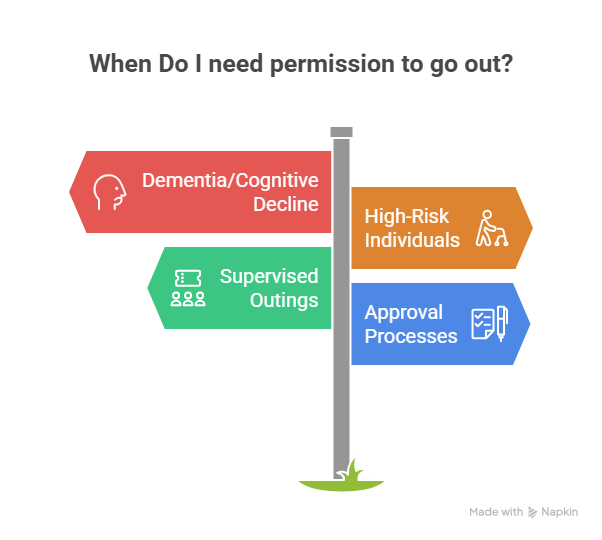
While care home residents often enjoy significant freedom, there are situations where formal approval or supervision is necessary to ensure safety and well-being.
1. Residents With Dementia or Cognitive Decline
Residents with moderate to severe dementia or cognitive impairment may require permission from staff or legal representatives before leaving the facility. This ensures their safety, as memory loss or disorientation can put them at risk.
2. High-Risk Individuals
Residents with serious health conditions, mobility challenges, or a history of falls may need approval for outings. Facilities often require a pre-approved plan or an accompanying caregiver to manage risks.
3. Supervised Outings
Memory care or secure units allow planned, supervised outings. Staff or family accompany residents to appointments, social visits, or community events.
4. Family or Staff Approval Processes
Most care homes have clear procedures for notifying staff about planned trips. Approval processes exist to safeguard health, coordinate care, and maintain continuity of services.
Can Care Home Residents Leave Permanently?
Yes, care home residents can leave permanently, but the process requires understanding discharge policies, health considerations, legal requirements, and support arrangements.
1. Discharge Policies: Voluntary vs. Involuntary
Discharge from a care facility can happen in two ways.
Voluntary discharge occurs when residents or their families decide to move, and the facility should help with the transition.
Involuntary discharge occurs when a resident’s care needs are too high for the facility, their health improves enough to move home or to a lower-level care setting, there are safety concerns, non-payment, or the facility closes.
2. Moving Back Home
Residents can go back home when their health gets better or if they have enough support, like caregivers, medical equipment, or home health aides.
Care teams work with families to make sure the home is safe, medical care and daily help are available, and medications or therapies continue without problems.
3. Switching Care Homes
Residents might choose to move to another care home for better services, to be closer to family, or for a more suitable environment.
Care Home Policies on Residents Going Out
Understanding these rules helps families plan outings confidently while ensuring residents’ well-being.
1. Why Policies Differ
A resident’s health, such as dementia or mobility issues, affects how much supervision is needed.
The type of facility, staff availability, layout, and services also influence how trips are managed. Local laws and regulations vary by region and guide what activities are allowed.
2. Risk Assessments
Before any outing, care facilities look at physical and mental abilities, safety hazards outside, social and emotional needs, and health risks.
3. Sign-Out Procedures
Most care homes have a sign-out system to keep track of residents when they leave. Staff record where the resident is going, when they are expected back, any medication or care needs, and who is accompanying them.
4. Liability and Duty of Care
Care home policies are designed to reduce risks during outings, record safety precautions, and make sure staff and family work together.
FAQs
1. Can care home residents go out on their own?
Yes, residents with full mental capacity generally have the right to go out independently. However, if they can do so depends on the facility’s policies, individual risk assessments, and safety considerations.
2. Can family members take residents out of a care home?
Yes, families can usually take residents out of a care home as long as they follow the home’s rules. This often means signing the resident out, telling staff where they are going and when they’ll return, and making sure any needed medication or special care is arranged.
3. Are care homes allowed to stop residents from leaving?
Care homes cannot arbitrarily prevent residents from leaving. Restrictions are only permitted under specific legal conditions, such as if a resident lacks capacity, has a court-appointed guardian restricting movement, or poses a serious safety risk to themselves or others.
4. Can residents go out overnight?
Overnight stays are allowed in some cases, often called therapeutic or temporary leaves. Facilities usually require advance notice, risk assessment, and arrangements for medication or ongoing care.
5. What happens if a resident leaves without permission?
If a resident leaves unexpectedly, care homes activate safety protocols, which may include notifying staff, contacting family members, and following emergency procedures.
Final Takeaway
Care home residents have the right to enjoy outings, maintain independence, and stay connected with family and community.
While policies, health considerations, and legal factors may guide how and when they can leave, the goal is always to balance safety with freedom.
Families and caregivers play a crucial role in planning and supporting these outings. By knowing the rules, following proper steps, and talking openly with care staff, you can help your loved ones safely enjoy outings outside the care home.