
Care for Blind Elderly: Complete Guide to Safe Living
According to the World Health Organization (WHO), more than 43 million people worldwide live with blindness, and the majority are seniors aged 60 and above.
Ever wondered who cares for the blind elderly when they can’t see, walk safely, or even eat without help? Care for blind elderly isn’t just about medical aid, it’s about dignity, comfort, and companionship.
From daily routines to emotional support, proper elderly care ensures they live with safety and respect. Whether at home or in assisted living, understanding their unique needs helps families make better choices. In this guide, you’ll learn the best ways to care for blind seniors, create a safe environment, and find trusted services that truly make a difference.
Therefore, let’s get started!
Understanding Care for Blind Elderly
Understanding the underlying causes, emotional effects, and realities of blindness in older adults is the first step toward providing meaningful, compassionate, and effective care.
1. Common causes of blindness and low vision
The most frequent causes of vision loss in older adults are largely age-related and many are preventable if identified early.
| Cause | Description | Key Facts |
| Cataracts | Clouding of the eye’s natural lens causes blurred or dim vision. | One of the main causes of low vision worldwide but treatable. |
| Glaucoma | Gradual optic nerve damage. | A leading cause of irreversible blindness. |
| Uncorrected Refractive Error | Need for glasses or corrective lenses. | Globally, the largest cause of vision impairment but easily corrected. |
| Diabetic Retinopathy | Damage to retinal blood vessels. | Major cause of blindness among working-age adults. |
| Age-Related Macular Degeneration (AMD) | Damage to the central part of the retina (macula). | Risk rises sharply after age 60 & main cause of central vision loss. |
| Trauma, Infections, & Retinal Diseases | Includes eye injuries & severe infections. | Less common globally. |
2. Levels of visual impairment
Low vision or visual impairment refers to significant vision loss not correctable by glasses or surgery, though some sight remains, and low-vision aids may help.
Legal blindness is a defined level of vision loss, commonly 20/200 (6/60) or worse in the better eye, or a very limited visual field.
Partial or functional blindness describes vision too limited for daily tasks, even with some light perception, while total blindness means a complete loss of light perception.
3. Psychological and emotional impact of losing sight later in life
Vision loss in older adults often leads to emotional and functional difficulties. It increases the risk of social isolation and depression.
It also places a greater burden on caregivers, especially when combined with dementia or mobility issues.
Additionally, vision impairment raises the risk of falls and injuries, which makes fall prevention crucial.
Creating a Safe and Accessible Home Environment
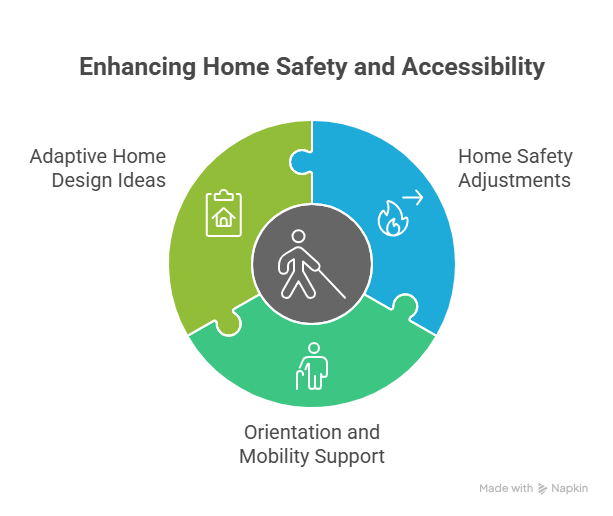
The three pillars below, safety adjustments, orientation & mobility, and adaptive design, work together to keep blind and low-vision seniors safe, mobile, and engaged.
1. Home Safety Adjustments
Simple, low-cost changes can greatly improve safety for seniors with vision loss.
Declutter pathways to keep hallways and walking routes clear of furniture, cords, and loose rugs.
Secure trip hazards by removing or anchoring rugs, tucking cords along walls, and using non-slip mats in high-risk areas like kitchens and bathrooms.
Enhance lighting and contrast with bright, glare-free bulbs and clear color contrast between floors, walls, and furniture to improve visibility.
Use tactile and color cues such as raised dots, Velcro strips, or high-contrast tape on switches, appliances, and stair edges to aid recognition and orientation.
2. Orientation and Mobility Support
Orientation and Mobility (O&M) training teaches cane use, route planning, and environmental awareness. These are certified specialists recommended.
Safe guiding techniques, such as the “sighted guide” method, where the senior holds the guide’s forearm and gives clear verbal cues about upcoming obstacles, help prevent accidents.
Maintaining a consistent home layout and using tactile “landmarks” like textured rugs or familiar furniture positions support spatial memory, reduce confusion, and lower fall risk.
3. Adaptive Home Design Ideas
Tactile flooring, handrails, and stair safety features such as dual handrails, non-slip flooring, and high-contrast step edges reduce fall risks and support confident movement.
Smart home and voice-activated devices like Alexa or Google Home allow hands-free control of lights, thermostats, and communication.
In the kitchen, tactile markers on stoves, non-slip mats, contrasting placemats, and organized storage ensure safe meal preparation.
Bathroom upgrades such as grab bars, thermostatic mixers, non-slip floors, and shower benches enhance safety and comfort.
Finally, emergency preparedness should include a tactile kit with labeled medications, a wearable alert device, and a practiced evacuation plan, along with dual-signal smoke detectors for sound and vibration alerts.
Promoting Independence and Daily Living Skills

Learning how to care for elderly blind individuals involves ensuring safety, promoting independence.
1. Communication Techniques
Speak clearly and respectfully using calm, simple language and a natural tone to enhance understanding.
Always announce your presence, explain your actions, and state when you leave to prevent confusion.
Encourage autonomy by allowing seniors to complete tasks independently and offering assistance only when needed.
2. Daily Tasks and Routines
Label items with tactile or large-print markers, such as raised stickers, textured dots, or Braille on cupboards, appliances, and personal belongings.
Use the “clock method” for meals to locate food easily, and keep clothing and personal items organized consistently to reduce frustration.
For medication management, employ pill organizers with tactile or color-coded indicators, audio reminders, and smartphone alerts.
3. Assistive Technologies and Tools
Talking devices like clocks, scales, and microwaves provide voice feedback for daily tasks.
Voice-controlled smart assistants such as Alexa or Google Home allow hands-free control of lights, appliances, calls, and reminders, widely recommended for independence.
Screen readers, magnifiers, and digital Braille tools (JAWS, NVDA, ZoomText) support reading and online navigation, while digital Braille displays offer tactile access for advanced users.
Wearable apps like Be My Eyes, Seeing AI, and Aira deliver real-time assistance for navigation and object recognition.
Navigation apps such as BlindSquare or Google Lookout provide audio-based guidance for safe indoor and outdoor travel.
Emotional and Social Well-being
This section explores common emotional hurdles, strategies to foster social connections, and activities that promote well-being.
1. Emotional Challenges of Aging with Blindness
Vision loss in older adults often triggers deep emotional and psychological struggles.
Anxiety and depression are common, as uncertainty about the future and loss of independence heighten emotional distress.
Grief and loss may arise when familiar routines or hobbies become difficult or impossible to perform.
Isolation often follows, as reduced mobility and communication barriers limit social interaction, increasing loneliness and detachment.
However, these emotional challenges can be eased through early counseling, social engagement programs, and strong caregiver and community support systems.
2. Encouraging Social Connection
Encourage regular social interactions through family visits, community events, and group activities to reduce loneliness.
Promote accessible communication using screen readers, voice assistants, or other adaptive technologies that make staying in touch easier.
Foster community engagement by joining local support groups or organizations offering programs designed for visually impaired seniors (National Institute on Aging).
3. Role of Empathy, Patience, and Companionship
Showing empathy helps build trust and emotional comfort.
Practicing patience allows seniors to complete tasks at their own pace.
Offering genuine companionship through conversation and shared activities reduces loneliness and greatly improves overall quality of life.
4. Supporting Hobbies and Interests
Music and audiobooks offer relaxation and cognitive stimulation, while tactile crafts such as knitting or clay work provide creative expression and motor engagement.
Sensory gardening adds tactile and olfactory stimulation, fostering a calming connection with nature.
Professional and In-Home Care Options
It’s essential to understand the available options, their benefits, and how to access them.
1. In-Home Care Services
In-home care provides support while allowing seniors to stay in a familiar, comfortable environment.
Personal care assistance helps with bathing, dressing, grooming, and mobility.
Companionship services reduce isolation through social interaction and engaging activities. 24/7 home support ensures safety and assistance at all times.
Staying at home offers personalized care tailored to individual needs, promotes independence, and can be more cost-effective than institutional settings.
2. Assisted Living and Specialized Facilities
Assisted living facilities for visually impaired seniors provide specialized services and accommodations to support independence and safety.
Key features include orientation and mobility training from trained staff, accessible design with clear signage, tactile pathways, and proper lighting, and specialized amenities such as Braille materials, audiobooks, and assistive technologies.
For example, organizations like Gracious Hearts Inc. can assist in connecting families with professional caregivers experienced in supporting older adults with vision challenges.
They offer structured approaches to caregiving, including personal care, companionship, and mobility assistance, which help families navigate options while ensuring the senior’s independence and safety.
3. Cost and Affordability Options
In-home care for seniors generally costs $23 – $30 per hour, while assisted living averages $2,500 – $4,500 per month, based on location and services.
Government programs can help reduce costs: Medicaid covers in-home care and assisted living for eligible individuals.
In addition, Medicare covers short-term medical care at home (not personal assistance).
Vision Rehabilitation and Government Programs
For seniors experiencing vision loss, accessing specialized rehabilitation services and understanding available government programs is crucial.
1. Vision Rehabilitation Services
Mobility training teaches safe navigation, including cane use and public transportation.
Adaptive living skills focus on performing daily tasks like cooking, cleaning, and personal care without relying on sight.
Emotional counseling supports coping with the psychological impact of vision loss.
Orientation and mobility specialists assess individual needs and create personalized training plans to enhance confidence and independence.
2. Government & Nonprofit Programs
Older Individuals Who Are Blind (OIB) Program
This federally funded program offers services to adults aged 55 and older who are blind or visually impaired.
Services include mobility training, adaptive living skills instruction, and emotional support, aiming to enhance independence and quality of life.
Social Security Disability Insurance (SSDI) & Supplemental Security Income (SSI)
The Social Security Administration offers benefits to individuals who are blind or have low vision.
SSDI provides benefits based on work history, while SSI offers financial assistance to those with limited income and resources.
American Foundation for the Blind (AFB) & VisionAware
AFB’s VisionAware is a comprehensive resource offering information, tips, and services to help adults with low vision live independently.
It provides guides for individuals and families adjusting to vision loss.
Vista Center for the Blind and Visually Impaired
Serving the Bay Area since 1936, Vista Center offers evaluation, counseling, education, and training to empower individuals who are blind or visually impaired to embrace life fully.
FAQs
What are the best assistive devices for the blind elderly?
Assistive tools such as talking clocks, magnifiers, screen readers, braille labels, and wearable apps like Seeing AI or Be My Eyes help seniors navigate daily tasks independently. Voice-activated devices like Alexa or Google Home also enhance accessibility and reduce reliance on others.
How can families make their homes safer for blind seniors?
Clear pathways, non-slip flooring, tactile markers, consistent furniture layout, and adequate lighting are essential. Removing trip hazards such as loose rugs or cords significantly reduces fall risk.
What emotional support do visually impaired seniors need most?
Seniors benefit from empathy, companionship, social engagement, and access to counseling or support groups. Encouraging hobbies, regular visits, and group activities helps prevent isolation and improve well-being.
How can technology help blind seniors stay independent?
Technology enables independent communication, navigation, and daily task management. Smart home devices, talking gadgets, and accessible apps allow seniors to maintain autonomy while reducing caregiver burden.
Are there government programs for blind elderly care?
Yes, there are government programs for blind elderly care, such as SSDI, SSI, IHSS, and OIB provide financial, in-home, and adaptive support. Nonprofits such as the American Foundation for the Blind and specialized caregiver organizations like Gracious Hearts Inc. offer additional guidance, resources, and connections to local services.
Bottom Line
Caring for blind elderly individuals requires a thoughtful combination of safety, independence, and emotional support.
Creating accessible home environments, promoting daily living skills, using assistive technologies, and maintaining social engagement are key to enhancing quality of life.
Empathy, patience, and proactive care empower seniors to navigate challenges confidently, while trained caregivers and supportive programs ensure consistent guidance.
By understanding their unique needs and utilizing available resources, families and professionals can make a meaningful difference in the lives of visually impaired seniors.
