Care Home Categories: Find the Best Option for Your Loved One
Knowing the right care home category can save you time, money, and a lot of stress.
Care home categories group facilities by the level of care they provide, so you can find the option that fits your family’s needs.
The main types include residential care homes, nursing homes, dementia care homes, and respite care services.
Each one is different, with varying medical support, staff availability, and specialized care for things like dementia or short-term recovery.
If you’re exploring care options for a loved one and don’t know where to start, providers like Gracious Hearts Inc. can help make the process easier.
We offer compassionate senior support based on different care needs, including personal care, meal assistance, health monitoring, and help with daily activities.
In this guide, you’ll see all the major care home categories, explain who they are best suited for, compare the services and costs, and provide practical tips for making the best choice.
Therefore, let’s get started!
What Are Care Home Categories?
Care home categories provide a clear framework to understand the types of senior living options available, based on the level of care, medical support, and independence a resident needs.
They are grouped by key factors that influence daily life and well-being:
Level of care: Ranges from basic support with everyday tasks to full-time, round-the-clock medical supervision.
Medical needs: Some residents require skilled nursing and ongoing treatment, while others mainly need help with daily activities.
Independence level: Determines how much autonomy a resident can maintain while still receiving the right support.
Quick Overview: Main Care Home Categories Explained
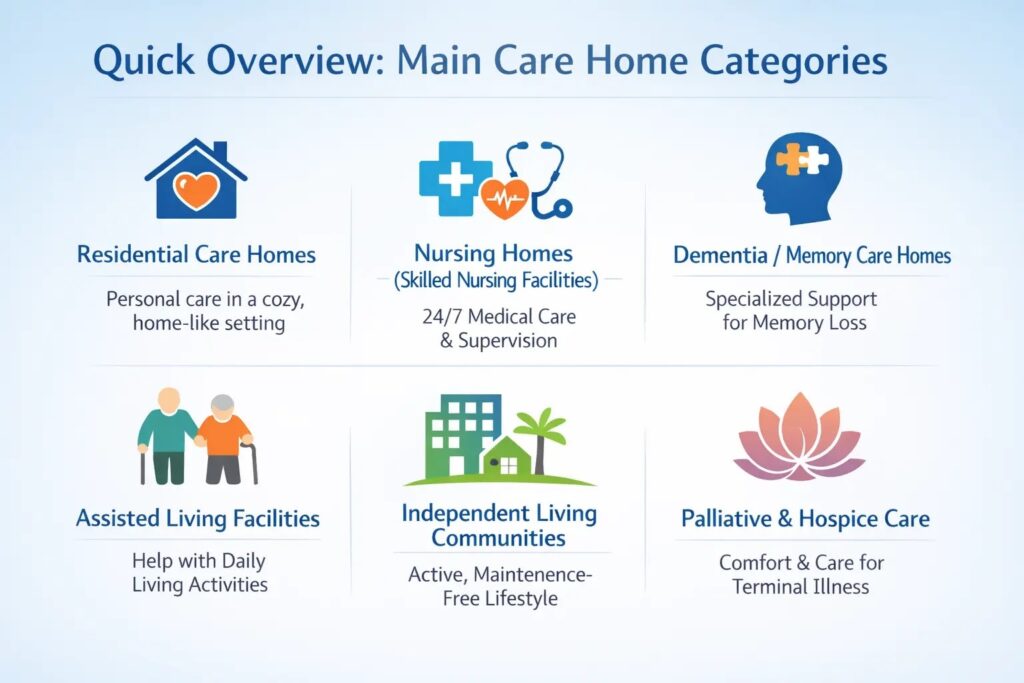
Before we dive deeper into each type, here’s a snapshot of the most common care home categories:
Residential Care Homes: Small, home-like settings offering personal care and support with daily activities. Ideal for seniors who need companionship and moderate assistance.
Nursing Homes (Skilled Nursing Facilities): Provide 24/7 nursing care and medical supervision for residents with chronic or complex health needs.
Dementia / Memory Care Homes: Specialized facilities designed for residents with Alzheimer’s or other forms of memory loss, featuring trained staff and secure environments.
Assisted Living Facilities: Offer support with activities of daily living while promoting independence in a community setting.
Independent Living Communities: Perfect for active seniors who want maintenance-free living, social opportunities, and community amenities without daily personal care.
Palliative & Hospice Care Homes: Focus on comfort, dignity, and quality of life for residents with advanced or terminal illnesses.
Independent Living
Independent living is a senior living option designed for active, healthy older adults who want to enjoy retirement without the responsibilities.
These facilities are often called retirement communities or independent living communities, and focus on freedom and social engagement.
Residents live in apartments, cottages, or villas and have access to a range of supportive services, such as meal plans, housekeeping, transportation, and recreational programs.
Unlike assisted living or nursing homes, independent living does not provide help with daily medical tasks. Instead, it emphasizes autonomy, community involvement, and a fulfilling lifestyle.
Key Features
- Maintenance-free homes and gardens
- Social clubs, events, and activities
- Supportive services: meals, transport
- Flexible lifestyle and autonomy
Services Offered
- Apartments, cottages, or villas
- Meal plans and housekeeping
- Transportation and concierge services
- Recreational programs and social events
Best For
- Self-sufficient in daily tasks
- Socially active and engaged
- Seek convenience and comfort
Assisted Living Facilities
Assisted living facilities provide a supportive, home-like environment for seniors who need help with daily tasks but don’t require full-time medical care.
The focus is on enhancing quality of life while providing safety and comfort. Residents receive personalized assistance with their needs, such as personal care, meals, and daily routines.
Families looking for daily support often focus on services like bathing assistance, grooming, medication reminders, nutritious meals, and housekeeping.
These are the same types of practical senior care services offered by Gracious Hearts Inc. through its personalized caregiving support.
Key Features
- Flexible, personalized care plans
- 24/7 staff support for safety
- Community-focused activities
- Independence with assistance
Services Offered
- Personal care (bathing, dressing)
- Mobility support and ADLs
- Medication management and reminders
- Meals, housekeeping, laundry
Best For
- Seniors needing daily help
- Mentally alert, socially active
- Require a safe, supportive environment
- Flexible care for changing needs
Memory Care – Support for Dementia and Alzheimer’s
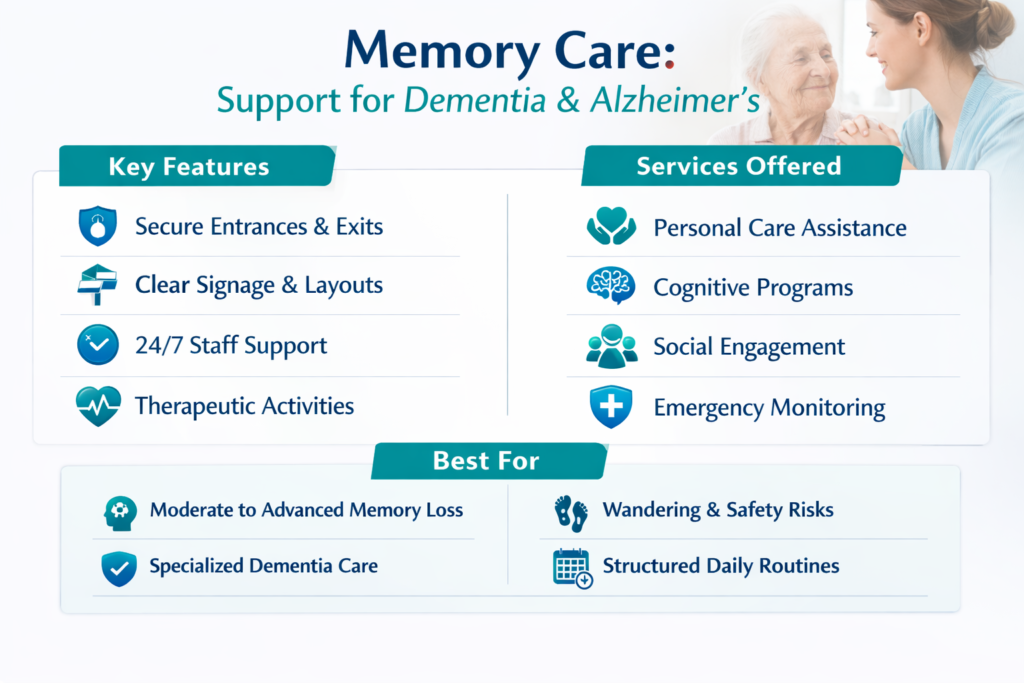
Memory care is a specialized form of senior living designed for Alzheimer’s disease or other forms of dementia.
Unlike general assisted living, memory care addresses cognitive decline, behavioral changes, and emotional well-being.
Staff receive specialized dementia training to manage memory challenges, improve communication, and support emotional stability.
Therapeutic activities, sensory programs, and social engagement are integrated into daily life to stimulate memory, reduce anxiety, and enhance quality of life.
When memory loss affects daily life, families often need more than just basic supervision.
Supportive care providers like Gracious Hearts Inc. can help with daily routines, meals, social interaction, and consistent care.
Key Features
- Secure entrances and exits
- Clear signage, logical layouts
- 24/7 trained staff support
- Therapeutic activities and routines
Services Offered
- Personal care assistance
- Cognitive and sensory programs
- Social engagement activities
- Emergency monitoring and support
Best For
- Moderate to advanced memory loss
- Risk of wandering or accidents
- Require specialized dementia care
- Need structured daily routines
Residential Care Homes
Residential care homes, also called board and care homes, provide small, home-like environments for seniors who need daily support but don’t require full-time medical care.
Unlike assisted living communities or nursing homes, residential care homes house a small number of residents. It allows caregivers to build close, consistent relationships and tailor care for the elderly to their preferences and needs.
Key Features
- Cozy, familiar surroundings
- Small resident groups
- Personalized care plans
- Family-style social environment
Services Offered
- Assistance with ADLs
- Nutritious meals and dining
- Housekeeping and laundry
- Recreational and social activities
Best For
- Need daily personal support
- Prefer a small, intimate environment
- Value personalized caregiver attention
- Enjoy calm social interaction
Skilled Nursing Facilities (24/7 Clinical Support)
Skilled nursing facilities, also known as nursing homes, provide round-the-clock medical care for seniors with complex health needs or post-hospital recovery requirements.
For seniors with more complex health needs, families may need extra support. This can include health monitoring, medication help, mobile medical visits, and emergency assistance.
Providers like Gracious Hearts Inc. offer this kind of support as part of a broader care plan.
Key Features
- Continuous nurse and medical supervision
- Structured, safe environment
- Integrated rehabilitation and therapy
- Personalized care plans
Services Offered
- Chronic disease management
- Physical, occupational, and speech therapy
- ADL assistance and hygiene support
- Post-surgery and wound care
Best For
- Need full-time medical care
- Require intensive rehabilitation support
- Cannot live independently safely
- Benefit from structured care
Continuing Care Retirement Communities (CCRCs / Life Plan Communities)
Continuing Care Retirement Communities (CCRCs), or life plan communities, offer a single location where seniors can access independent living, assisted living, and skilled nursing care as their needs change.
Key Features
- Independent, assisted, skilled nursing
- Personalized, flexible care plans
- Active community lifestyle
- Long-term financial predictability
Services Offered
- Residences with housekeeping, dining
- Daily assistance for ADLs
- 24/7 clinical supervision
- Wellness and social programs
Best For
- Want all-in-one community
- Seek flexible care options
- Value social engagement
- Desire financial predictability
Respite Care: Short-Term Support for Seniors and Caregivers
Respite care offers temporary, professional support for seniors. It gives primary caregivers the chance to rest, attend to personal matters, or manage emergencies.
Key Features
- Flexible duration: hours to weeks
- At home or facility-based
- Trained professional staff
- Supports caregiver breaks
Services Offered
- ADL assistance (bathing, dressing)
- Meal planning and supervision
- Medication reminders
- Social and recreational activities
Best For
- Caregivers needing temporary relief
- Seniors recovering from illness
- Families managing emergencies
- Seniors needing short-term care
Comparing Care Home Categories (Side‑by‑Side)
Below is a snapshot comparison to help families quickly see how each care home type differs in care level, medical support, cost, and who it’s best suited for:
| Care Home Category | Level of Care | Medical Support | Cost |
| Independent Living | Low, lifestyle focus | Minimal medical support | Lower |
| Assisted Living | Moderate, daily tasks | Some medical assistance (ADLs) | Moderate |
| Memory Care | Moderate | Specialized dementia care | High |
| Residential Care Homes | Moderate | Basic support, minimal medical | Moderate |
| Respite Care | Short‑term transition | Varies | Variable |
| Skilled Nursing Facilities | High clinical focus | 24/7 nursing & therapy | High |
| CCRCs (Life Plan Communities) | Variable | Integrated as needs evolve | Moderate-high |
How to Choose the Right Care Home Category
A structured approach ensures you make an informed, confident choice.
1. Assess Care Needs
Do they need help with personal care like bathing, dressing, or medication? Are there chronic illnesses, cognitive challenges, or mobility limitations?
Understanding the level of support required guides families toward the right care category.
2. Consider Budget and Costs
Independent living and residential care homes are often more affordable. Assisted living provides moderate support with personalized care.
Memory care and skilled nursing are higher due to specialized staff and 24/7 medical supervision. Continuing care retirement communities may include entry fees but offer long-term security.
3. Evaluate Location and Community
Proximity to family, friends, and healthcare providers is crucial for regular visits and emotional support.
Consider neighborhood safety, accessibility, nearby amenities, and opportunities for social engagement.
4. Ask the Right Questions
Engage with potential care homes and ask about staffing levels, staff qualifications, medical oversight, daily routines, recreational programs, meal plans, emergency procedures, and policies before getting your loved one admitted.
It’s also helpful to ask if a care provider offers more than basic supervision. Some may provide personal care, meal support, housekeeping, health monitoring, emergency help, or access to mobile nurses and doctors.
For families looking for more hands-on and compassionate care, Gracious Hearts Inc. is one example of a provider that offers a wider range of senior support services in one place.
Cost Differences Between Care Home Categories
Most pricing data below is based on nationwide median figures from trusted senior care cost surveys and industry reports.
rs in care level, medical support, cost, and who it’s best suited for:
| Care Home Category | Cost |
| Independent Living | $2,000 – $4,000 |
| Assisted Living | $4,500 – $7,000 |
| Memory Care | $5,500 – $9,000 |
| Residential Care Homes | $4,000 – $5,000 |
| Respite Care | $150 – $300/day (home or facility-based) |
| Skilled Nursing Facilities | $7,500 – $10,000+ |
| CCRCs (Life Plan Communities) | $3,000 – $10,000+ |
FAQs
1. What are the main care home categories?
Care home categories classify facilities based on the level of support and medical care provided. The main types include independent living, assisted living, memory care, residential care homes, skilled nursing facilities, continuing care retirement communities (CCRCs), and respite care.
2. What is the difference between residential and nursing care?
Residential care homes provide a home-like environment for seniors needing daily support with activities like bathing, dressing, and meals, but without full-time medical supervision. Nursing homes (skilled nursing facilities), on the other hand, focus on 24/7 medical care, chronic illness management, and rehabilitation after hospital stays.
3. Which care home category is best for dementia?
Memory care facilities are specifically designed for individuals with Alzheimer’s or other dementias. They feature secure environments, specialized staff, and structured activities to support cognitive function and reduce anxiety.
4. Can you switch care home categories later?
Yes, you can switch care home categories later. Many facilities, especially CCRCs, allow residents to transition between care levels as their needs change. Moving from independent living to assisted living or memory care is common.
Conclusion
Choosing the right care home category can make a big difference in a senior’s daily life and overall well-being.
Knowing the options, from independent living and assisted living to memory care and skilled nursing, helps families find the right balance of support, safety, and independence.
For those who need extra support, trusted providers like Gracious Hearts Inc. can make the journey easier, more compassionate, and more personal.
Best of luck!