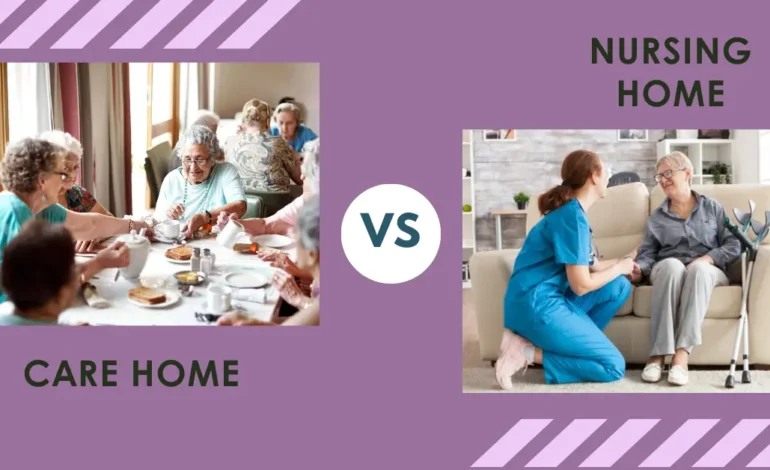
Care Home vs Nursing Home: A Complete Comparison Guide
Care home vs nursing home: what’s the real difference, and how do you know which one your loved one actually needs?
Many families assume the two offer similar services, only to discover later that medical care, costs, and levels of daily support vary widely.
At the core of this decision is the level of medical support provided. Care homes are designed to provide personal care, daily activities such as bathing, dressing, and meals, and social engagement, but they do not offer 24-hour medical care.
Nursing homes provide all of these services as well, with the critical addition of licensed nurses available 24/7 to manage medical conditions, administer treatments, and support complex health needs.
In this article, you’ll learn how care homes and nursing homes differ in medical care, daily living support, costs, and environment, who each option is best suited for, and how to choose the right level of care with confidence.
Henceforth, let’s get started!
What Is a Care Home?
A care home is a residential setting designed to support older adults who need help with everyday personal care and daily living, but who do not require continuous medical treatment.
The primary purpose of a care home is to provide a safe, supportive, and comfortable environment where residents can maintain dignity, routine, and social connection.
Unlike nursing homes, care homes focus on non-medical care. This means residents receive help with daily tasks, supervision, and emotional support rather than ongoing clinical treatment.
Services Provided in a Care Home
Care homes are structured to make daily life easier, safer, and more enjoyable for residents. Services are centered around activities of daily living (ADLs) and supervised support, including:
- Personal care assistance, such as bathing, dressing, grooming, toileting, and mobility support
- Nutritious meal preparation and dining support, with attention to dietary needs
- Housekeeping and laundry services, ensuring a clean and comfortable living space
- Medication reminders and basic assistance, without medical administration or monitoring
- 24-hour supervision, offering safety, reassurance, and immediate help when needed
- Social and recreational activities, promoting mental well-being, routine, and companionship
At Gracious Hearts Inc., these services are delivered with a personalized, compassionate approach. Their experienced staff work closely with each resident to create a safe and nurturing environment.
From structured daily routines to thoughtfully planned activities, Gracious Hearts ensures residents not only receive essential support but also enjoy a meaningful, engaging lifestyle.
Who Is a Care Home Best For?
A care home is best suited for seniors who need help with daily activities but do not require ongoing medical supervision. This includes individuals who:
- Need help with daily personal care, but are medically stable
- Are mostly mobile or require only minimal assistance
- Thrive with a structured routine and social interaction
- Prefer a home-like, non-clinical environment
- Do not require 24/7 skilled nursing for a complex condition.
For seniors who are mostly independent but need help with daily tasks, Gracious Hearts Inc. provides highly trained caregivers who can assist with personal care, mobility, and social engagement, ensuring safety and comfort without compromising independence.
What Is a Nursing Home?
A nursing home is a licensed residential facility that provides round-the-clock medical care and personal support for seniors and adults with complex health needs.
Unlike care homes, where the focus is on daily living assistance, nursing homes are designed to deliver continuous clinical oversight, rehabilitation, and skilled nursing care.
Staffed by registered nurses (RNs), licensed practical nurses (LPNs), and certified nursing assistants (CNAs), nursing homes ensure that residents receive timely medical attention, safe medication management, and assistance with daily activities in a structured, regulated environment.
Medical Care & Skilled Nursing Services
Nursing homes stand out for their professional medical care delivered 24/7, including:
- Licensed nurses monitor residents’ health, update care plans, and respond quickly to emergencies.
- Nurses safely administer medications, support adherence, and monitor complex prescriptions.
- Physical, occupational, and speech therapy help residents regain mobility, independence, and daily function.
- Regular checks, chronic disease management, wound care, and assessments maintain long-term wellness.
- Staff provide immediate care during health crises to keep residents safe.
Who Needs a Nursing Home?
Nursing homes are suited for seniors who require more than basic assistance, including:
- Chronic illnesses like heart disease or diabetes
- Post-hospital recovery or rehab
- Limited mobility or frequent falls
- Advanced dementia or cognitive issues
- Complex medication management
Key Differences Between Care Home vs Nursing Home
Understanding these differences not only clarifies what each setting offers but also helps families match the level of care to individual health, lifestyle, and support needs.
| Feature | Care Home | Nursing Home |
| Level of Medical Care | Minimal clinical care | 24/7 medical care |
| Daily Support | Meals, bathing, dressing, and personal care | Daily support plus medical supervision |
| Cost | Affordable | Higher cost |
| Residents | Mostly independent | Frail or medical needs |
| Staffing | Care assistants | RNs & care staff |
Care Home vs Nursing Home: Key Differences Explained
Understanding these differences ensures that seniors receive the right balance of care, comfort, and safety.
1. Level of Medical Care
Care Homes: Focus on personal care and daily living assistance, such as bathing, dressing, meals, and medication reminders. They do not provide round-the-clock medical care.
Nursing Homes: Provide 24/7 medical supervision by registered nurses and licensed care staff. Residents receive professional oversight for chronic conditions, medication administration, rehabilitative therapy, and emergency interventions.
2. Independence & Daily Living Support
Care Homes: Encourage independence while offering support with personal tasks. Residents follow structured routines but are empowered to make choices and engage in social activities.
Nursing Homes: Support daily living while integrating medical oversight, so residents who need frequent health interventions or monitoring can safely remain in a residential setting.
3. Environment & Living Setting
Care Homes: Often feel home-like, with communal areas, social programs, and cozy living spaces that foster social interaction.
Nursing Homes: While still welcoming, they are more clinical in layout to accommodate medical equipment, therapy spaces, and nursing stations.
4. Cost Differences
Care Homes: Typically more affordable, around ($5,000 – $7,700), as they focus on daily living support rather than full-time medical staffing.
Nursing Homes: Higher costs, around ($9,000 – $15,000+), correspond to 24/7 clinical care, skilled nursing staff, and rehabilitative resources.
How to Choose Between a Care Home and a Nursing Home
By evaluating key factors, you can confidently select a setting that ensures both well-being and quality of life.
1. Health & Medical Needs
Nursing homes are best for seniors with chronic illnesses, multiple medications, frequent hospital visits, or specialized care requirements.
Care homes suit seniors who are medically stable but need help with daily tasks without 24/7 medical supervision.
Consulting doctors, geriatric specialists, or care managers can help assess current and future care needs.
2. Mobility, Safety & Supervision
Consider whether your loved one can walk, transfer, and handle daily tasks on their own or needs help. Nursing homes provide 24/7 supervision for those at high risk of falls or accidents.
Both home care and nursing homes offer safety features like grab bars and non-slip flooring, but nursing homes also include clinical safety measures and adaptive devices for higher-risk residents.
3. Social, Emotional & Lifestyle Preferences
Care homes often offer social activities, outings, and group programs to keep seniors engaged and connected.
Nursing homes provide structured schedules and health-focused activities, which suit residents with higher medical needs.
Cost Differences: Care Home vs Nursing Home
In the United States, long‑term care costs are generally higher. Assisted living (comparable to a care home setting) averages around $4,600 – $5,900 per month, while nursing home care typically runs about $8,700 – $10,600 per month.
Whereas, in the UK, care home (residential) fees range from about £800 to £1,200 per week, covering accommodation, meals, and personal care. Nursing homes, which include 24/7 medical and nursing support, range from £1,000 to £1,600 per week.
| Cost Type | Care Home (Residential) | Nursing Home |
| UK Weekly Cost | £600 – £1,200 per week | £1,000 – £2,000 per week |
| UK Annual Cost | ~£31,200 – £62,400 | ~£52,000 – £104,000 |
| US Monthly Cost | $5,000 – $7,700 | $9,000 – $15,000+ |
| US Annual Cost | ~ $60,000 – $92,000 | ~ $110,000 – $180,000+ |
Related Care Options Often Compared
Understanding the nuances between these settings helps you match the right level of care to your loved one’s needs, safety, and lifestyle.
Care Home vs Assisted Living
Care homes vs assisted living facilities are similar, but terminology varies by region: Care Homes offer personal care and daily living support, such as meals, bathing, and supervision, in a home-like environment.
Assisted Living (US) focuses on support with activities of daily living (ADLs) while promoting independence, social engagement, and autonomy.
Nursing Home vs Memory Care
Memory care is specialized support for dementia or cognitive decline, often within or alongside nursing homes:
Memory Care has a secure environment, trained staff, cognitive stimulation programs, and structured routines.
Nursing Homes are focused on 24/7 medical supervision, chronic illness management, and rehabilitation.
FAQs
1. What is the difference between a care home and a nursing home?
A care home focuses on personal and daily living support – help with bathing, dressing, meals, and supervision, but does not provide constant clinical care. A nursing home offers all of that plus 24/7 medical and skilled nursing support for people with complex health needs, chronic conditions, or rehabilitation requirements.
2. When should someone move from a care home to a nursing home?
A move is usually needed when a person’s health or medical needs increase beyond what personal care staff can safely provide. Signs include frequent falls, worsening chronic conditions, memory impairment, daily medical interventions, or a recent hospital stay requiring rehabilitation or skilled nursing.
3. Are nursing homes more expensive than care homes?
Yes. Nursing homes are generally more expensive because they have licensed medical staff, clinical oversight, and specialized equipment. Care homes tend to cost less as they provide daily living support without full‑time medical supervision.
4. Can someone with dementia live in a care home?
People with early‑stage memory issues may live in a care home if their needs are mainly daily‑living support. However, those with moderate to advanced dementia often require specialized memory care or a nursing home with trained staff and safety measures for cognitive impairment.
5. What services do nursing homes include that care homes don’t?
Nursing homes include 24/7 registered nurse care, clinical monitoring, medication management, rehabilitation therapies (physical, occupational), and emergency response, in addition to personal care services that care homes also provide.
Conclusion
Care homes provide personal support and a home-like environment, while nursing homes offer 24/7 skilled medical care for complex health conditions.
Understanding these differences helps families make an informed choice that ensures safety, comfort, and quality of life for their loved one.
Evaluate daily living needs, health requirements, and lifestyle preferences to select the right long-term care solution.