
How to Find A Care Home for Elderly [5-Step Guide]
According to the U.S. Census Bureau, the population aged 65 and over reached 61.2 million in 2024, a 3.1% annual increase.
With this rapid aging of the population, families are increasingly searching for trusted guidance on how to find a care home for elderly.
Find a care home for the elderly by assessing care needs, budget, and location.
Use government directories or Care Quality Commission websites to compare ratings, visit shortlisted homes, and check staff qualifications, cleanliness, and resident feedback.
Always review contracts and services before making a decision.
Through this guide, you’ll learn how to explore verified databases and comparison platforms, and visit and assess potential facilities using professional-quality checklists.
We’ll also walk you through understanding pricing structures and funding options like Medicare.
Hence, let’s get started!
Understanding What a Care Home Is
Understanding the types of care homes and what each offers is the first step toward making an informed, confident decision for your loved one’s future.
Definition & Purpose
A care home is a residential setting that provides both accommodation and personal support services for older adults who can no longer live independently.
Staff assist residents with daily activities such as bathing, dressing, medication management, and meals.
Unlike in-home or independent living care, care homes offer housing with 24-hour supervision and assistance for seniors needing continuous support.
Types of Care Homes
1. Assisted Living Facilities
Designed for older adults who remain active but need help with daily tasks.
Assisted living facilities offer private or semi-private apartments, meals, social programs, and personal care services.
They promote independence while providing staff assistance as needed. Medical care is limited, but health monitoring and medication support are common.
2. Residential Care Homes (RCFEs)
Residential Care Facilities for the Elderly (RCFEs) are small, home-like settings offering non-medical care and supervision for seniors aged 60 and above.
These settings often have 4 – 10 residents, creating a cozy, family-like environment with individualized attention.
RCFEs are state-licensed and ideal for those needing assistance but not round-the-clock nursing care.
3. Memory Care Communities
Memory care is a specialized residential program for people living with Alzheimer’s disease or other forms of dementia.
These communities feature secured layouts to prevent wandering, staff trained in cognitive support, structured routines, and therapeutic activities designed to preserve memory and reduce anxiety.
4. Skilled Nursing Homes
Nursing homes or skilled nursing facilities (SNFs) provide 24-hour medical supervision, rehabilitative services, and skilled nursing care for residents with complex health conditions.
Licensed nurses and therapists deliver ongoing treatment.
5. Continuing Care Retirement Communities (CCRCs)
CCRCs, also called Life Plan Communities, offer a full continuum of care from independent living to assisted living, memory care, and skilled nursing.
This model allows residents to transition between care levels as their needs evolve.
Signs It’s Time to Start Looking for a Care Home
If you observe any of the following signs, it may be time to consider a care home. Understanding these factors highlights the importance of elderly care.
Physical and Daily Living Indicators
- Decline in Daily Activities.
- Mobility Issues or Frequent Falls
- Neglect of Personal Hygiene
- Weight Loss or Poor Nutrition
- Medication Mismanagement
Emotional and Social Indicators
- Mood Swings or Withdrawal
- Confusion or Memory Issues
Practical & Caregiver-Related Indicators
- Unsafe Living Conditions
- Caregiver Burnout
Step-by-Step Guide on How to Find A Care Home for Elderly
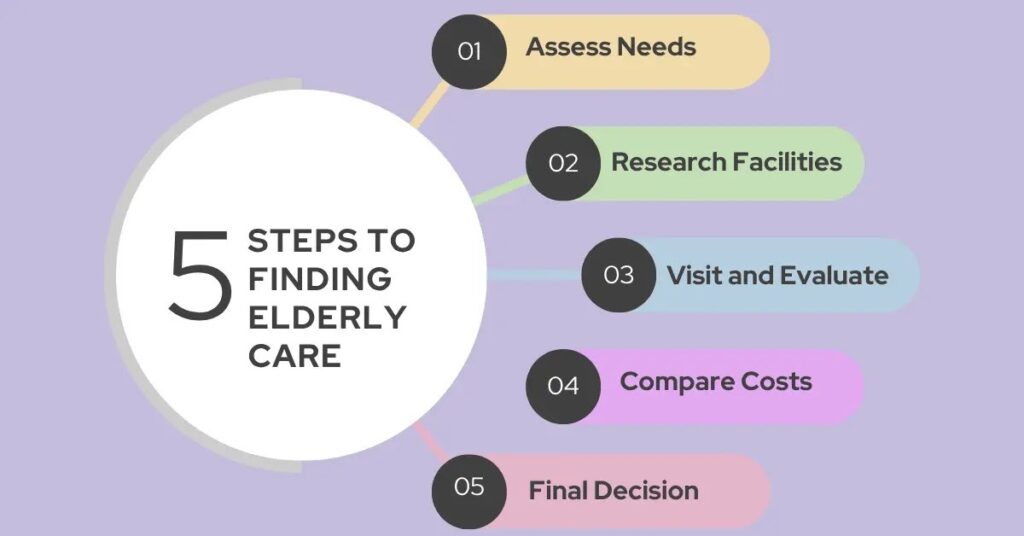
By following a structured approach, families can make informed decisions that balance care quality, lifestyle preferences, and financial considerations.
Step 1: Assessing Your Loved One’s Needs
Before researching facilities, it’s essential to understand your loved one’s health, emotional state, and personal preferences.
Consider physical limitations, chronic conditions, and the need for ongoing medical supervision.
Seniors recovering from hospital stays may require temporary after hospital care for the elderly to ensure a smooth transition.
Evaluate memory, cognitive function, and emotional health.
Dementia, Alzheimer’s, or mental health challenges can influence whether memory care or specialized assisted living is necessary.
Location, social activities, religious/spiritual needs, and desired independence should guide your choice.
Determine affordability, available savings, and potential support programs like Medicare, Medicaid, or VA benefits.
Step 2: Researching and Shortlisting Facilities
Once needs are clear, start exploring local and national options.
Websites such as A Place for Mom, SeniorAdvisor, SeniorCareForMom, and communities like Gracious Hearts offer comprehensive insights on senior living options.
Exploring these platforms helps families understand how to care for elderly relatives and compare services side-by-side.
Reliable resources for evaluating care homes include Medicare Care Compare for certified facility data, state databases for license and inspection verification, and the Eldercare Locator for local aging services and support.
Online reviews on Yelp, Google, and California Registry help gauge resident satisfaction and family experiences.
Local communities often have smaller facilities providing personalized attention, ideal for those showing early signs that their elderly parent needs help.
Step 3: Visiting and Evaluating Care Homes
Visiting shortlisted facilities allows you to see day-to-day operations and staff-resident interactions firsthand.
Book formal tours. Spontaneous visits can also provide insights into staff attentiveness, resident satisfaction, and overall atmosphere.
Observe,
- Cleanliness and safety of common areas
- Quality and variety of meals
- Comfort of resident rooms
- Interaction between staff and residents
Step 4: Comparing Costs and Payment Options
Costs vary by care level, room type, and additional services (medication management, personal care, therapy).
Check for eligibility with Medicare, Medicaid, VA benefits, or local state programs. Long-term care insurance and reverse mortgage options can help cover expenses.
Balance quality care with financial sustainability.
Step 5: Making the Final Decision
Compare facilities based on care quality, location, lifestyle, and affordability. Decide which factors are most critical for your loved one’s well-being.
Understand terms regarding refunds, transfers, and resident rights.
Prepare your loved one emotionally and practically for the move. Smooth transitions include packing, orientation, and settling in routines.
Financial Planning: Understanding Care Home Costs
Here’s a detailed breakdown of average costs and funding options available.
Average Weekly Costs by Care Type
| Type of Care Home | Description | Weekly Cost | Monthly Cost |
| Residential Care Homes | Assistance with daily activities | £1,298 | £5,192 |
| Nursing Homes | 24-hour medical care | £1,545 | £6,180 |
| Live-in Care | Round-the-clock in-home support | £1,200 – £1,800 | £5,200 – £7,800 |
| Dementia Care Homes | Specialized Alzheimer’s care | £1,343 | £5,372 |
Private vs. Publicly Funded Care
Private Care: Self-funding individuals often face higher costs. For example, self-funders pay an average of £1,278 per week for residential care and £1,594 per week for nursing care.
Publicly Funded Care: Local authorities may contribute to care costs based on a financial assessment. The average weekly fees paid by councils are approximately £908 for residential care and £1,225 for nursing care.
Applying for Financial Assistance
To determine eligibility for financial support:
Contact Your Local Council: Request a care needs assessment to evaluate the level of care required.
Financial Assessment: The council will assess your financial situation to determine if you qualify for funding. Generally, if your capital is below £23,250, you may be eligible for assistance.
NHS Continuing Healthcare: For individuals with significant health needs, the NHS may fully fund care costs through the NHS Continuing Healthcare program.
Warning Signs When Choosing a Care Home
Here’s a comprehensive guide to help you identify these warning signs.
1. Unhygienic Conditions
Persistent unpleasant odors, dirty floors, overflowing trash, and soiled linens are strong indicators of inadequate cleaning practices.
Such conditions can lead to infections and suggest poor organizational practices within the facility.
2. Understaffing and High Staff Turnover
A lack of staff or frequent personnel changes can compromise the quality of care.
Signs of understaffing include delayed responses to call bells, residents left in bed for extended periods, and staff appearing rushed or stressed.
3. Emotional and Psychological Indicators
Unexplained weight loss, withdrawal, depression, or fearfulness in residents may point to neglect or abuse.
Changes in behavior, such as agitation or unusual quietness, can also be red flags.
4. Unexplained Injuries
Frequent falls, bruises, bedsores, or other untreated injuries may indicate poor supervision or a lack of basic care.
Repeated incidents should raise concerns about the facility’s ability to provide adequate care.
5. Poor Communication and Accountability
Unanswered phone calls, reluctance to allow private visits, or vague responses to questions about care plans can be signs of a facility attempting to hide issues.
Transparency and open communication are essential for quality care.
6. Lack of Activities and Engagement
A lack of stimulating activities or social programs can lead to boredom and depression among residents.
Engagement in meaningful activities is crucial for the mental and emotional well-being of elderly individuals.
7. Signs of Abuse
Physical abuse may manifest as bruises, black eyes, or rope marks, while emotional abuse can lead to withdrawal or fearfulness.
Any signs of mistreatment should be taken seriously and investigated promptly.
FAQs
What’s the difference between residential and nursing care?
Residential care homes assist with daily activities like bathing, dressing, and meal preparation, but they do not offer 24-hour medical care. Nursing homes, on the other hand, have trained medical staff on-site. They provide round-the-clock supervision, medication management, and rehabilitation services.
How long does it take to find a care home?
On average, families spend several weeks to a few months researching, visiting, and evaluating facilities. Planning allows you to consider after-hospital care for the elderly if your loved one needs a temporary transition.
Can I move my parent if the care home isn’t right?
Yes, you can move your parent if the care home isn’t right. Before moving, review the contract terms regarding notice periods, refunds, and resident rights.
What financial help is available for elderly care?
Funding options include Medicare and Medicaid (in the U.S.), local authority contributions (in the UK), VA benefits, long-term care insurance, and means-tested assistance. Financial planning ensures sustainability without compromising care quality.
How to find dementia-specific care homes?
Look for memory care communities or specialized units within assisted living and nursing homes. Verify staff training in dementia care, security measures to prevent wandering, and therapeutic activity programs. Trusted resources such as Gracious Hearts can help identify reputable dementia-focused facilities.
Wrap Up
Finding the right care home for your elderly loved one requires a careful balance of research, empathy, and thoughtful evaluation.
Every choice affects their safety, comfort, and overall quality of life, so taking the time to understand their specific needs is essential.
Using trusted resources and directories, such as Gracious Hearts, allows families to compare facilities, review real experiences, and make informed decisions.
Professional guidance from a no-cost senior living advisor can further simplify the process and provide personalized recommendations.
Start your search today to secure a care home that offers compassionate, safe, and high-quality support.