
How to Get Elderly to Shower: Gentle, Effective Tips That Work
Two-thirds of caregivers assist with personal daily care tasks such as bathing, dressing, and grooming, which is a clear sign of how common and challenging hygiene support becomes as loved ones age.
As seniors age, bathing resistance increases due to fear of falling, memory loss, modesty concerns, discomfort, or changes caused by dementia and mobility loss.
Therefore, if you’re searching for practical ways on how to get elderly to shower, you’re not alone.
Get elderly individuals to shower by creating a safe bathroom setup, offering clear choices, and using a calm routine.
Increase cooperation by explaining the health benefits, warming the room, and using adaptive tools like grab bars or shower chairs.
Reduce resistance by keeping the process predictable and respectful.
In this guide, we’ll cover emotional barriers, safety strategies, dementia-specific approaches, communication techniques, caregiver tips, and step-by-step methods to make bathing easier, safer, and more cooperative.
Hence, let’s get started!
Why Seniors Refuse to Shower
Seniors may skip showers for days or react with anxiety, anger, or withdrawal when prompted. These behaviors reflect real physical, emotional, or cognitive challenges.
Understanding the reasons behind an elderly person refusing to shower is the first step toward an effective approach.
1. Physical Barriers
Mobility limitations, arthritis, chronic pain, and balance issues make stepping over tubs, standing on wet surfaces, or moving quickly extremely challenging.
Even minor dizziness or muscle weakness can heighten the fear of falling, one of the leading reasons seniors avoid bathing.
2. Emotional and Cognitive Causes (Including Dementia)
Cognitive changes such as dementia or Alzheimer’s disease can profoundly impact a senior’s perception of bathing.
Some may forget why showering is necessary; others may experience confusion, sensory overload from water and noise, or feelings of vulnerability and embarrassment.
3. Mental Health Factors (Depression & Anxiety)
Seniors experiencing depression often lose motivation for self-care, including showers and grooming.
Anxiety can make the thought of bathing stressful, triggering fears about falling, exposure, or discomfort.
Step-by-Step Process: How to Get Elderly to Shower
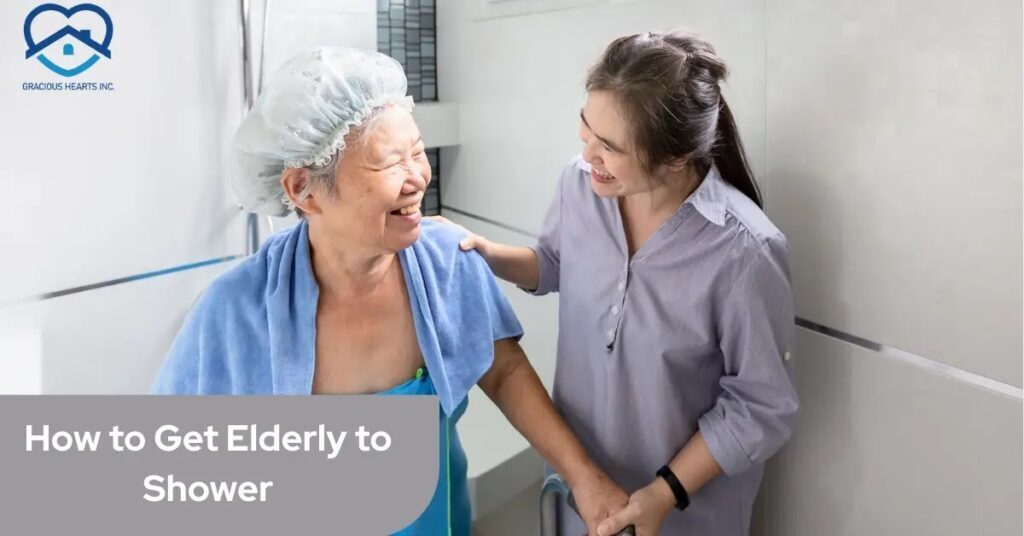
A clear, step-by-step routine reduces anxiety, preserves dignity, and ensures hygiene without stress.
Step 1: Preparing the Bathroom
Start by checking safety. Make sure grab bars are secure, non-slip mats are in place, and floors are dry.
Set the water temperature to a comfortable level, around 37- 38°C (98 – 100°F), to prevent chills or burns.
Gather all supplies you’ll need, such as towels, washcloths, mild soap, shampoo, lotion, and clothes, and keep them within reach.
Make the space comfortable by warming the room, providing bright, even lighting, and having a pre-warmed towel ready.
Step 2: Guide Them Through the Shower
Let them do tasks themselves when possible and go at their own pace.
Give gentle, step-by-step instructions, such as “Let’s start with your face, then arms,” and stand nearby while giving enough personal space to maintain privacy.
Offer simple choices, like which soap to use or the order of washing, to encourage independence.
This approach helps build trust, reduces anxiety, and makes cooperation easier.
Step 3: Post-Shower Care (Drying, Lotion, Warmth)
Gently pat the skin dry, paying attention to folds and moisture-prone areas.
Apply fragrance-free lotion to prevent dryness and irritation. Lay out clothing in advance to make dressing easier and more comfortable.
Keep the person warm by wrapping them in a towel and maintaining a cozy room temperature.
Proper post-shower care supports skin health, comfort, and dignity.
Safety Improvements That Reduce Fear of Showering
Thoughtful safety improvements can reduce anxiety, prevent injuries, and make showering a calm, confident experience.
1. Essential Bathroom Modifications for Elderly Safety
A senior-friendly bathroom begins with the right setup:
- Grab bars and rails: Install sturdy bars near the shower, tub, and toilet to provide stability.
- Adequate lighting: Bright, glare-free lights help prevent trips.
- Non-slip surfaces: Use mats or textured flooring to reduce slipping hazards.
- Handheld showerheads: Allow seniors to bathe while seated.
- Additional aids: Raised toilet seats and bath steps enhance independence.
2. Using Shower Chairs, Transfer Benches & Mobility Aids
Shower chairs, whether fixed or swivel, allow seniors to bathe while seated and maintain independence.
Transfer benches are ideal for tubs, as it let seniors slide in without stepping over high edges.
Guidance from an occupational therapist helps ensure the right equipment is chosen and installed correctly.
3. Make the Bathroom Warm and Comfortable
Warm the room with a space heater or pre-warmed bathroom to reduce chills and anxiety.
Keep towels or robes pre-warmed in a heated drawer or rack.
Use soft lighting and calming décor, like gentle lights and neutral colors, to create a welcoming environment.
Alternatives: If the Elderly Resist Showering Completely
In these situations, caregivers can maintain hygiene, comfort, and dignity through practical alternatives such as sponge baths, bed baths, and no-rinse body wipes.
1. How to Give a Sponge Bath Safely
A sponge bath allows caregivers to clean the senior gently while preserving privacy and comfort:
- Gather warm water, mild soap, washcloths, towels, and clean clothes. Keep the room comfortably warm.
- Close doors, draw curtains, and cover the body with a towel or sheet.
- Wash the face first, then neck, arms, chest, back, and legs, rinsing the washcloth frequently and replacing water if it cools.
- Use warm water and pre-warmed towels to prevent chills and make the process soothing.
2. Using No-Rinse Body Wipes or Cleansers
No-rinse wipes are a convenient and stress-free option for seniors who may avoid full showers.
They are ideal for quick hygiene on busy days, during illness, or when a full bath isn’t possible.
To use, gently wipe key areas such as the face, neck, underarms, and groin, and dispose of the wipes properly.
They can be used once a day or every other day, based on activity level and comfort.
No-rinse wipes help keep skin clean, prevent odor, and reduce discomfort without causing anxiety or confrontation.
When to Get Professional Help
Engaging trained caregivers, home care agencies, or medical professionals can make a significant difference in a senior’s safety, comfort, and overall well-being.
Hiring a Bath Aide or Home Caregiver
Persistent resistance to showering may be best addressed with a trained caregiver who provides neutral, patient, and compassionate support.
Professional bath aides help seniors maintain dignity and privacy, use safe techniques, and reduce stress for both the senior and their family.
At Gracious Hearts Inc., you can hire caregivers specifically trained to handle sensitive personal care tasks.
Their team combines expertise with a genuine understanding of seniors’ emotional and physical needs.
When to Involve a Doctor or Therapist
Sometimes, refusal to bathe signals an underlying medical or psychological concern, such as depression, dementia, infection, or pain.
Consulting a geriatrician or occupational therapist can help identify causes and guide appropriate interventions.
Gracious Hearts Inc. caregivers can collaborate with medical professionals when needed. It can ensure seniors receive both compassionate support and medically informed care.
FAQs
How often should seniors shower?
Most seniors can bathe 1 – 3 times per week, based on their comfort, activity level, and health conditions. Daily showers may not be necessary and can sometimes dry out sensitive skin.
What if a senior refuses to shower completely?
Start with gentle alternatives such as sponge baths, bed baths, or no-rinse wipes. Gradually work up to full showers when the senior feels safe and comfortable.
How do I motivate an elderly person to shower?
Use empathy, positive reinforcement, and patience. Praise little progress, maintain a calm environment, and allow them to make choices about timing, order, or bathing aids.
What if they’re afraid of falling?
Install grab bars, non-slip mats, shower chairs, or transfer benches to reduce fear. Adaptive equipment creates a safer, more confident bathing experience.
Is it okay to help a senior bathe?
Yes, assisting is appropriate when done respectfully, patiently, and with dignity. Always preserve privacy and autonomy as much as possible.
Conclusion
Understanding how to get elderly to shower requires patience, empathy, and a safe, supportive environment.
Many seniors resist bathing due to mobility challenges, cognitive changes, or fear of falling, which makes personal hygiene care for the elderly an essential part of maintaining health and dignity.
Key strategies include showing empathy, preparing a safe bathroom with grab bars and adaptive aids, using gentle step-by-step guidance or alternatives like sponge baths, and knowing when to involve professional caregivers or medical support.
With consistent routines and structured support, bathing can become a comfortable, stress-free experience.
Start implementing these techniques today, and consider professional assistance from trusted providers like Gracious Hearts Inc. to ensure every personal care routine is safe, dignified, and effective.
