
How to Hire A Caregiver for the Elderly Care: A Beginner’s Guide
Did you know there are an estimated 63 million caregivers in the U.S. providing paid or unpaid assistance to loved ones with basic needs?
If you’re asking yourself how to hire caregivers who are skilled, trustworthy, and compassionate, you’re in the right place.
Hiring the right caregiver starts with defining the required skills, creating a clear job description, and running thorough background checks.
You should verify certifications, check references, and conduct in-person interviews.
Ultimately, the best caregivers demonstrate reliability, empathy, and clear communication.
This guide will take you step by step through the entire process: assessing your care needs and budget, deciding between a home care agency or private hire, and sourcing candidates through online platforms, referrals, and community resources.
Therefore, let’s get started!
Understand Your Care Needs and Hiring Context
Before hiring a caregiver, it’s essential to clearly define the type and level of care your loved one requires, determine a realistic budget, outline a schedule, and decide whether to hire through a home care agency or independently.
Setting these foundations upfront ensures you find a caregiver who truly fits your needs, avoids miscommunication, and supports long-term care.
Define Tasks & Responsibilities
Start by mapping out exactly what you expect from the caregiver:
1. Activities of Daily Living (ADLs): Bathing, dressing, toileting, and mobility support are critical to maintaining your loved one’s independence.
2. Household chores: Tasks like meal preparation, laundry, cleaning, and errands should be clearly specified to prevent misunderstandings.
3. Transportation: Assistance with driving, appointments, and errands can be a major help in daily life.
4. Companionship and emotional support: Many caregivers provide conversation, engagement, and presence, which significantly impacts overall well-being.
5. Medical or health support: Depending on your needs, this can include medication reminders, monitoring vital signs, or coordinating with healthcare providers.
Budgeting and Cost Considerations
Understanding the financial aspect is just as important as defining tasks:
1. Hourly rates: In the U.S., median in-home care rates range from $33 – $36 per hour, with higher rates for skilled or specialized care.
2. Agency vs. independent costs: Agencies often charge 20 – 30% more than hiring independently, covering payroll, administrative work, and backup staffing.
3. Additional costs: Include overtime, taxes, workers’ compensation (if hiring privately), and administrative duties.
Agency vs. Private Hire: Pros & Cons
Home care agencies handle the vetting, background checks, and training of caregivers, which provides a higher level of reliability and consistency.
Agencies also manage payroll, taxes, insurance, and scheduling logistics, so you don’t have to worry about administrative tasks.
Another major benefit is backup coverage; if a caregiver is unavailable, the agency can provide a replacement, ensuring continuous care.
On the other hand, hiring a private or independent caregiver can offer more flexibility and personalization.
You can choose a caregiver who perfectly matches your loved one’s personality, preferences, and specific care needs.
Independent hires are often more cost-effective, as you avoid the overhead fees charged by agencies.
However, this approach also comes with added responsibilities: you must handle payroll, taxes, insurance, and any backup planning yourself.
- If consistency, liability protection, and minimal administrative work are most important, an agency may be the better option.
- If personalization, flexibility, and potential cost savings are your top priorities, a private hire can work well.
Where to Find Caregiver Candidates
By combining grassroots connections with digital platforms and local support networks, you maximize your chances of finding someone who is both skilled and a good personal fit.
1. Personal Networks & Referrals
Talk to friends, family, neighbours, and especially healthcare professionals, like a doctor, discharge planner, or hospital social worker.
See if they know reliable, experienced caregivers. These referrals often come with firsthand insight into the caregiver’s character, work style, and reliability.
Local senior centres and community centres can also be invaluable. Staff there may know trusted caregivers or be connected to informal caregiver networks.
2. Online Platforms & Job Postings
Sites like Care.com let you post a caregiver job description, review individual profiles, and message candidates directly.
When writing your caregiver job posting, be very clear and specific: describe the daily duties, preferred hours, necessary certifications, and your expectations for companionship or personal care.
This helps attract candidates who are a good match from the start.
3. Local Resources & Community Agencies
Another essential resource is your Area Agency on Aging (AAA).
AAAs are nonprofit or public organizations designated to help older adults in a specific geographic area, and they often coordinate in-home services.
You can find your local AAA through the Eldercare Locator, a national directory that connects you to relevant aging support services.
Additionally, Centers for Independent Living (CILs) serve people with disabilities and may have connections with caregivers or be able to recommend independent home-care workers.
These local agencies often know trusted caregivers in the community and can help you navigate referrals or service providers.
For families who want a trusted, well-supported option, Gracious Hearts Inc. offers caregivers who are thoughtfully matched to each senior’s needs.
Their team focuses on safety, comfort, and dignity, making sure your loved one receives care from someone who is both skilled and genuinely compassionate.
Types of Caregivers to Hire
Each brings unique skills, certifications, and experience, so choosing the right one ensures your loved one receives safe care.
1. Certified Nursing Assistants (CNAs)
CNAs are certified healthcare professionals trained to provide both personal care and basic medical support.
They assist with activities of daily living (ADLs) such as bathing, grooming, and mobility, and can monitor vital signs or help with basic nursing tasks.
CNAs are ideal for individuals with medical needs.
Hourly rates range from $16 to $20, based on experience and location.
2. Home Health Aides (HHAs)
Home health aides are certified and can assist with medication reminders, vital sign checks, and support tasks under guidance from healthcare professionals.
HHAs are suitable when ongoing supervision or light medical support is needed at home.
Normal hourly pay ranges from $15 to $28, based on state and certification level.
3. Personal Care Assistants (PCAs)
PCAs focus on non-medical support, including grooming, dressing, meal preparation, household chores, errands, and companionship.
They do not perform medical procedures, which makes them ideal for those primarily needing assistance with daily living and emotional support.
Hourly rates for PCAs generally range from $20 to $40, with higher rates for specialized or live-in support.
4. Private Caregivers vs. Agency Caregivers
Private caregivers are hired directly, offering flexibility, personalization, and sometimes lower costs. Rates usually range from $15 to $25 per hour, based on skills and location.
Agency caregivers are employed through a home care agency. Agency services are more expensive, with typical costs around $30 to $40 per hour.
5. Part-Time vs. Full-Time Caregivers
Part-time caregivers provide support for a few hours each day, often for errands, companionship, or ADLs.
Full-time caregivers deliver consistent, around-the-clock assistance, which is essential for individuals with intensive care needs.
Part-time care generally follows the standard hourly rates listed above, while full-time or live-in care can significantly increase costs, sometimes reaching $30 – $45 per hour or $5,000+ per week for 24/7 coverage in some regions.
If you prefer not to search independently, agencies such as Gracious Hearts Inc. can match you with the right type of caregiver, whether you need a CNA, HHA, PCA, or part-time or full-time support, based on your loved one’s exact needs.
Step‑by‑Step: How to Hire Caregivers
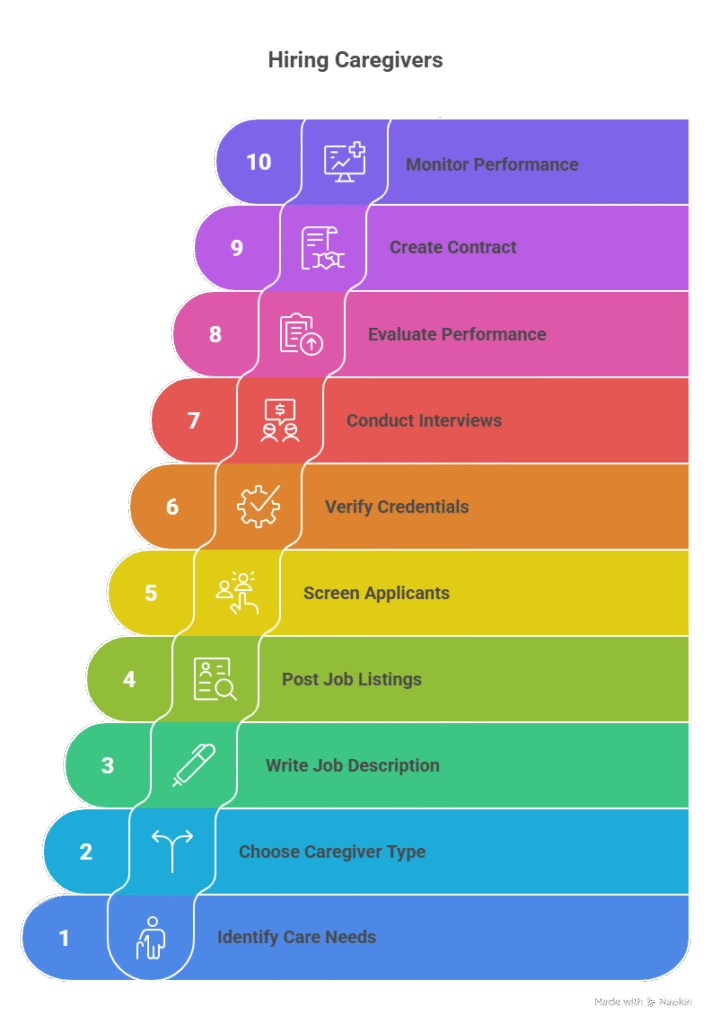
Here’s a comprehensive, 10-step roadmap to guide you:
Step 1: Identify the Level of Care Needed
Assess your loved one’s needs: personal care (bathing, dressing), mobility support, medication reminders, errands, or companionship.
Determine whether supervision is needed full-time or only for specific periods.
Step 2: Choose an Agency or Private Caregiver
Decide whether to hire through a home care agency, which manages vetting, payroll, and backup coverage, or a private caregiver, which offers more personalization but requires you to manage employment logistics.
Step 3: Write a Clear Job Description
Create a detailed job description including daily duties, schedule, required certifications, experience, and personality qualities such as empathy and reliability.
A precise description attracts suitable candidates and minimizes mismatches.
Step 4: Post Job Listings Online
Use caregiver-specific job boards, general employment platforms, and community sites.
Include the full job description, pay range, and application instructions. Broad outreach increases the likelihood of finding qualified candidates.
Step 5: Screen Applicants
Review resumes or online profiles for relevant experience and availability. Shortlist candidates whose skills and experience match your loved one’s needs.
Step 6: Run Background Checks & Verify Certifications
Verify credentials such as CNA, HHA, or CPR certifications. Conduct criminal and driving record checks and contact references.
Step 7: Conduct Interviews
Meet candidates in person and ask situational questions, such as handling mobility challenges or medication refusal.
Assess both competency and interpersonal compatibility with your loved one.
Step 8: Trial Shifts & Performance Evaluation
Arrange trial shifts to observe punctuality, task execution, and interaction with your loved one.
Use feedback from both the caregiver and your family to make informed decisions.
Step 9: Create a Written Caregiver Contract
Formalize the arrangement with a contract detailing pay, schedule, duties, time-off, and termination terms.
Step 10: Monitor Performance & Maintain Communication
Regularly review the care plan, provide feedback, and maintain open communication.
Ongoing monitoring ensures consistent, high-quality care and a positive caregiver-family relationship.
FAQs
1. How do I know if a caregiver is qualified?
Check certifications like CNA, HHA, or CPR based on your loved one’s needs. Review work experience, request references, and run background checks. Conduct an in-person interview to assess skills, reliability, and compatibility with your family. A qualified caregiver should demonstrate both technical competence and emotional empathy.
2. Should I choose an agency caregiver or a private caregiver?
Agency caregivers provide training, background checks, payroll handling, and backup coverage, making them reliable but more costly. Private caregivers offer flexibility, personalization, and sometimes lower rates, but require you to manage taxes, employment logistics, and scheduling. If you want a trusted starting point, Gracious Hearts Inc. offers dependable, compassionate caregivers
3. How long does it take to hire a caregiver?
The hiring process can take a few days to several weeks, based on how quickly you identify candidates, conduct interviews, complete background checks, and finalize contracts. Planning and posting job listings on multiple platforms can speed up the process.
4. What documents do I need when hiring a caregiver?
Essential documents include a caregiver contract, proof of certifications, emergency contact information, tax forms if hiring privately, and any medical instructions relevant to your loved one. Keeping detailed records ensures legal compliance and clarity on responsibilities.
5. Can I fire a caregiver if it’s not a good match?
Yes, you can fire a caregiver if it’s not a good match for your loved ones. If a caregiver is not performing duties as expected, does not meet your loved one’s needs, or does not fit well with your family, you can terminate the agreement. For agency hires, review their policies for replacements; for private hires, ensure the termination process is clearly outlined in the contract.
Bottom Line
Hiring the right caregiver is one of the most important decisions you can make for the well-being of your loved one.
Start by assessing the care needs. Then weigh the pros and cons of agency vs. private caregivers. Write a clear job description.
Follow a structured hiring process with screening, background checks, interviews, and trial shifts. This helps you find a caregiver who is skilled, compassionate, and reliable.
Understanding the differences between Certified Nursing Assistants (CNAs), Home Health Aides (HHAs), Personal Care Assistants (PCAs), part-time, and full-time caregivers helps you match the right professional.
Taking the time to hire thoughtfully not only safeguards your loved one’s health and happiness but also lays the foundation for providing consistent, high-quality support, a critical part of caring for your elderly, and gives you peace of mind.