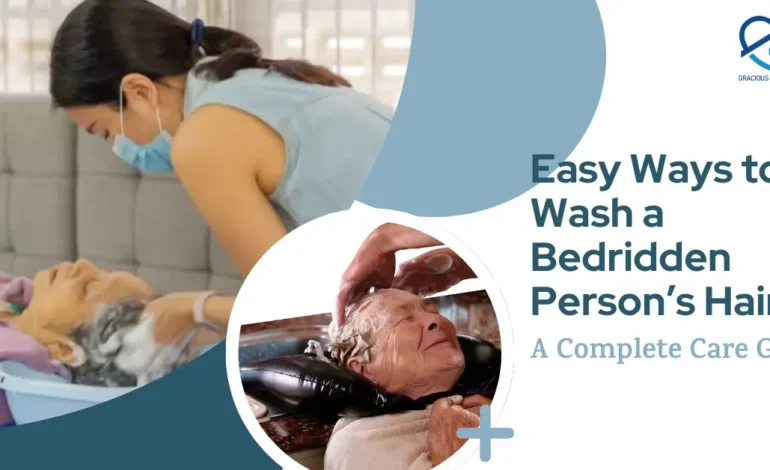
How to Wash a Bedridden Persons Hair at Home
A recent study found that 76% of nurses had insufficient knowledge and 54% had a negative attitude toward hygienic care for bedridden patients.
This negligence can lead to discomfort, itching, or even infections. For families and caregivers, one of the most common questions is how to wash a bedridden persons hair safely and comfortably.
When mobility is limited, even a simple hair wash can feel overwhelming.
But with the right method, tools, and compassionate approach, it becomes a calming part of caregiving.
Place a waterproof sheet under the patient’s head. Use a no-rinse shampoo cap or an inflatable basin.
Gently massage the scalp with warm water and mild shampoo. Rinse with a cup or handheld sprayer. Towel-dry the hair and comb it to prevent tangles.
In this comprehensive guide, you’ll find step-by-step instructions on washing hair in bed, tips for preparing and protecting the bed, and caregiver tools that simplify the process.
Therefore, let’s get started!
Preparing for the Hair Wash – Supplies, Setup & Safety
With careful preparation, this routine becomes safe, efficient, and comfortable.
1. Gather Essential Caregiver Tools & Supplies
Start by collecting everything you’ll need:
- Inflatable shampoo basin with drainage.
- Waterproof pad to protect the bed, plus extra towels to catch drips.
- Mild shampoo, wide-tooth comb, and soft brush for detangling.
- Pitcher or cup for pouring water, or a handheld sprayer for rinsing.
- A bucket or container to collect runoff water.
Optional: no-rinse shampoo cap, cotton balls for ear protection, or extra washcloths.
2. Protect the Bed and Position the Patient
Place the waterproof pad under the head and shoulders and extend it onto the bed surface.
Layer towels over the pad to absorb water and simplify cleanup. Use pillows or cushions to support the neck and shoulders.
Position the basin under the head and make sure any drainage hose or outlet leads into a bucket to catch water.
Pro Tip: Wrap a towel around the shoulders to keep warm during rinsing and prevent chills.
3. Safety & Comfort Checks Before Washing
- Always check water temperature, warm but not hot, to avoid burns.
- Ensure the basin is stable and the patient’s head and neck are properly supported.
- Keep extra towels nearby to cover shoulders during rinsing and maintain warmth.
Pro Tip: Gently pre-comb hair before wetting to reduce tangles.
Step‑by‑Step: How to Wash A Bedridden Person’s Hair
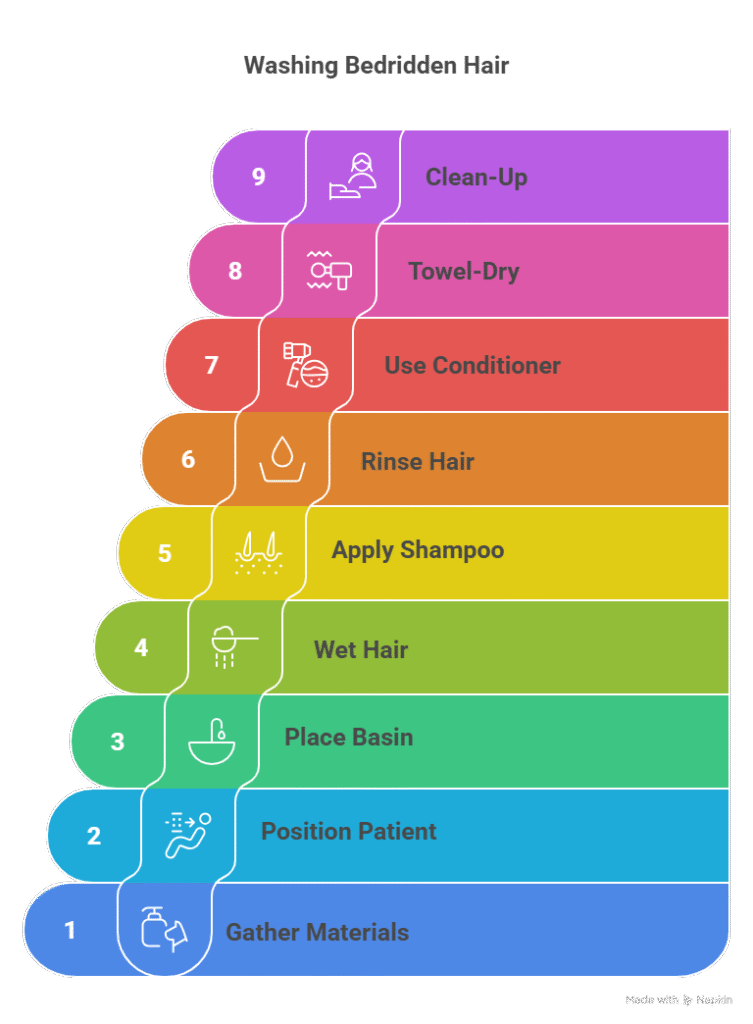
A detailed, caregiver‑friendly guide on how to wash hair for a bed-bound person’s hair from start to finish.
Step 1: Gather Materials
Collect all the hair washing aids and supplies before you begin, as mentioned before.
Check your environment: ensure the room is warm, clear of clutter, and comfortable for the bedridden person.
Step 2: Position the Patient Safely
Place pillows or cushions behind the person’s shoulders and neck for support. Position their head so that it rests comfortably in the basin neck opening.
Ensure the basin’s drainage hose or outlet leads into a bucket to prevent bedding from getting wet.
Step 3: Place the Shampoo Basin Under the Head
Carefully slide the inflatable shampoo basin into place beneath the head and neck area. It makes sure the rim sits snugly and there is no risk of slipping.
Verify that the basin is stable and that the drainage hose is correctly positioned into the collection bucket.
If a basin is unavailable, you may use towels, a waterproof pad/sheet, and a washcloth method as an alternative.
Use of a proper basin improves fluid control and comfort for the bed‑bound hair washing technique.
Step 4: Wet Hair Using Jug or Handheld Sprayer
Using the pitcher or cup, pour warm water gently over the hair. Start from the forehead/hairline and move toward the back.
Make sure the water is warm (comfortable to the skin), not hot, as this protects scalp health.
Continue until the hair is thoroughly wet. This sets up for effective shampoo application.
Step 5: Apply Shampoo and Gently Massage
Apply a small amount of shampoo; too much can make rinsing difficult in a bed‑bound scenario.
Gently massage the scalp with fingertips to stimulate circulation, remove buildup, and support scalp health.
Avoid aggressive rubbing; instead, use smooth, gentle motions.
Focus on the scalp rather than just the hair length, because for bedridden persons, scalp care is critical.
Step 6: Rinse Thoroughly
Use the pitcher or sprayer to rinse out all shampoo and direct the clean warm water from scalp to hair ends until the water runs clear.
If the hair is very dirty, you might repeat shampoo & rinse.
Make sure no shampoo residue remains, as leftover suds can irritate the scalp of a bed bound person.
Step 7: Use Conditioner (Optional)
If the person’s hair type supports it, apply a small amount of conditioner. Focus on the hair ends.
After a short wait, rinse again thoroughly with warm water.
Step 8: Towel‑Dry and Comb Through Hair
Lift the head gently out of the basin, support the neck, and wrap the hair in a clean, dry towel. Blot to remove excess water.
If they tolerate it, use a hair dryer on low heat. Maintain distance and avoid overheating the scalp.
Use a wide‑tooth comb or soft brush to remove tangles and work from the ends upward to the roots.
Give the person a warm blanket or cover to keep comfortable after the wash.
Step 9: Clean‑Up and Check Comfort
Empty the basin’s dirty water, rinse and dry the basin, wash towels, and remove the waterproof pad once fully dry.
Make sure the bed padding under the patient is dry and clean to protect bedding and skin.
Check that they’re warm, comfortable, head and neck supported, and that the hair feels clean.
Pro Tips & Notes
For extremely frail or immobile patients, consider a no‑rinse shampoo cap or dry shampoo as an alternative hair‑washing method.
Always monitor the scalp during wash for signs of irritation, redness, or skin breakdown. Good technique supports scalp health and prevents complications.
Alternative Methods When Water Use is Limited

For caregivers looking after a bedridden person with extreme immobility, traditional water-based hair washing may not always be possible.
Whether due to fragility, surgery, dementia, or resistance to water, there are effective alternatives that maintain hygiene, comfort, and dignity.
Method 1:Towel / Flannel Method
This one is also called the washcloth method. It is ideal when a basin or full rinse is impractical.
It minimizes mess and is gentle enough for patients with limited mobility or cognitive challenges. Here’s how to do it:
1. Warm a small amount of water and dampen a soft flannel or washcloth, wring out excess water.
2. Optionally, apply a tiny amount of mild shampoo to the cloth.
3. Starting at the front, gently wipe the hair and scalp with smooth strokes. Move toward the back.
4. Rinse the cloth periodically in warm water and continue until the hair and scalp are clean.
5. Blot hair dry with a towel and gently detangle with a wide-tooth comb.
Method 2: No‑Rinse Shampoo Caps & Dry Shampoo
For situations where any water use is not possible, no‑rinse shampoo caps and dry shampoo are excellent alternatives.
These methods are convenient, maintain hygiene, and are easy for caregivers to use.
No‑Rinse Shampoo Caps
- Pre‑moistened caps with shampoo and conditioner.
- Place on the patient’s head, massage gently through hair and scalp, then remove and towel dry.
- Excellent for patients with wounds or extreme immobility.
- Supports bedridden hair care and ensures hygiene without spills.
Dry Shampoo
- Apply spray or foam to the roots, massage, then brush through.
- Suitable as a temporary solution when water use is impossible.
- Helps maintain scalp freshness, but should not replace periodic full washing.
Aftercare: Drying, Combing & Styling
Proper aftercare ensures the hair is dry, detangled, and styled in a way that is safe, manageable, and respectful.
1. Gentle Towel-Drying
Carefully lift the patient’s head from the basin by supporting the neck and shoulders.
Wrap a clean, dry towel around the hair and pat gently to remove excess water. Avoid rubbing to prevent tangles and scalp irritation.
If using a low-heat hair dryer, maintain a safe distance, keep airflow moving continuously, and ensure the patient’s shoulders and chest stay warm.
Keep the environment comfortable to prevent chills, especially important for bed-bound hair care.
2. Combing Out Tangles
Use a wide-tooth comb or soft brush to detangle hair. Start from the ends and gradually move toward the roots.
For long hair, consider simple, practical styles such as a loose braid, low ponytail, or clipped-back sections to minimize friction and maintain comfort.
During combing, check the scalp for redness, irritation, or pressure marks.
3. Simple Styling for Comfort and Dignity
Keep styling functional rather than elaborate; the goal is neat, manageable hair.
Offer choices to the patient where appropriate. For example, a loose braid or hair clips, to preserve a sense of autonomy and dignity.
Ensure hair is arranged to avoid tangling against bedding.
4. Final Comfort and Environment Check
Make sure the patient’s head and neck are well-supported, and bedding underneath is dry and comfortable.
Remove all tools, hair dryer, comb, towels, and restore a calm environment.
Why Hair Hygiene Matters for Bedridden Individuals
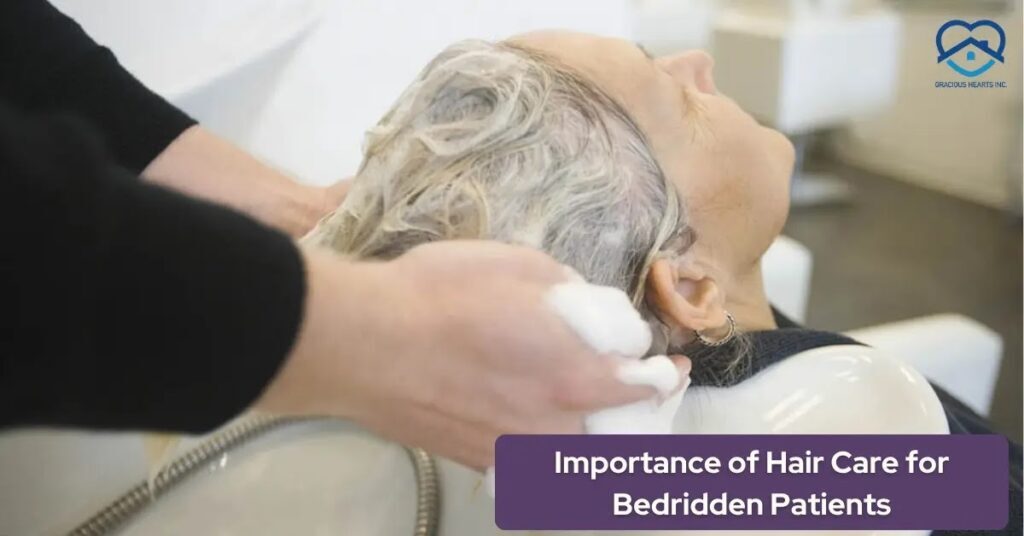
Maintaining hair hygiene for a bedridden person is essential for scalp health, overall hygiene, comfort, and dignity.
1. Protect Scalp Health and Prevent Complications
The scalp naturally produces oils, but in immobile patients, sweat, sebum, and debris can accumulate.
It increases the risk of skin irritation, bacterial or fungal infections, and odor.
In addition, hair rubbing against bedding can lead to tangling, matting, or minor abrasions, which may worsen discomfort or create entry points for infection.
Gentle hair washing and scalp massage improve blood circulation and keep follicles healthy.
2. Maintain Hygiene and Reduce Health Risks
Bedridden individuals are at higher risk of secondary infections from poor personal hygiene.
Hair washing in bed reduces bacteria and sweat accumulation, especially when using basins, no-rinse shampoo caps, or gentle flannel methods.
Regular hair hygiene also helps protect bedding and clothing from oils and dirt.
3. Promote Comfort, Dignity, and Emotional Well-Being
Maintaining neat, clean hair can improve mood, comfort, and confidence, even for someone confined to bed.
For caregivers, a mindful hair-washing routine is an opportunity to demonstrate respect and dignity.
Neglected hair may contribute to itchiness, discomfort, or social withdrawal.
4. Adapted Techniques for Bed-Bound Hair Care
Standard hair-washing methods aren’t always possible for bed bound persons, which is why bed-based basins, no-rinse shampoo caps, and gentle towel methods are essential tools.
Proper setup, like a warm room, waterproof sheets, pillows for support, and safe water temperature, ensures safety, comfort, and hygiene during the process.
Clean-up & Maintenance of Hygiene Environment
This phase covers cleaning the basin, disposing of water, replacing wet bedding and towels, and storing supplies for future use.
1. Clean and Disinfect the Hair-Washing Basin
Carefully remove the basin and pour the used water into a sink or designated disposal area.
Wash the basin thoroughly with warm, soapy water. Ensure all hair and shampoo residue is removed.
Disinfect the basin if the patient has sensitive skin, wounds, or is immunocompromised.
Dry the basin completely before storage to prevent bacterial growth or mold.
2. Dispose of Towels and Waterproof Pads Properly
Collect all wet or soiled towels, flannels, and waterproof pads. Replace them with fresh, dry linens immediately.
Launder used items with hot water and a gentle, fragrance-free detergent to prevent scalp infections and odors.
Inspect waterproof pads and sheets for any moisture or damage.
3. Restore Bedding and Maintain the Environment
Smooth out sheets, replace damp pillows or blankets, and ensure the patient is warm and comfortable.
Tidy the surrounding area by wiping surfaces, drying any spills, and removing clutter.
4. Organize and Store Supplies
Return all tools, basin, pitcher, handheld sprayer, combs, and towels to their designated storage areas.
Separate clean and ready-to-use items from those that need laundering. Proper storage ensures that future hair-wash sessions are efficient and safe.
Caregiver Communication & Comfort Strategies
Thoughtful communication and gentle strategies help reduce anxiety, particularly for individuals with dementia or cognitive impairment.
1. Communicate Clearly and Calmly
Speak softly and clearly, using short, simple sentences.
Explain each step before doing it, which helps build trust and reassurance.
Effective communication supports caregiver hair wash best practices and reduces stress for the patient.
2. Manage Anxiety, Especially in Dementia Care
Individuals with dementia may find hair washing confusing or intimidating.
Offer small choices, such as background music or towel positioning, to give a sense of control.
3. Use Gentle Touch and Preserve Dignity
Begin with reassuring contact, such as a gentle hand on the shoulder.
Always narrate your actions. Expose only the areas necessary for washing.
4. Comfort-Focused Extras
Keep your shoulders warm with a towel or small blanket. Use a gentle scalp massage to clean and relax the patient.
Positive reinforcement: offer praise or a calming phrase. Simple styling afterward can enhance comfort.
Common Mistakes & How to Avoid Them
Understanding common errors and how to prevent them ensures the process is safe, hygienic, and dignified.
1. Using Too Much Shampoo
Applying excessive shampoo creates too many suds. This situation makes it difficult to rinse thoroughly and leave residue on the scalp.
Use a small, pea-sized amount of mild shampoo. Focus on the scalp rather than the hair ends.
Rinse completely until the water runs clear. Controlled use protects scalp health and makes rinsing easier.
2. Improper Bed Protection
Skipping waterproof sheets or misplacing towels can result in wet bedding, discomfort, and extra cleanup.
Place a waterproof pad under the head and shoulders, layer towels over it, and ensure any drainage flows into a bucket.
3. Using Water That’s Too Cold or Too Hot
Water that is too cold can cause chills, while hot water can burn sensitive skin.
Always test water temperature with your inner forearm or a thermometer. Keep it warm but comfortable, and cover the patient’s shoulders to maintain body heat.
4. Leaving Hair Damp or Incompletely Dried
Damp hair can cause tangles, scalp irritation, and discomfort. After rinsing, pat hair gently with a towel. Avoid rubbing.
If appropriate, use a low-heat hair dryer at a safe distance, then comb to remove tangles.
5. Rushing the Hair Wash
Hurrying through the process can create anxiety, skip essential steps, or compromise cleanliness.
Take your time, explain each step, and work calmly. A measured pace improves both hygiene and emotional comfort.
6. Neglecting to Check the Scalp and Surrounding Skin
Ignoring the scalp and pillow area can overlook early signs of redness, irritation, or pressure sores.
After washing, gently inspect the scalp, neck, and surrounding areas for any abnormalities.
Frequently Asked Questions (FAQs)
1. How often should you wash a bedridden person’s hair?
For most bedridden patients, washing 1 – 2 times per week is sufficient, but frequency can vary depending on scalp health, hair type, and personal hygiene needs. Overwashing may irritate the scalp, while under-washing can lead to odor, oil buildup, or discomfort.
2. What’s the easiest way to wash someone’s hair in bed without making a mess?
Use an inflatable shampoo basin or a no-rinse shampoo cap, place a waterproof pad under the head, and keep towels handy to catch drips. Working slowly and using a pitcher or handheld sprayer helps control water flow and maintain cleanliness.
3. How do you wash a bedridden patient’s hair if they can’t tolerate water?
Alternative methods include,
- No-rinse shampoo caps for quick, waterless cleansing.
- Dry shampoo to absorb oils and freshen hair.
- Towel or flannel method: dampen a washcloth and gently clean the scalp.
4. How can caregivers keep a patient comfortable and calm during hair washing?
Speak gently and explain each step clearly. Maintain a warm, comfortable environment and use a soft touch. Play calming music or use familiar scents to ease anxiety. Allow small choices, like towel placement or water temperature
5. How do hospitals and nursing homes wash patients’ hair in bed?
Facilities are often used,
- Inflatable shampoo basins or portable sinks.
- Warm water pitchers or handheld sprayers.
- No-rinse shampoo caps for patients who can’t tolerate a full wash.
- Staff are trained to maintain comfort, safety, and dignity throughout the process.
If you’re caring for someone who is bed‑bound, looking into a facility or service provider like Gracious Hearts Inc. is worthwhile.
6. What should you do if a dementia patient refuses to have their hair washed?
Stay calm and explain the process clearly. Give small choices to help them feel in control. Use no-rinse shampoo caps or towel methods when needed. Be patient and gentle.
Final Takeaway
Regular hair care for bedridden persons not only maintains cleanliness but also supports scalp health, overall well-being, and a sense of normalcy for the patient.
Approach the task with respect and a gentle touch. Communicate clearly to maintain the patient’s dignity.
Use warm water and protect the bed properly. Tools like inflatable basins, no-rinse shampoo caps, and waterproof pads help keep the process safe and hygienic.
Incorporating soothing elements like calm pacing, familiar music, and consistent routines can reduce anxiety, particularly for patients with dementia or limited mobility.
By following these methods, caregivers can maintain cleanliness, enhance comfort, and provide compassionate care for bedridden patients.
