
Short Term Stay Assisted Living for Seniors: Complete Guide
Recovering after surgery, caring for an aging parent, or needing a temporary break from caregiving can become overwhelming.
That is why many families choose short term stay assisted living for recovery, respite care, and temporary support with professional help included.
Short term stay assisted living provides temporary housing and care for anywhere from 7 to 90 days. These temporary assisted living stays often include chef-prepared meals, medication management, personal care, housekeeping, and daily assistance.
In most cases, the cost of short term assisted living ranges from $100 to $300 per day, based on the location, level of care, room type, and community amenities.
In this guide, you will learn what short term stay assisted living is, what services are included, how much they cost, if Medicare helps cover expenses, and how to choose the right community.
Now, let’s dig deeper!
What is Short Term Stay Assisted Living?
Short term stay assisted living is temporary senior care that lets older adults stay in an assisted living community for a short time without moving in permanently.
It’s for seniors recovering from surgery, adjusting after a hospital stay, giving caregivers a break, or trying assisted living before a long-term move.
Short term assisted living brings housing, meals, personal support, supervision, and community life together in one place.
Short-term stay assisted living can appear under different names, which often confuses families. Common terms include respite care, temporary assisted living, trial stay, recovery stay, short-term senior care, and short-term memory care.
Short Term Assisted Living vs Long-Term Assisted Living
At a glance, short-term and long-term assisted living can look very similar because both provide care, meals, housing, and access to community life.
| Feature | Short-Term Assisted Living | Long-Term Assisted Living |
| Purpose | Temporary care for recovery, respite, or trial stay | Ongoing care as part of everyday life |
| Use Cases | Recovery after surgery or illness, family caregiver respite, hospital/rehab discharge, trial stay | Seniors needing regular help with daily activities, cannot live safely alone |
| Best For | Temporary support without committing to a permanent move | For a permanent move and continuous assistance |
| Duration | Short-term, weeks to a few months | Long-term, permanent, or indefinite |
| Goal | Help for now, not forever | Support an ongoing lifestyle |
Who Needs Short Term Stay Assisted Living?
Understanding who benefits most can help families decide if a short-term stay is the right choice for their loved one.
1. Seniors Recovering After Surgery, Illness, or Hospital Discharge
Temporary stays are ideal for seniors transitioning from a hospital or rehab. Services often include:
- Medication management and reminders
- Assistance with bathing, dressing, and mobility
- Nutritious meals and dietary accommodations
- Housekeeping, laundry, and daily upkeep
- Activities for seniors in assisted living to maintain mental and physical wellness
2. Family Caregivers Who Need Respite Care
Short-term assisted living provides respite care. It gives caregivers time to rest, travel, or handle emergencies without worry. During a respite stay, seniors receive:
- 24/7 professional supervision
- Personal care assistance and daily support
- Meals, housekeeping, and social engagement
3. Seniors Trying Assisted Living Before a Permanent Move
During a trial stay, residents can:
- Test daily routines, meals, and activities
- Experience the level of support available for personal care
- Evaluate the community atmosphere and staff-resident interactions
4. Emergency Situations or Temporary Family Travel
Short-term assisted living also provides a solution during unexpected events or family travel. Situations include:
- Sudden illness or hospitalization of a caregiver
- Family emergencies requiring temporary relocation
- Home repairs or natural disasters
What Is Included in a Short Term Stay Assisted Living Program?
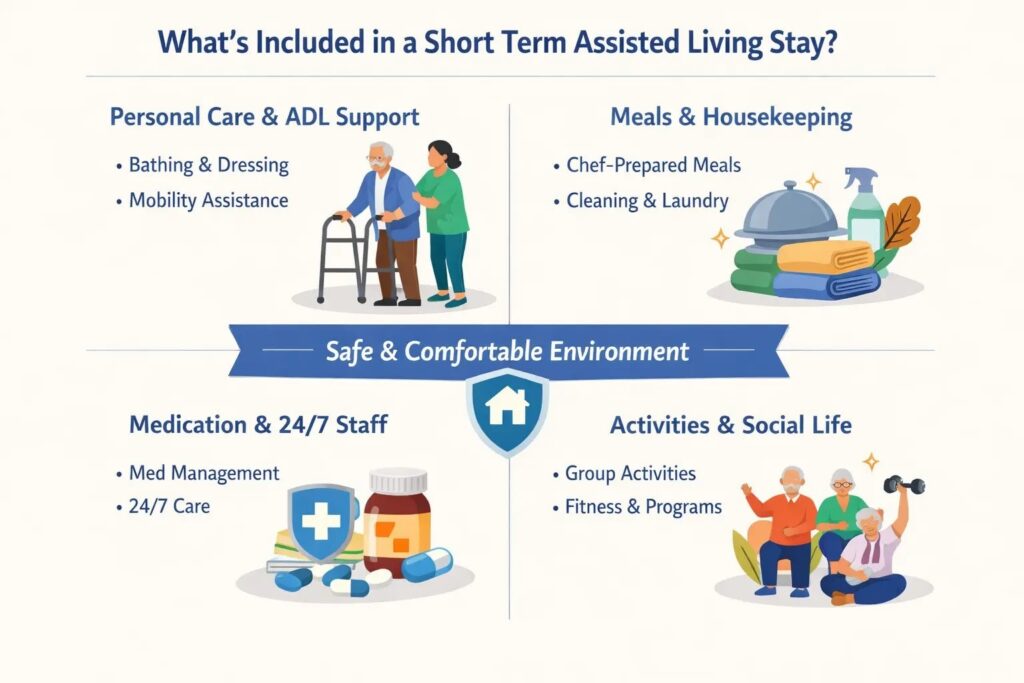
This section breaks down what residents typically receive during a short-term stay.
1. Personal Care and Daily Living Support
Temporary stays prioritize assistance with activities of daily living (ADLs). Services include:
- Bathing, dressing, grooming, and toileting assistance
- Mobility support for walking, transferring, or using adaptive equipment
- Supervision of daily routines to prevent accidents
2. Meals, Housekeeping, Laundry, and Transportation
Short-term assisted living combines hotel-style amenities that make temporary living stress-free. Common offerings:
- Chef-prepared meals designed for senior nutrition
- Housekeeping and laundry services
- Fully furnished apartments or suites
- Transportation to appointments or errands
3. Medication Management and 24/7 Staff Support
A cornerstone of short-term stays is medical oversight and continuous supervision. Services include:
- Medication reminders and administration
- Monitoring of health and vital signs
- 24-hour staff availability
- Secure, supportive environment
4. Social Activities, Wellness Programs, and Community Access
Temporary stays also promote engagement, wellness, and connection. Activities often offered:
- Group recreational programs
- Wellness initiatives, including gentle exercise, cognitive activities, or therapy sessions
- Access to communal dining and lounges
- Participation in the same amenities
How Long Can You Stay in Short Term Assisted Living?
Understanding stay durations and minimum stay policies helps families plan effectively.
1. General Stay Durations
Short-term assisted living programs are built for flexibility. It accommodates a wide range of temporary care needs:
- Weekend stays: Ideal for brief caregiver breaks or minor recovery needs
- 1 – 2 weeks: Suitable for short-term rehabilitation or temporary senior care
- 30 days: Common for more extensive post-surgery recovery or trial living before a long-term move
- Several months: For ongoing transitional care after hospitalization or illness
2. Minimum Stay Requirements
Some communities offer flexible short-term stays, while others have minimum stay rules to manage staff, room availability, and care needs.
Senior Living Residences often allow stays of a few days to a week for temporary support.
Charter Senior Living locations may require a minimum 30-day stay, especially for memory care or higher-level services.
How Much Does Short Term Stay Assisted Living Cost?
Short-term stays usually range from $99 to $300+ per day. The cost reflects the level of support and comprehensive care for the elderly, amenities, and location.
| Tier | Daily Cost Range | What It Covers |
| Lower‑budget | ~$125 – $175 | Basic daily care, standard meals, & smaller communities |
| Mid‑range | ~$175 – $250 | Daily living support, meals, housekeeping, activities |
| Premium / High‑cost | ~$250 – $350+ | Memory care, post‑surgery support, larger suites, regional pricing |
Does Medicare Pay for Short Term Stay Assisted Living?
Understanding the distinction between medical coverage and assisted living costs is essential.
1. What Medicare Usually Covers & What It Doesn’t
Medicare does not cover everyday living costs in assisted living, such as meals, housing, or personal care, since these are not medical services.
It may cover certain medical treatments, such as doctor visits, therapy, or medical equipment, which are billed separately.
2. Other Ways Families Can Pay
Since Medicare coverage is limited, families explore alternative funding options:
Private Pay: Most short-term stays are out-of-pocket; offers flexible duration and services.
Medicaid: May cover personal care via waivers; room and board are usually excluded.
Long-Term Care Insurance: Can cover stays if the policy includes respite or assisted living benefits.
Veterans Benefits: Programs like Aid and Attendance help eligible veterans or surviving spouses.
State/Local Senior Programs: Grants or subsidies may be available; coverage and eligibility are limited.
Short Term Stay Assisted Living vs Other Senior Care Options
The right choice depends on the level of medical support needed, the level of supervision required, cost considerations, and flexibility.
| Care Type | Best For | Cost | Flexibility | Focus |
| Short Term Assisted Living | Recovery, caregiver break, trial stays | Medium | High | ADL support, meals, social engagement |
| Home Care | Aging in place with part-time help | Medium | Medium | Personal care, in-home support |
| Nursing Home | Intensive medical care | High | Low | 24/7 nursing, rehab, complex care |
| Rehab Center | Post-surgery/hospital recovery | High | Medium | Physical & occupational therapy |
| Short-Term Memory Care | Dementia/Alzheimer’s support | High | Low | Cognitive care, secure environment |
How to Choose the Right Short Term Stay Assisted Living Community
This guide provides a step-by-step framework to help families evaluate options confidently.
1. Ask the Right Questions Before Booking
Start by checking availability and policies, find out if the dates you need are open, how long stays can be, and whether there are any deposits, fees, or penalties.
Next, ask about care and support services: what daily help is included, like bathing, dressing, meals, and medication, and how medication is managed. Make sure the facility provides a written care plan and updates it regularly.
Staffing is another key point; ask about staff-to-resident ratios, whether help is available 24/7, and if staff are trained to assist with mobility or memory care needs.
Also, check safety and emergency measures: how emergencies are handled, whether fall alerts are in place, and if the environment is secure for residents with memory issues.
Finally, ask about intake and discharge; what documents you’ll need, and how discharge is coordinated for going back home or moving to long-term care.
2. Look for Signs a Community Is a Good Fit
Check if the rooms and common areas are clean and well-kept, with safe and accessible features like bathrooms and handrails.
Pay attention to how staff interact with residents; are they respectful, attentive, and genuinely engaged? Notice how they communicate about daily routines and care.
See if residents have activities to keep them active and social, like group meals, exercise, or hobby programs, and if they seem happy and connected.
Finally, ask about care plans, services, billing, and emergency procedures, and see if the facility shares information clearly and takes responsibility.
What to Pack and Prepare for a Short Term Stay Assisted Living?
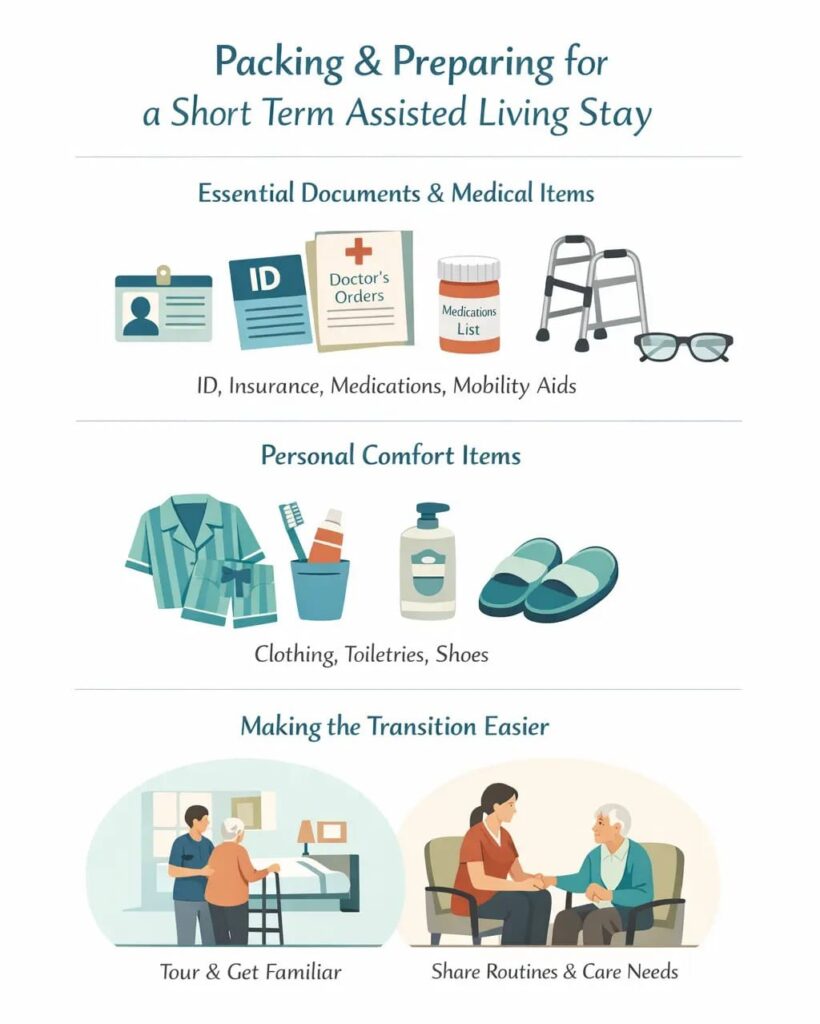
Focus on essential items, medical needs, and emotional support to make the stay positive.
1. Essential Documents and Medical Items
When preparing for a stay, bring important paperwork like your ID, insurance card, doctor’s orders, medication list, and advance directives.
Don’t forget any tools that help you move and stay independent, such as walkers, canes, hearing aids, or glasses.
2. Personal Comfort Items
Pack comfortable clothes that match the season, like pajamas, underwear, and shoes. Bring basic toiletries such as a toothbrush, toothpaste, soap, shampoo, deodorant, and any grooming items you use.
3. Tips to Make the Transition Easier
Start by showing the new resident around slowly, visiting their room, common areas, and activity spaces.
Spend time with the staff, sharing routines, likes, and any special care needs to keep the resident comfortable and independent.
FAQs
1. How long can someone stay in short term assisted living?
Short term stays usually range from 7 days up to 90 days, based on the community. Some facilities offer flexible stays for a weekend, one to two weeks, or even several months, while others may require a minimum stay of 30 days.
2. Does Medicare pay for short term assisted living?
Medicare generally does not cover room and board in assisted living facilities. It may pay for eligible medical services like nursing care, therapy, or post-surgery rehabilitation if provided during the stay.
3. Is short term assisted living the same as respite care?
Yes, short term assisted living is often considered respite care. It provides temporary support for seniors when families need relief, during recovery, or for a trial period before moving in long-term.
4. Can someone stay temporarily after surgery?
Yes, short term stays are ideal for seniors recovering from surgery, illness, or hospital discharge. Facilities provide meals, medication management, daily care assistance, and 24/7 supervision.
5. Is memory care available for short-term stays?
Some assisted living communities offer short-term memory care for seniors with Alzheimer’s or dementia. These stays provide a secure environment, cognitive support programs, and trained staff.
6. Do all assisted living communities offer trial stays?
No, while many communities offer trial or short-term stays, some require a minimum stay (often 30 days). Families should confirm policies and availability.
Conclusion
Short term stay assisted living offers seniors and their families a safe, supportive, and flexible solution. It can be for post-surgery recovery, a caregiver break, or a trial stay before a permanent move.
With personal care, meals, medication management, and engaging activities, these temporary stays provide peace of mind.
Asking the right questions and understanding services and costs helps families make confident decisions.
Therefore, best of luck!