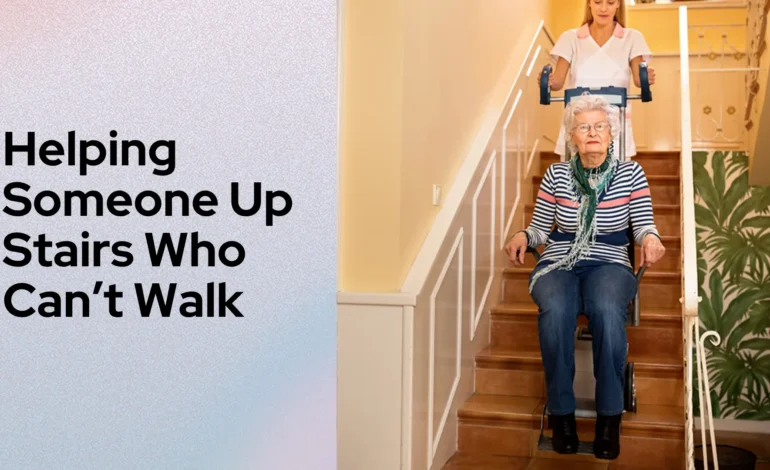
How to Get Someone Up Stairs Who Can’t Walk Safely: Step-by-Step Guide
According to the CDC, ~18.2% of U.S. adults report having “any difficulty walking or climbing steps.”
So, if you’re wondering how to get someone up stairs who can’t walk, you’re not alone.
Moving a non-ambulatory or wheelchair-bound individual upstairs has serious safety risks, for both the person being assisted and the caregiver.
The safest ways to do this include using a sturdy stair chair, a mobility lift, or a two-person assist.
Always support the person’s torso, stabilize their legs, and move slowly to prevent falls. When available, a medical transport chair offers the safest, most controlled ascent.
In this guide, we’ll cover manual lifting techniques, mechanical aids like stair lifts and portable ramps, caregiver training, emergency options, and long-term accessibility solutions.
Hencreforth, let’s get started!
Assess the Person’s Condition Before Moving Them
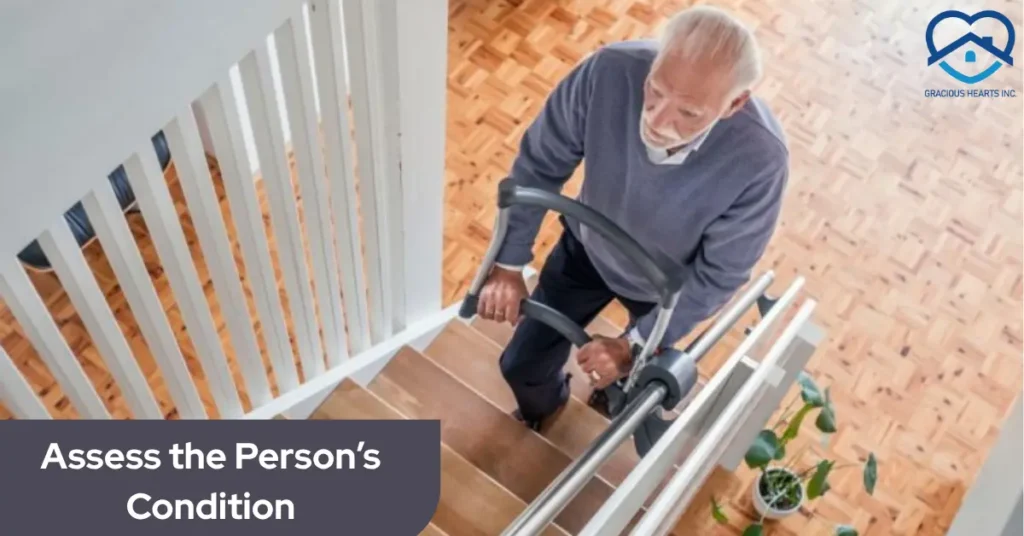
Before trying to move someone upstairs, start with a thorough mobility assessment to understand their risks and abilities.
1. Assess their level of mobility
Can they partially bear weight, or are they non-weight-bearing?
Do they have any voluntary leg movement or the ability to assist with transfers?
This helps determine whether a manual lift, chair, or lift device is appropriate.
2. Evaluate upper-body strength
Ask if they can push off from a surface, brace themselves, or hold on during movement.
Weak arms or shoulders make manual lifting much harder and more dangerous, for both the person and the caregiver.
Next, check for balance issues. For example, if a person struggles to stay steady when standing or shifting weight, that raises fall risk.
In cases where the individual has a higher body weight, understanding proper techniques for how to help an overweight elderly person off the floor becomes especially important.
The Berg Balance Scale is a validated test used by therapists to assess balance deficits.
3. Consider pain or injury
Any recent surgery, fractures, dizziness, or medical conditions can influence whether it’s safe to move.
According to safe‑handling guidelines, risk assessments must include pain, fatigue, and fall history.
4. Know when NOT to move someone
If the person reports severe pain, has signs of spinal injury, or presents sudden instability, do not attempt to lift. These scenarios call for caution.
And importantly, understand when to call for emergency help – if vital signs are unstable, there’s suspected head, spinal, or serious limb injury, or you’re not confident in their physical stability, call medical professionals rather than risk a fall or further harm.
Essential Safety Gear You Should Use
Key tools include,
1. Transfer / Gait Belts: Provide a secure hold to guide the person without pulling on clothing or limbs. Ideal for short transfers and partial assistance.
2. Stair-Climbing Wheelchairs / Stair Chairs: Allow controlled movement over stairs. Reduces strain on caregivers and ensures safety for heavier or non-ambulatory individuals.
3. Evacuation Chairs: Designed for emergencies, they enable quick and safe descent in urgent situations.
4. Slide Boards: Help bridge gaps between surfaces (bed to chair.
5. Portable Ramps: Offer a smooth path over small steps or thresholds; good for temporary solutions or short stairs.
6. Mobility Harnesses / Slings: Distribute weight safely when using hoists or lifts.
7. Lift Chairs and Stair Lifts: Provide long-term, stable, and safe solutions for daily use.
Tip: Always match equipment to the person’s mobility, the staircase layout, and ensure caregivers are trained before use.
How to Get Someone Up Stairs Who Can’t Walk Using a Transfer Belt
According to a study published by Fogel et al., transfer belts reduce the force on caregivers’ hands and improve posture, but they do not fully eliminate spinal load.
Here’s a step‑by‑step guide on how to get someone up stairs who can’t walk using a transfer (gait) belt.
Step 1: Positioning
Begin by placing the gait belt gently around the person’s waist, over their clothes. Not on bare skin.
Step 2: Securing the Belt
Fasten the buckle securely. You should be able to slide two fingers between the belt and your body to ensure it’s snug but not too tight.
Step 3: Angle and Leverage
Stand facing them with a wide, staggered stance, bend your knees, and keep your back straight. This posture helps maintain good body mechanics and reduces strain on your back.
Step 4: Proper Lifting Technique
Use a gentle rock-and-pull motion to help them rise. Do not lift using only the belt. Use your leg muscles, not your back.
Step 5: Two‑Person Team vs One Person
If possible, use two caregivers. One holds the belt, the other supports the torso or legs.
For a solo caregiver, stay very close and keep your hands steady.

How to Get Someone Up Stairs Who Can’t Walk With a Two‑Person Carry
Here’s a step‑by‑step explanation of how to get someone up stairs who can’t walk with a two‑person carry, with safety considerations.
Step 1: Two-Person Seated Carry
Both caregivers kneel or squat on either side of the person, raise them to a sitting position.
Then, link arms behind their back and around their knees. This is known as a “two‑handed seat.”
Keep your back straight, lift together using your legs, and walk slowly. Coordinate every step.
Step 2: Interlocked‑Arms Method (“Swing Carry”)
One caregiver supports the person’s torso from behind, while the other reaches under their knees.
Link (interlock) your forearms behind their back and create a secure cradle. Rise together in a smooth motion, keep your weight close, and avoid twisting.
Firefighter Carry (Emergency Only)
In a true emergency, you might perform a “fireman’s carry.”
Place the person across one shoulder. This technique is risky: avoid it unless there’s no other choice.
Many first-responder guides strongly advise against using it except when necessary.
When This Method Is Safe vs. Unsafe
This method is safe when:
- The person is light enough to carry without strain.
- You have good coordination, experience, or training.
- The staircase is wide and you can move slowly without rushing.
Unsafe when:
- The person has a suspected spine, neck, or serious injury.
- You feel out of control, tired, or unbalanced.
- There are too many steps, or the stairs are narrow or steep.
How to Move Someone Upstairs Using a Stair‑Climbing Wheelchair
Using a stair‑climbing wheelchair, also called a track chair or emergency stair chair, can make moving someone upstairs much safer and easier.
Follow these steps to ensure smooth and secure operation.
1. Choose the Right Type
- Motorized Stair‑Climbing Wheelchair: Powered tracks help climb stairs with minimal effort. One caregiver can operate it safely, and most models include automatic braking. Supports range from 135 kg to 220 kg.
- Manual Stair‑Climbing Chair: Lighter and more portable, but requires an attendant to guide or push. Ideal for short-term or occasional use.
2. Know When to Use It
This type of device is suitable for individuals who can sit upright and maintain their balance. It works best on straight, wide, and stable staircases.
Steep, narrow, spiral, or slippery stairs should be avoided unless the device is specifically designed and rated for them.
3. Consider Cost and Rentals
Motorized chairs are more expensive than manual ones.
Rental is a cost-effective solution for temporary or emergency needs, often including short-term support or training.
4. Follow Key Safety Practices
- Always secure the person with a safety belt or harness before moving.
- Align the chair’s tracks or wheels carefully with the stairs.
- Practice a few steps before attempting a full flight.
- Check brakes, tracks, and batteries regularly (for motorized models).
Using a Portable Stair Ramp
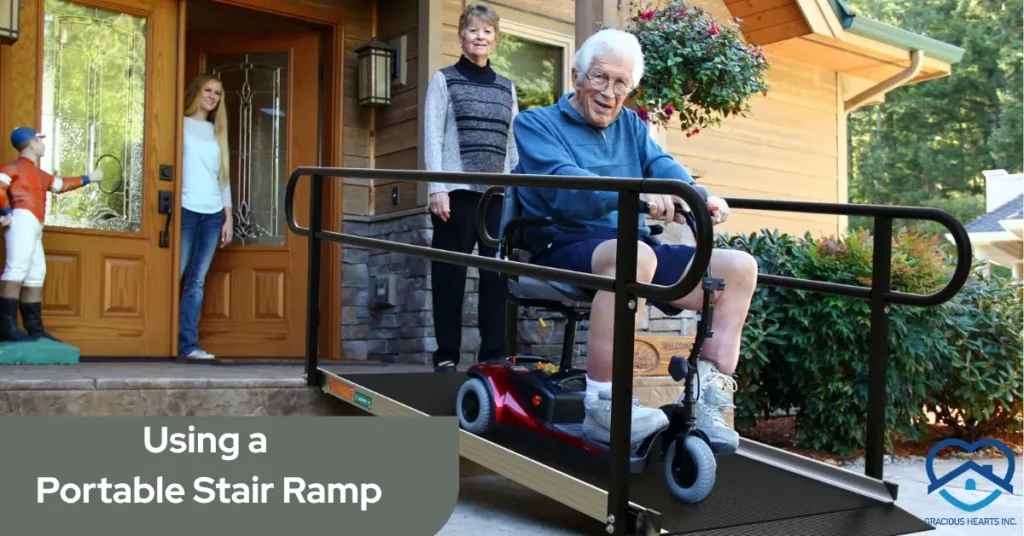
Portable stair ramps can make stair navigation safer for wheelchair users when used correctly.
They also include modular ramps or foldable aluminum ramps as effective alternatives for temporary or emergency access.
Follow these steps to ensure safety and efficiency.
1. When It Works
This type of ramp works best for small rises or shallow stairs, normally up to about 45 cm in height.
It is ideal for straight, stable, and wide staircases with gentle slopes, around 1:12. Make sure to choose a ramp that is wide enough for a wheelchair, with a minimum width of about 91 cm, and has a nonslip surface.
Portable, modular, and foldable aluminum ramps are convenient options when a permanent stair lift is not available.
2. When It Does NOT Work
Portable or modular ramps are not suitable for steep, high, or multiple steps. In these situations, permanent ramps or stair lifts are a safer option.
They should also be avoided on uneven, soft, or unstable surfaces, as these can cause slipping or tipping.
Additionally, curved, spiral, or very narrow staircases are generally unsafe for portable or modular ramps.
3. Safety Limitations
When using a ramp, always check the slope and weight capacity. The ramp must be able to support the combined weight of the wheelchair, the user, and any caregiver assistance.
Make sure there are stable, level landings at both the top and bottom of the ramp. Secure the ramp so it does not wobble or shift while in use.
Keep in mind that portable and foldable ramps rarely have full handrails, so consider adding extra support for longer or higher ramps.
How to Get Someone Upstairs Who Can’t Walk in an Emergency
Follow these steps to protect both the person being assisted and the caregiver.
Step 1: Activate the Emergency Plan
Immediately follow your building’s emergency plan.
Call 911 and clearly explain that a mobility-impaired person needs assistance. Provide their floor, exact location, and any accessibility details.
If immediate evacuation isn’t possible, move the person to a stairwell refuge point or designated safe area.
Step 2: Use an Evacuation Chair
An evacuation chair is designed to transport non-ambulatory individuals safely down stairs.
Secure the person with straps, deploy the tracks, and guide the chair slowly. Only trained caregivers should operate the chair, and only on suitable staircases.
Step 3: Temporary Measures if Equipment or Help Fails
Use a manual carry only as a last resort. Prioritize keeping the person stable and minimizing strain on caregivers.
Move the individual to a stairwell refuge point while staying in continuous communication with emergency responders.
Provide clear updates on your location, the person’s condition, and any obstacles.
Professional Help: When to Call a Medical Transport Service
When moving someone who can’t walk, knowing when to involve professional medical transport is crucial for safety.
1. Determine Medical Necessity
Use a medical transport service if the person has serious mobility limitations, recent surgery, spinal injuries, fractures, or chronic conditions that make lifting or stair navigation risky.
Professionals are trained in safe transfer techniques, reducing the risk of falls or injury for both the patient and caregiver.
2. Review Costs and Insurance Coverage
Many insurance plans cover non-emergency medical transport when it’s medically justified.
Costs vary by service type, distance, and urgency. Non-emergency home transfer services are often more affordable than emergency ambulance transport.
3. Understand Available Service Types
- Ambulance Services: Best for urgent medical needs or high-risk patients.
- Non-Emergency Wheelchair Transport: Equipped with lifts and trained staff for safe home-to-home or home-to-clinic transfers.
- Stretcher or Gurney Transport: For patients who must remain fully horizontal.
- Professional Caregiver Assistance: Some agencies provide trained personnel to safely lift and transfer individuals, including stair navigation.
Alternatively, if you prefer personalized in-home support, Gracious Hearts Inc. offers caregivers trained in safe transfers, stair navigation, and mobility assistance.
Home Modifications to Help Move Someone Upstairs Long-Term
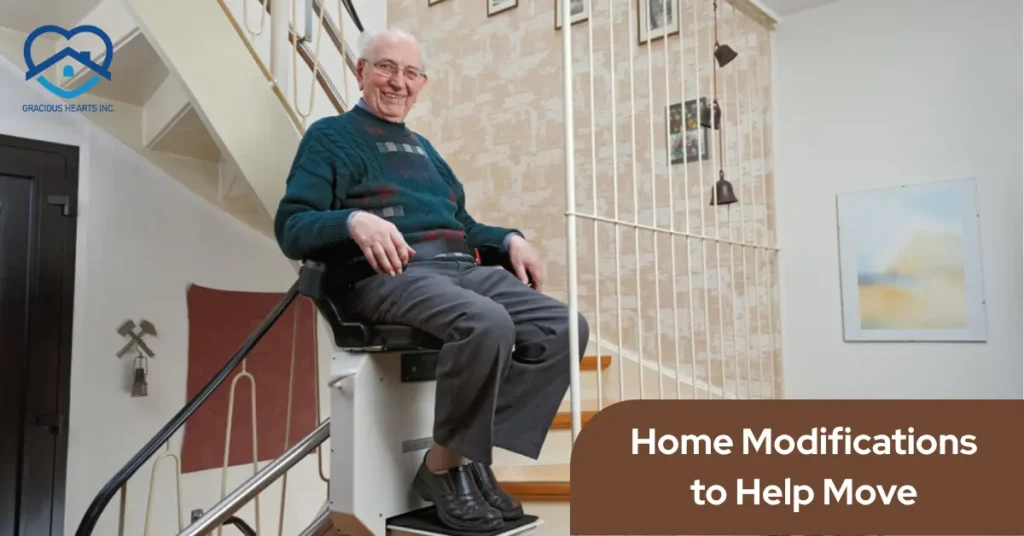
For individuals who cannot walk, long-term home modifications can make moving upstairs safer, easier, and more independent for the person.
1. Install Stair Lifts
Stair lifts are motorized chairs that travel along rails. It allows seated movement up and down stairs safely.
Modern models include safety belts, swivel seats, and remote controls, suitable for straight or curved staircases.
2. Consider Ceiling or Overhead Lifts
Ceiling lifts or track-mounted hoists enable transfers from bed to stairs or between floors without manual lifting. Ideal for individuals with very limited mobility.
According to biomechanical studies, ceiling or overhead patient lifts significantly reduce spinal and joint loading compared with manual lifting transfers.
3. Add Ramps and Widen Staircases
Portable, modular, or aluminum ramps provide safe access for wheelchairs and mobility devices.
Widening staircases improves maneuverability and space for caregivers assisting the individual.
4. Reinforce Handrails
Strong, continuous handrails on both sides of the stairs provide extra stability and support for caregivers and the person using the stairs.
5. Consider Long-Term Savings
Investing in lifts, ramps, and structural modifications may have higher upfront costs but reduces injury risk and caregiver strain.
Alternative Solutions if Moving Them Upstairs Is Not Safe
If moving someone upstairs is too risky, there are practical alternatives to maintain safety and independence at home.
1. Relocate the Bedroom Downstairs
Moving the person’s bedroom to the ground floor eliminates the need to use stairs daily. This simple adjustment reduces fall risk.
2. Use Temporary Medical Beds
Adjustable medical beds support proper positioning and comfort.
Features like side rails and tilt functions make care and mobility safer for both the individual and caregiver.
3. Modify Bathrooms and Living Spaces
Install walk-in showers, grab bars, and raised toilet seats to enhance independence and reduce accidents.
Widen doorways and create open layouts to accommodate wheelchairs or walkers safely.
4. Hire In-Home Care Services
Professional caregivers, such as those provided by Gracious Hearts Inc., are trained to handle these tasks safely, ensuring comfort, dignity, and proper technique for non-ambulatory individuals.
Learn how to hire caregivers, so you can hire the experienced with heavier or less mobile individuals. They can ensure safety and confidence for both the person being assisted and their family.
5. Rent Lift Assist Devices
Portable lift assist devices provide temporary support for transfers when stairs cannot be avoided.
Ideal for short-term solutions or while planning permanent home modifications.
Frequently Asked Questions
1. How do you safely lift someone who can’t walk?
Use proper lifting techniques such as a two-person carry, a transfer belt, or a stair climbing wheelchair. Always support the torso, stabilize the legs, and move slowly.
2. Is it legal to carry someone up stairs in an apartment?
Yes, it is generally legal to carry someone up stairs in an apartment, but you must ensure safety and avoid creating hazards. Liability may arise if improper techniques cause injury.
3. What is the safest way to get someone upstairs?
The safest methods include stair lifts, evacuation chairs, stair climbing wheelchairs, or professional transport services. Manual carrying is only recommended when trained and as a last resort.
4. What equipment helps move disabled people up stairs?
Essential equipment includes stair-climbing wheelchairs, evacuation chairs, transfer belts, portable ramps, and lift assist devices. Each option should match the user’s mobility level and staircase type.
5. When is it unsafe to move someone upstairs?
Do not attempt to move someone if they have spinal injuries, fractures, severe weakness, or pain, or if the staircase is narrow, steep, or unstable. In these cases, call professionals or use safe alternatives.
6. Should you call 911 to help someone upstairs?
Call 911 if there is an emergency, such as a fall, fire, or sudden medical issue. Provide details about the person’s location, mobility limitations, and any hazards for a safe, rapid response.
In Summary
Helping someone who can’t walk move safely upstairs requires careful planning.
Whether you use a stair climbing wheelchair, evacuation chair, transfer belt, or professional transport service, safety must always come first.
Long-term solutions, such as stair lifts, ceiling lifts, or ramps, can improve independence and reduce the risk of injury.
Always assess the person’s condition, the staircase, and available resources before attempting any move.
With careful preparation and the right support, families and health professionals can confidently manage mobility challenges and maintain a safe, accessible home environment.
