How to Wipe an Elderly Person on the Toilet Safely & With Dignity
Many caregivers struggle with assisting seniors in the bathroom, but learning how to wipe an elderly person on the toilet safely can prevent infections, skin irritation, and discomfort.
Wipe an elderly person on the toilet by supporting their balance, cleaning from front to back, and using moist wipes to protect sensitive skin.
Performing the cleaning gently, checking for redness or sores, and washing your hands before and after care are essential steps to maintain hygiene and safety.
Proper toileting care is about preserving dignity, promoting independence, and reducing the risk of urinary tract infections (UTIs) and pressure injuries.
In this comprehensive guide, we’ll cover preparing with gloves, wipes, and privacy measures; step-by-step wiping techniques for men and women; and using supportive tools like bidets or long-handled wipers.
Henceforth, let’s get started!
Why Proper Wiping Matters for Elderly Care
Proper wiping after toileting is a vital aspect of senior care that protects health, preserves dignity, and supports both the elder and the caregiver.
1. Preventing Infection Risks
According to a 2023 study published on PubMed, those diagnosed with incontinence had five times more UTIs than those without incontinence.
Careful wiping from front to back and maintaining clean perineal care reduces the risk of bacteria spreading and causing infections.
Moist wipes or gentle cleansing solutions can help protect delicate skin while lowering UTI risk.
2. Protecting Skin Integrity
According to Incontinence‑Associated Dermatitis in Older Adults, prolonged contact with urine or feces can lead to incontinence‑associated dermatitis (IAD) – redness, maceration, erosion, and painful skin lesions.
Proper wiping, combined with routine skin checks and the use of barrier creams, helps prevent redness, irritation, and painful sores.
3. Preserving Dignity and Emotional Well-Being
Respectful care preserves the elder’s dignity, reduces shame, and fosters trust between caregiver and senior.
Maintaining privacy, explaining each step, and allowing the senior as much control as possible support their emotional well-being.
4. Reducing Caregiver Stress and Improving Outcomes
By preventing infections and skin injuries, caregivers avoid emergency interventions and reduce the likelihood of medical complications.
Clear routines, supportive tools, and knowledge of best practices create safer, more predictable care environments.
Essential Supplies for Wiping an Elderly Person on the Toilet
Having the right supplies makes the process easier, more effective, and more comfortable for both the caregiver and the senior.
Toilet-Related Hygiene Essentials
1. Flushable or Moist Wipes
Flushable wipes for adults gently cleanse sensitive skin and reduce friction. It helps prevent irritation and incontinence-associated dermatitis (IAD).
Choose alcohol-free, fragrance-free wipes to avoid dryness or allergic reactions.
2. Toilet Paper
Soft, multi-ply toilet paper works best for gentle cleaning.
For seniors with incontinence, lightly dampening tissue can improve comfort and cleaning efficiency.
3. Toilet Tissue Wand / Long‑Handled Wiper
These aids allow seniors or caregivers to reach sensitive areas with minimal bending or twisting.
They are particularly useful for older adults with arthritis, limited mobility, or reduced dexterity.
Use a fresh section of tissue for each pass and disinfect the wand after use.
4. Disposable Gloves (PPE)
Gloves are essential to protect both the caregiver and the senior from bacterial exposure.
Always wash your hands before putting on gloves and immediately after removing them. Dispose of single-use gloves properly; never reuse.
5. Barrier Creams
Applying a thin layer of barrier cream shields skin from prolonged exposure to moisture.
These creams are especially useful when disposable continence products are in use.
6. Handwashing & Sanitizing
Even when gloves are used, wash hands thoroughly with soap and water before and after care, or use an alcohol-based hand rub when appropriate.
Safety Equipment That Simplifies Wiping
1. Grab Bars
Sturdy grab bars near the toilet help seniors maintain balance and reduce the risk of falls during transfers.
2. Raised Toilet Seats
Raised seats reduce the effort needed to sit and stand.
3. Bidet Attachments
Handheld or built-in bidets gently rinse the perineal area.
They reduce friction and minimize skin irritation, which makes them especially useful for fragile skin or seniors with difficulty wiping manually.
4. Portable Commode
For seniors with severely limited mobility, a portable commode provides a safe, stable, and accessible option.
Safety Precautions Before Wiping an Elderly Person
A few thoughtful steps can significantly reduce fall risk, protect skin health, and make the experience more comfortable.
Preventing falls is important because bathroom slips are very common for older adults.
Keep their position stable. Place the wheelchair, commode, or chair close to the toilet.
Always lock the wheels. If you use a wheelchair or rolling commode, lock the brakes and adjust the footrests before helping them transfer.
Use gentle support. Hold them at the hips or use a gait belt. Do not pull under their arms..
Ask them to keep their feet flat, hold the grab bars, and follow your instructions.
Use disposable pads or underpads. They keep the seat and nearby surfaces dry and make cleanup easier.
Step-by-Step Guide: How to Wipe an Elderly Person on the Toilet
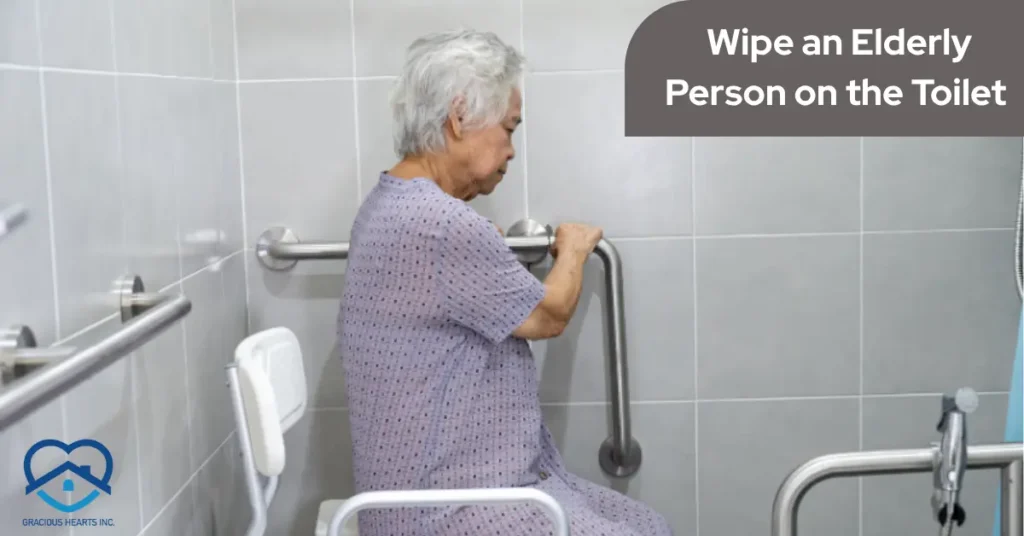
Below is a step-by-step process to follow.
Step 1: Prepare the Elderly Person
Ask for permission first. Make sure they are ready for help.
Explain each step in simple words. Speak calmly and tell them what you are about to do.
Ensure privacy and modesty. Close the door or the curtain. Cover the parts you are not cleaning.
Step 2: Position and Support Safely
Before wiping, check their balance. Keep their feet flat on the floor or on footrests. Use grab bars if needed.
If they need to stand, brace them safely. Support them at the hips or use a gait belt.
If they are in a wheelchair or commode, lock the wheels. This stops the chair from sliding or tipping during wiping.
Step 3: Begin the Correct Wiping Technique
Always wipe from front to back. This direction stops bacteria from moving toward the urethra.
It is especially important for women because it reduces the risk of UTIs.
Use several passes with clean sections of the wipe. Keep wiping gently until the wipe comes back clean.
Check for any residue or redness. Look for irritation, moisture, or early signs of skin breakdown.
Wiping Technique for Women
Female anatomy requires extra care because the urethra is close to the rectum, increasing the risk of UTIs.
- Gently separate the labia with one hand.
- Wipe front to back with each stroke, never back to front.
- Clean the urethral area, then the labial folds, then the perineum, and finally the anal area.
- Use soft, moisturizing wipes to avoid dryness or irritation.
- If the skin looks red or swollen, apply a barrier cream as recommended.
Wiping Technique for Men
Men also require gentle, systematic cleaning:
- Begin by exposing only the needed area to preserve dignity.
- If uncircumcised, retract the foreskin gently and clean underneath using light circular motions.
- Clean the shaft, scrotum, and perineum with downward strokes.
- Replace the foreskin afterward to prevent irritation.
- Finish by wiping the anal area last, using the standard front-to-back direction.
Step 4: Clean Sensitive Skin Carefully
Older adults often have fragile skin. Use soft and slow strokes. Do not rub or scrub.
Use alcohol-free and moisturizing wipes. They are gentle on the skin.
Avoid harsh soaps or strong fragrances. These products can upset the skin’s pH.
After Wiping: Post-Care Steps
Proper post-care protects the skin, prevents infection, and maintains the dignity and comfort of the senior.
1. Gently Dry the Area
Pat the skin dry with a soft towel or disposable tissue. Avoid rubbing, which can irritate delicate, aging skin.
Thorough drying helps prevent maceration and reduces the risk of incontinence-associated dermatitis (IAD).
2. Apply Barrier Cream if Needed
If the skin is moist, irritated, or showing early signs of redness, apply a thin layer of water-based barrier cream.
This protects against moisture and friction. Avoid heavy oil-based products, which can reduce the absorbency of pads.
For seniors using diapers or incontinence products, professional adult diaper change services can provide safe, hygienic assistance while reducing caregiver strain
3. Assist with Dressing
Encourage them to do what they can themselves, such as pulling up pants or adjusting garments, to support independence.
Confirm their stability and balance before standing to reduce fall risk.
4. Clean Up and Practice Hand Hygiene
Dispose of used wipes, gloves, and pads properly. Even “flushable” wipes are best discarded in the trash to avoid plumbing issues.
Remove gloves safely, turning them inside out, and wash your hands immediately. Handwashing with soap and water is preferred when hands are visibly soiled.
5. Manage Reusable Cloths or Towels
If you used washcloths or towels, place them in a closed laundry bag.
Wash on the hottest safe cycle recommended for the fabric, and dry thoroughly. Avoid shaking soiled linens to prevent the spread of bacteria.
6. Monitor and Document Skin Health
After care, check for redness, soreness, or irritation. Document any changes and alert a healthcare professional if you notice:
- Persistent redness or open sores
- Bleeding or unusual discharge
- Foul odor
- Signs of infection, such as fever or sudden confusion
Using a Bidet for Elderly Toilet Hygiene
Bidets are an effective, gentle solution for seniors who have difficulty with manual wiping, sensitive skin, or limited mobility.
Types of Bidets
- Handheld bidets: These sprayers allow the caregiver or senior to direct a warm water stream precisely where needed.
- Toilet-seat bidets: Also called washlets, these integrate the spray nozzle into the toilet seat.
Bidets significantly reduce wiping frequency, which lowers the risk of skin irritation, redness, and incontinence-associated dermatitis (IAD).
Step-by-Step Usage
1. After toileting, position the handheld or activate the seat bidet.
2. Adjust water pressure and temperature to a comfortable, warm level.
3. Allow the water to rinse the perineal area gently for 10 – 20 seconds.
4. Pat the area dry with a soft towel or toilet paper; avoid rubbing.
5. Apply a thin layer of barrier cream if the skin is fragile or exposed to moisture.
Training & Support for Caregivers
Caring for an elderly person, especially when assisting with toileting and personal hygiene, can be physically demanding and emotionally challenging.
When to Seek Professional Help
For families unsure how to hire caregivers, Gracious Hearts Inc. offers professional in-home care services designed to provide compassionate, expert assistance tailored to each senior’s needs.
- Occupational Therapist (OT): OTs assess home environments, recommend adaptive tools like grab bars and raised toilet seats, and train caregivers in safe transfers and personal care techniques.
- Home Health Aide: In-home aides assist with daily care tasks, including toileting, hygiene, and mobility support, easing the caregiver’s physical load.
- Respite Care Services: Short-term support allows caregivers to rest, recharge, and return to caregiving duties with renewed energy and patience.
Caregivers can also rely on professional support from trusted agencies. Gracious Hearts Inc. provides respite care solutions that allow caregivers to take essential breaks
Frequently Asked Questions (FAQ)
1. Can I flush wet wipes when wiping an elderly person?
While some wipes are labeled “flushable,” most can still cause plumbing blockages. It’s safest to dispose of wipes in a sealed trash bag. Using alcohol-free, fragrance-free wipes reduces the risk of skin irritation.
2. How often should I check an elderly person’s skin after toileting?
Skin should be checked every time after toileting, especially in seniors with incontinence or limited mobility. Look for redness, sores, or irritation. Early detection prevents incontinence-associated dermatitis (IAD) and pressure injuries. Applying a thin layer of barrier cream can protect delicate skin.
3. What is the safest way to help someone who resists help during toileting?
When a senior resists care, gentle communication, patience, and reassurance are essential. Approach at eye level, use simple, calm instructions, and explain each step. Offering privacy and choice whenever possible can reduce anxiety and preserve dignity. For individuals with dementia, establishing a routine schedule often helps minimize resistance.
4. How can I prevent urinary tract infections (UTIs) during perineal care?
Preventing UTIs requires proper technique and hygiene:
- Always wipe front to back (especially for women).
- Use moist, gentle wipes or a bidet to clean thoroughly without irritation.
- Ensure the area is dry and protected with barrier cream.
- Wash your hands before and after care, and change gloves as needed.
Maintaining skin integrity and reducing bacterial spread are key to lowering infection risk.
5. Which tools or products make wiping easier and safer for seniors?
Several products can simplify care and increase safety:
- Bidets (handheld or seat attachments) reduce friction and wiping effort.
- Long-handled wipers allow seniors or caregivers to reach sensitive areas comfortably.
- Gloves and barrier creams protect skin and prevent bacterial transfer.
- Raised toilet seats and grab bars support balance and reduce fall risk.
Bottom Line
Helping an elderly loved one with toileting is a deeply personal act of care.
With the right techniques, gentle attention, and supportive tools like bidets, long-handled wipers, and barrier creams, even challenging situations can become safe and compassionate.
Professional caregivers, like those from Gracious Hearts Inc., bring experience, patience, and respect into every step of care.
By combining knowledge, empathy, and proper resources, each bathroom visit can become an opportunity to preserve independence.
