Elderly Foot Care: Complete Guide to Healthy Aging Feet
Research shows that foot disorders affect between 71% and 87% of older patients, which makes foot health a widespread and often overlooked concern among seniors.
Elderly foot care focuses on keeping feet clean, dry, and well-trimmed to reduce these risks.
Proper care includes daily washing, moisturizing dry skin, trimming toenails straight across, wearing supportive shoes, and checking feet regularly for cuts, swelling, or changes in color.
Consistent routines, combined with regular podiatry visits, play a critical role in preventing complications and maintaining long-term foot health.
This guide is designed for seniors, family caregivers, and anyone responsible for supporting an older adult’s comfort and mobility.
In the sections ahead, you’ll learn about common foot problems in seniors, step-by-step daily foot care routines, footwear and circulation support, diabetic foot care considerations, and when to seek professional podiatric care.
Therefore, let’s step into it!
What Is Elderly Foot Care?
Elderly foot care means taking special care of older adults’ feet to prevent problems, stay comfortable, and keep them mobile for longer.
It goes beyond basic hygiene to address age-related changes in skin, nails, circulation, sensation, and foot structure.
Proper elderly foot care includes gentle daily cleaning, moisture control, safe nail trimming, wearing supportive footwear, regular foot inspections, and timely professional care.
How Aging Affects the Feet
As we grow older, our feet change in ways that aren’t always visible but significantly impact comfort and safety.
1. Skin Becomes Thinner and Drier
With age, the skin on the feet loses elasticity and natural oils, while the protective fat pads under the heels and balls of the feet gradually thin.
2. Toenails Change in Texture and Growth
Toenails often grow more slowly, thicken, and become harder or brittle.
These changes make trimming more difficult and increase the risk of ingrown nails, pressure pain, and nail infections if not properly managed.
3. Foot Shape and Structure Shift
Ligaments loosen, arches may flatten, and feet can widen over time. Joints also become stiffer.
These structural changes affect gait, balance, and how weight is distributed when walking.
4. Circulation and Sensation Decline
Blood flow to the feet may decrease with age. It slows healing and increases the risk of ulcers.
At the same time, nerve sensitivity can diminish, especially in older adults with diabetes.
5. Muscle Strength and Flexibility Reduce
Muscles that support the feet and ankles weaken over time. It reduces stability and increases fall risk.
Less flexibility also limits natural movement and shock absorption while walking.
Adult vs. Senior Foot Care: What’s Different?
Elderly foot care differs in purpose, frequency, and risk management.
1. Risk Level Is Significantly Higher
Younger adults generally heal quickly from minor cuts, blisters, or nail issues.
In seniors, slower healing, reduced circulation, and fragile skin mean that even small problems can turn serious if left unattended.
2. Preventive Care Becomes a Priority
Senior foot care focuses on preventing problems before they start, rather than reacting after pain or infection develops.
3. Professional Monitoring Is Often Needed
Many older adults benefit from regular podiatrist visits to safely manage thick nails, calluses, deformities, and chronic conditions that are difficult or unsafe to handle alone.
4. Footwear Plays a Larger Role
Age-related changes in foot shape and balance make supportive, well-fitting shoes essential.
Common Foot Problems in the Elderly
Older adults frequently experience a combination of structural, skin-related, nail-related, and circulation-based foot problems. Common issues include,
- Arthritis in the feet
- Bunions and hammertoes
- Corns and calluses
- Thickened or brittle toenails
- Fungal nail infections
- Dry, cracked heels
- Ingrown toenails
- Poor circulation
- Loss of sensation (neuropathy)
Structural & Skin-Related Foot Issues in Seniors
Structural changes and skin breakdown are among the most visible foot problems in the elderly and often develop gradually over many years.
1. Bunions
Bunions occur when the big toe joint shifts outward. It creates a painful bony bump at the base of the toe.
In seniors, bunions can worsen due to weakened ligaments, arthritis, and years of pressure from improper footwear.
They often cause swelling, redness, shoe discomfort, and difficulty walking.
2. Hammertoes
Hammertoes develop when toe muscles weaken, and joints bend abnormally. It causes toes to curl or remain in a fixed position.
This condition can lead to friction, corns, pressure sores, and balance issues, especially when shoes do not provide adequate toe space.
3. Corns and Calluses
Corns and calluses form as thickened areas of skin caused by repeated pressure or friction.
While common, they can become painful in older adults with thinner skin or reduced circulation.
Improper trimming or self-treatment may increase the risk of skin injury or infection.
4. Dry, Cracked Heels
As oil production decreases with age, the skin on the heels often becomes dry and less elastic.
Deep cracks (fissures) can form, making walking painful and increasing the risk of infection.
Nail & Infection-Related Foot Conditions
Toenail and infection-related issues are especially common in the elderly due to slower nail growth, reduced vision, and difficulty with self-care.
1. Thickened Toenails
Aging often causes toenails to become thicker, harder, and more brittle.
Thickened nails can press into surrounding skin, cause discomfort in shoes, and become difficult to trim safely without professional help.
2. Ingrown Toenails
Ingrown toenails occur when the nail edge grows into the surrounding skin. It leads to redness, swelling, pain, and possible infection.
3. Fungal Nail Infections
Fungal infections cause toenails to become discolored, thick, brittle, or crumbly.
These infections are common in older adults and can spread if untreated.
Poor circulation and weakened immune response make clearing fungal infections more challenging with age.
Circulation and Nerve-Related Foot Problems
Some of the most serious issues affect blood flow and nerve function.
1. Poor Circulation
Reduced blood flow to the feet slows healing and increases the risk of ulcers and infections.
Even small cuts or blisters may take longer to heal and can become serious if ignored.
2. Loss of Sensation (Neuropathy)
Neuropathy, commonly associated with diabetes and aging, reduces the ability to feel pain, pressure, or temperature changes.
Step-by-Step: Daily Elderly Foot Care Routine
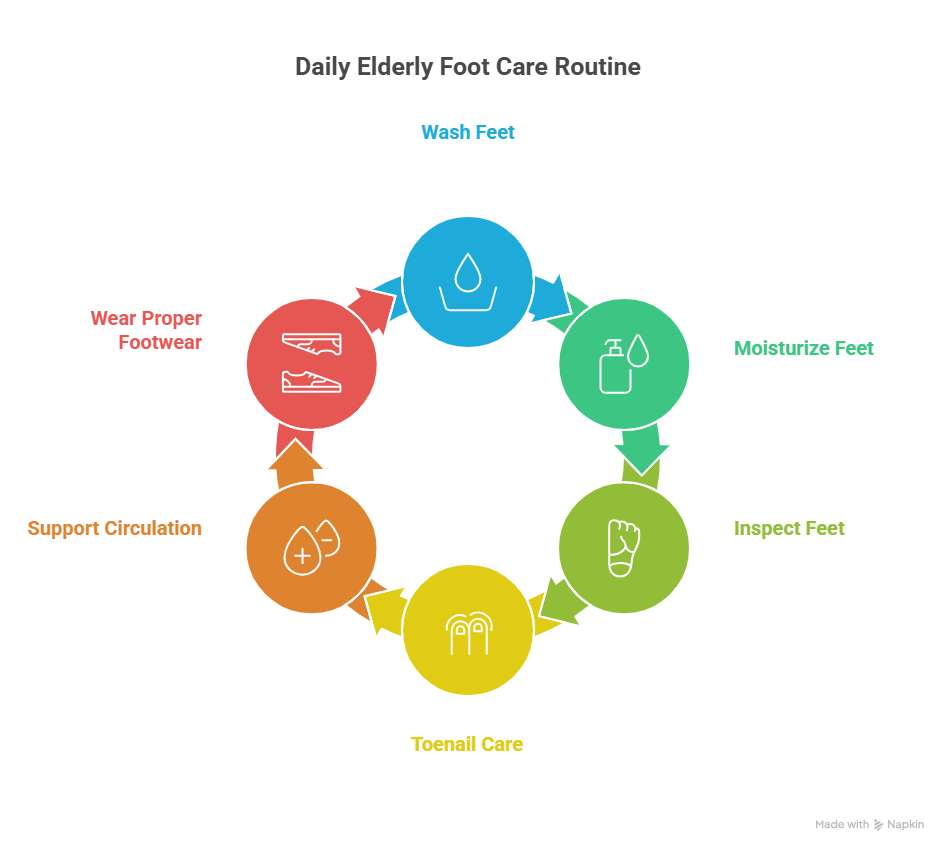
A consistent daily routine keeps feet healthy, prevents pain, infection, and mobility issues. Follow these steps carefully.
Step 1: Wash Feet Thoroughly
Use warm water and mild, fragrance‑free soap to wash feet once a day. Avoid hot water, as elderly skin is more sensitive and prone to dryness.
Gently rub between toes and along the soles. Focus on areas where sweat and dirt accumulate.
Dry thoroughly, especially between the toes, with a soft towel. Moisture left behind can lead to fungal infections like athlete’s foot.
Step 2: Moisturize Safely
Elderly skin naturally becomes drier with age, which can lead to cracking, itchiness, and pain if not cared for properly.
After washing and drying, apply a non‑scented, thick moisturizer to the tops and bottoms of the feet.
Never apply lotion between the toes. Trapped moisture in skin folds can promote fungal and bacterial growth.
Step 3: Inspect Feet Daily
Many serious foot problems begin as small, unnoticed changes.
Each day, examine every part of the foot: soles, heels, toes, and between toes.
Look for,
- Redness or warmth
- Swelling or puffiness
- Small cuts, blisters, or wounds
- Changes in skin color or texture
- Nail abnormalities
Use a mirror or caregiver assistance if flexibility or vision is limited.
Step 4: Toenail Care
Healthy toenails are essential to comfort and fall prevention, but trimming nails incorrectly can do more harm than good.
Do not attempt toenail trimming at home if the senior has diabetes, poor circulation, or thickened nails. Instead, trained professionals or elderly nail care services can safely manage these issues, reducing the risk of infection and injury.
How to Safely Trim Toenails
Trim nails straight across rather than rounding the corners to reduce the risk of ingrown nails.
Use clean, sharp nail clippers designed for toenails.
File sharp edges gently with an emery board. Avoid digging into the corners.
After trimming, gently smooth rough edges to prevent them from catching on socks or skin.
When NOT to Trim Nails at Home
Do not attempt toenail trimming at home if the senior:
- Has diabetes
- Has poor circulation or neuropathy
- Exhibits thick, misshapen, or fungal‑infected nails
- Shows pain, bleeding, or signs of infection
In these cases, professional care from a podiatrist or trained foot care provider is recommended to avoid injury.
Thick Toenails in Seniors
Thickened nails are common with age due to slowed growth, repeated pressure, and past micro‑trauma.
They can become painful if left untrimmed and may trap debris.
Signs of Infection to Watch For
- Increased redness or warmth around the nail
- Pus or foul odor
- Pain when pressure is applied
- Separation of the nail from the nail bed
Step 5: Support Circulation
Move feet daily to improve blood flow. Wiggle toes, rotate ankles, and flex feet.
Elevate feet for 10 – 15 minutes while sitting. Massage gently if comfortable.
Step 6: Wear Proper Footwear and Socks
Wear clean, moisture-wicking socks daily. For seniors with limited mobility, a sock helper elderly device makes putting on socks easier and safer.
Avoid high heels or shoes that pinch. Wear clean, moisture-wicking socks daily.
Proper Footwear and Socks for Elderly Foot Health
Choosing the right footwear and socks supports healthy walking patterns, reduces pressure points, and helps seniors stay active and safe.
Choosing Supportive Shoes for Seniors
Supportive shoes protect feet by absorbing shock, aligning the foot, and reducing pressure on joints and sensitive areas.
Look for shoes with good arch support, cushioning, and a wide toe box to reduce pressure on bunions and hammertoes. For example,
LeIsfIt Diabetic Adjustable Arthritis Slippers – Wide, adjustable indoor/outdoor slippers designed to relieve pressure and provide comfort for swollen, arthritic, and diabetic feet with a roomy toe box
Shoes with slip‑on designs or easy closures help seniors put them on without bending or struggling with laces.
Shoes accepted by the American Podiatric Medical Association (APMA) often meet clinically endorsed support standards. For example,
Skechers Women’s Go Walk Joy Sneakers – Breathable slip‑on walking shoes with 5GEN® cushioning and Air‑Cooled Goga Mat insole for lightweight, all‑day comfort and support.
Importance of Socks and Moisture Control
Moisture‑wicking, breathable socks help keep feet dry, reduce friction, and prevent blisters and fungal infections.
Look for socks made from moisture‑wicking materials like bamboo viscose, Coolmax, or polyester blends. For example,
BRISIRA Coolmax Bamboo Viscose Moisture Wicking Socks – Breathable everyday socks made with a Coolmax and bamboo viscose blend that draws moisture away from the skin.
Proper Footwear for Elderly Foot Care
Footwear choices should prioritize safety, comfort, and support for daily walking and standing.
Non-Slip Soles
Shoes with a textured rubber outsole and good traction reduce the risk of slipping on smooth or wet surfaces.
This is especially important indoors and outdoors, where seniors walk regularly.
Product Suggestion
Skechers Go Walk Joy Slip-On Sneakers – Lightweight shoes with flexible traction outsoles and cushioning that many wearers describe as “like walking on clouds.”
Wide Toe Box
A wide and deep toe box helps reduce pressure on bunions, hammertoes, and swollen feet.
Product Suggestion
Rollstep Wide Toe Box Sneakers – Affordable walking shoes with a roomy fit, breathable mesh, and non‑slip rubber outsole, ideal for seniors who need extra space for comfortable toe movement.
Adjustable Closures
Velcro straps, hook‑and‑loop closures, or slip‑on designs make putting on and taking off shoes easier for seniors with limited mobility or dexterity.
Product Suggestion
Diabetic Shoes for Men– Comfortable diabetic walking shoes with adjustable hook‑and‑loop closure, breathable mesh upper, extra wide toe box, removable insoles, non‑slip soles, and cushioned heel.
Cushioned Insoles
Cushioned insoles distribute weight evenly and reduce impact on heels and forefoot. Proper cushioning can lessen stress on ankles, knees, and lower back.
Product Suggestion
- Skechers Go Walk Evolution Ultra Sneaker – This everyday shoe features a Goga Mat cushioned insole and slip‑on convenience.
Improving Foot Circulation and Mobility in Seniors
Here are safe, practical ways seniors can support foot circulation every day.
Toe Wiggles and Flexes
- Sit in a chair with feet flat on the floor.
- Spread toes apart, wiggle them, then curl and flex them.
- Repeat 10 – 15 times per foot.
Ankle Circles
- Lift one foot off the ground slightly.
- Rotate the ankle in slow circles clockwise 10 times, then counterclockwise 10 times.
- Switch feet.
Heel Raises
- Stand behind a sturdy chair.
- Hold the backrest for support.
- Raise heels off the floor, then lower them slowly.
- Repeat 10 – 12 times.
Walking or Light Marching
- Aim for short walks throughout the day, even indoors.
- If walking is hard, sit and gently march in place, lifting knees one at a time.
Elevation
- Lie down and prop your feet up on a pillow so they are slightly above heart level.
- Keep them elevated for 10 – 15 minutes.
Special Foot Care Needs for Seniors With Diabetes
Daily foot care combined with regular medical oversight is essential for preventing complications and maintaining mobility.
Neuropathy and Loss of Sensation
Diabetic neuropathy reduces feeling in the feet, which means seniors may not notice injuries, pressure points, or temperature changes.
Even a minor blister or cut can go unnoticed, allowing infections to develop.
Inspect feet daily for cuts, redness, swelling, or color changes. Use a mirror or ask a caregiver for help if needed.
Preventing Diabetic Foot Ulcers
Foot ulcers are open sores that can develop when sensation and circulation are impaired.
They are the most common precursor to serious infections and diabetes-related amputations.
Why ulcers are dangerous
- Reduced blood flow slows healing.
- Lack of sensation allows pressure or irritation to continue unchecked.
- Ulcers can become infected quickly, sometimes reaching deeper tissues or bone.
Prevention strategies
Examine feet daily for changes in skin, nails, or swelling.
Keep feet clean and moisturized, but avoid applying lotion between toes.
Wear properly fitting, supportive shoes to reduce pressure points. Schedule regular podiatrist visits.
Warning signs that need urgent attention
- Non-healing sores or ulcers
- Redness, warmth, swelling, or foul odor
- Pain, discharge, or deep tissue involvement
When to See a Podiatrist or Foot Care Specialist
For seniors who need daily monitoring or assistance with foot hygiene, Gracious Heart Inc. offers trained caregivers who can help check feet, spot early warning signs, and ensure minor issues are noticed before they escalate.
1. Persistent Pain, Swelling, or Redness
Any ongoing foot discomfort is a sign to seek professional care. For example,
Pain that doesn’t improve with rest or proper footwear. Swelling in the feet or ankles, or redness that persists beyond a day or two.
These could indicate inflammation, infection, arthritis, or tendon issues. Having a caregiver from Gracious Heart Inc. can help monitor these symptoms daily.
2. Changes in Skin Color or Temperature
Changes in skin color or appearance can be a sign of circulation or nerve problems.
Watch for black, blue, or purple patches, pale or shiny skin, areas that feel unusually cold or warm, and redness around cuts or wounds.
Noticing these changes early, especially in seniors with diabetes, can help prevent ulcers and tissue damage.
3. Nail Problems
Toenail problems that cause pain or don’t get better should be checked by a podiatrist.
Watch for thick, brittle, or discolored nails, ingrown toenails, fungal infections, or nails that are lifting or separating from the nail bed.
4. Foot Deformities or Structural Changes
Changes in the structure of your feet can affect the way you walk and may cause pain if not treated.
Signs to watch for include bunions or hammertoes, flattening arches, and new bumps or bone protrusions.
5. Wounds, Sores, or Ulcers That Don’t Heal
Any open sore or wound that doesn’t heal needs immediate attention.
This includes cuts or blisters that linger, wounds that are red, swollen, or have a bad smell, and injuries that are deep or spreading.
If left untreated, these wounds can cause serious infections or complications, especially in seniors with diabetes or poor circulation.
6. Numbness, Tingling, or Loss of Sensation
Neuropathy reduces the ability to feel pressure, heat, or pain in the feet.
This can cause persistent tingling or numbness and make it easy to miss injuries during daily activities.
At-Home vs Professional Elderly Foot Care Services
Understanding the differences, benefits, and limitations helps families choose the right approach for their loved ones.
1. Self-Care for Elderly Foot Health
Wash and dry your feet daily using warm water and mild soap. Make sure to dry thoroughly, especially between the toes.
Apply lotion to prevent dry, cracked skin, but avoid the areas between the toes to reduce the risk of fungal infections.
Trim toenails straight across and file the edges smooth, while keeping an eye out for any changes.
Regularly inspect your feet for cuts, redness, swelling, blisters, or unusual color changes.
Self-care is convenient, affordable, and encourages independence, but it can also carry risks if issues are missed, especially for seniors with limited mobility, vision problems, or neuropathy.
2. Caregiver-Assisted Foot Care at Home
Caregivers can help by checking feet daily for early signs of infection, pressure sores, or nail problems.
They assist with washing, drying, and moisturizing feet safely, and make sure supportive shoes and moisture-wicking socks are worn consistently.
This support reduces the risk of unnoticed injuries, guides proper care techniques, and helps seniors with limited mobility.
While it requires trained caregivers and quality may vary, dedicated support can make a big difference.
At Gracious Heart Inc., caregivers help with washing, moisturizing, inspecting feet, and ensuring proper footwear, all while monitoring for early warning signs of infection or injury.
3. In-Home Professional Foot Care Services
In-home foot care by licensed professionals can perform foot exams, trim nails, and remove calluses or corns.
Seniors with diabetes or circulation issues can receive specialized care to protect their feet.
Professionals also monitor changes over time and recommend early interventions to prevent problems.
The benefits include expert care at home, less travel stress, and personalized care plans.
The main drawbacks are the higher cost and the need to schedule visits in advance.
4. Clinic-Based Foot Care
Care at a clinic or podiatry office provides a full assessment and treatment for foot health.
Specialized equipment allows for advanced diagnostics, nail surgery, or treatment of ulcers.
Immediate care is available for infections, deformities, or chronic foot problems.
Clinics also offer holistic management, coordinating with primary doctors or diabetes specialists to ensure comprehensive care.
Elderly Foot Care Tips for Caregivers
Here are practical tips to follow every day.
1. Helping Seniors Inspect Their Feet
Look for cuts, blisters, redness, swelling, or unusual color changes.
Check between the toes for fungal infections or irritation, and examine toenails for thickness, discoloration, or ingrown nails.
If the senior has limited flexibility, use a mirror or help reposition their feet.
2. Safe Bathing Techniques
Use warm water with mild soap, and avoid hot water that can burn delicate skin. Wash gently.
Make sure to clean the tops, soles, and between the toes. Dry thoroughly, especially between the toes, to prevent fungal infections.
Apply moisturizer to the tops and bottoms of the feet, but avoid the areas between toes to prevent excess moisture.
3. Encouraging Proper Footwear
Choose shoes with a wide toe box, cushioned insoles, and non-slip soles. Avoid high heels or tight shoes, as they can make bunions or corns worse.
Encourage moisture-wicking socks made from bamboo, Coolmax, or polyester blends.
Make sure shoes are worn consistently both indoors and outdoors to protect fragile feet.
4. Preventing Falls
Make sure shoes fit well and have good traction. Keep walkways clear of clutter, rugs, and cords.
Encourage daily foot exercises, like toe curls and ankle rotations, to improve balance and circulation.
For seniors with neuropathy or poor sensation, use non-slip socks or shoe inserts for extra stability.
5. Keeping a Foot Care Checklist
Track any discomfort, redness, or swelling so you can discuss it with a podiatrist.
Schedule regular podiatry visits and note their recommendations. Include reminders for moisturizing, checking footwear, and doing foot exercises.
FAQs
1. How often should elderly feet be checked?
Elderly feet should be inspected daily for cuts, redness, swelling, blisters, or changes in skin or nail color. Regular checks help detect issues early, especially in seniors with diabetes, poor circulation, or neuropathy.
2. What are the most common foot problems in the elderly?
Seniors frequently experience bunions, hammertoes, corns, calluses, thickened or fungal toenails, cracked heels, ingrown nails, poor circulation, and neuropathy. These conditions can cause pain, affect balance, and increase the risk of falls if left untreated.
3. Can seniors cut their own toenails?
Seniors can trim their nails if they have good vision, flexibility, and no diabetes or neuropathy. Nails should be cut straight across and filed smooth. However, those with thick, brittle, or fungal nails, or limited mobility, should seek assistance from a caregiver or podiatrist to prevent injuries or infections.
4. What shoes are best for elderly foot care?
Supportive shoes with a wide toe box, cushioned insoles, adjustable closures, and non-slip soles are ideal. Moisture-wicking socks help keep feet dry and comfortable.
5. When should an elderly person see a podiatrist?
A podiatrist should be consulted for persistent pain, swelling, redness, changes in skin color or temperature, nail problems, structural deformities, wounds, ulcers, or numbness.
Conclusion
Consistent foot care is essential for seniors to maintain mobility, balance, and independence.
Daily hygiene, proper footwear, regular inspections, and timely podiatry visits prevent pain, infections, and serious complications.
Proactive attention to foot health helps seniors stay active, comfortable, and confident as they age.
Caregivers and family members play a key role in supporting these routines.
For those seeking reliable at-home assistance, Gracious Heart Inc. provides trained caregivers to help seniors maintain healthy feet safely and effectively.