
How to Deal with Caregiver Guilt: Simple Ways to Find Relief
Why does caring for someone you love sometimes make you feel like you are still not doing enough?
If you are searching for how to deal with caregiver guilt, you may be carrying more than daily caregiving responsibilities, such as emotional pressure, exhaustion, self-blame, and the fear of taking time for yourself.
The most effective way to deal with caregiver guilt is to name the guilt thought, separate realistic responsibility from impossible expectations, practice self-compassion, set boundaries, and ask for practical support before guilt turns into burnout.
In this guide, you will learn why caregiver guilt happens, how to manage difficult caregiver emotions, ask for practical help, and prevent caregiver burnout.
Therefore, let’s dig into it!
What Is Caregiver Guilt?
Caregiver guilt is the emotional weight that settles in when you take a break and immediately wonder if you should have.
According to the Family Caregiver Alliance, caregiver guilt is one of the most commonly reported emotional experiences among those providing care for an ageing parent, ill spouse, or family member living with a chronic condition.
It can arise from something as significant as making a complex medical decision on someone else’s behalf, or something as ordinary as eating a meal while it’s still hot.
At its core, caregiver guilt is rooted in a profound sense of responsibility toward the care receiver.
Many caregivers fall into the “I should be doing more” trap. This mindset makes it hard to recognize everything they are already doing and keeps their attention fixed on what still feels unfinished.
Common Signs of Caregiver Guilt
Here’s what it actually looks like when it shows up.
Constant self-blame: You replay what you could have done differently.
Difficulty resting: Breaks feel undeserved, even when you need them.
Resentment followed by guilt: You feel frustrated, then blame yourself for feeling that way.
Chronic worry: You feel responsible for preventing every possible problem.
Feeling responsible for everything: You believe your loved one’s health, mood, and comfort depend entirely on you
Step by Step: How to Deal With Caregiver Guilt?
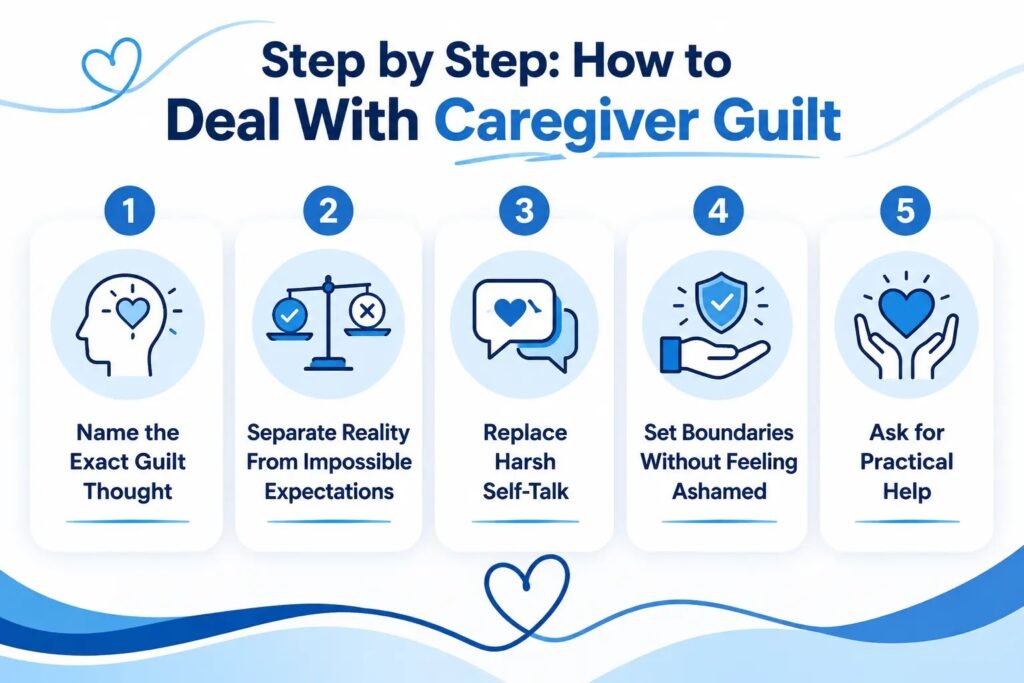
These five steps will give you something real to work with. Start wherever you can. Any honest step forward beats another day of carrying it alone.
Step 1: Name the Exact Guilt Thought
Instead of just saying “I feel guilty,” try to identify exactly why. For example: “I feel guilty because I took a day to rest” or “because I lost patience today.”
Naming the thought makes it easier to understand instead of letting it quietly weigh you down.
Step 2: Separate Reality From Impossible Expectations
Once you’ve named the guilt thought, ask yourself one honest question: Was this actually within my control?
Then ask a second one: if a friend described this exact situation to me, would I tell them they’d failed?
Many caregivers expect themselves to do everything perfectly, even when they are exhausted, stressed, and overwhelmed. Doing your best within real limits is still an act of love.
Step 3: Replace Harsh Self-Talk
Pay attention to how often you tell yourself, “I should have done more.”
Try replacing those thoughts with kinder, more realistic ones like, “I’m doing the best I can right now.”
It won’t happen overnight, but the more consistently you practice this, the quieter that harsh inner voice becomes.
Step 4: Set Boundaries Without Feeling Ashamed
The thought of setting boundaries probably makes you feel guilty, which is exactly why this step is here.
Boundaries don’t mean you love someone less. They mean you’re being realistic about what you can sustain.
According to AARP, the absence of boundaries is one of the leading causes of caregiver burnout.
Healthy boundaries, like protecting your sleep, asking for personal time, or saying no when needed help prevent burnout and make caregiving more sustainable.
Step 5: Use Respite Care or Short Breaks
Respite care refers to temporary, short-term relief care provided by a trained professional, a volunteer, or a care organization.
It allows the primary caregiver to step away for a period of genuine rest. Many caregivers resist respite care out of guilt or out of the belief that no one can care for their loved one as well as they can.
Short, regular breaks, even a two-hour walk, an uninterrupted afternoon, or a full evening off matter enormously when they happen consistently.
Step 6: Ask for Practical Help
Emotional support matters, but practical help matters too.
Ask family, friends, or support services for specific help like meals, rides, errands, or a few hours of respite care.
Caregiving becomes much more manageable when you stop trying to carry everything alone.
Why Caregiver Guilt Happens?
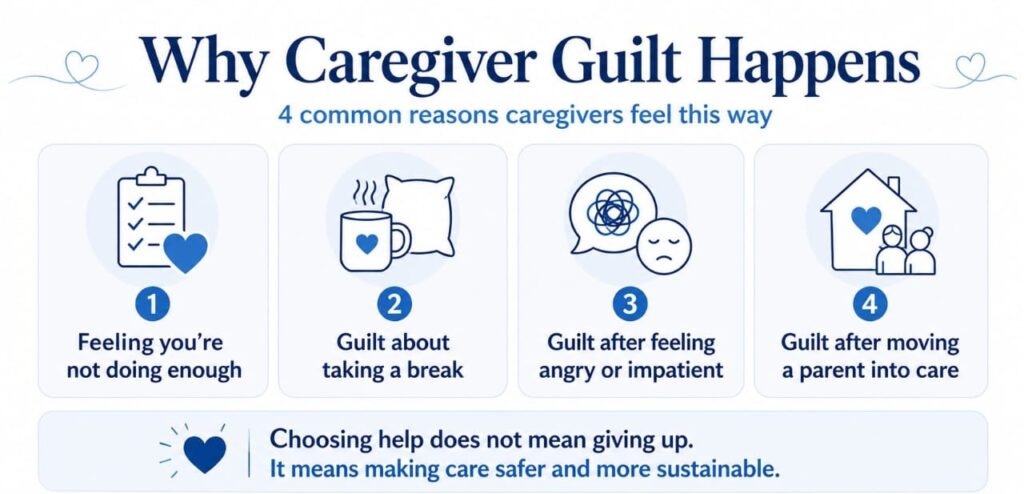
Here are the most common reasons it shows up.
1. Guilt About Not Doing Enough
Most caregivers hold themselves to a standard that simply isn’t achievable. The belief that if you just tried harder, loved more, or sacrificed more willingly, you could meet every need perfectly.
But the truth is, the needs of someone who is aging or seriously ill often exceed what any one person can fully provide, no matter how devoted they are.
Feeling like a bad daughter, son, or spouse because you can’t do everything isn’t an honest reflection of your effort.
2. Guilt About Taking Breaks or Practicing Self-Care
When a burned-out caregiver finally gets a few hours to themselves, the feeling that usually follows isn’t relief, it’s guilt.
The idea that rest is selfish is one of the most harmful beliefs in caregiving, and it’s also completely wrong.
A caregiver who is exhausted and depleted makes more mistakes and has less emotional clarity. Rest isn’t an option; it’s what keeps you fully functional.
3. Guilt About Feeling Angry, Resentful, or Impatient
This is the guilt caregivers feel most deeply. The moment you snapped. The afternoon resentment flared toward someone you love. The evening you silently counted the hours and then felt terrible for it.
These feelings do not make you a bad person or a bad caregiver. They are human reactions to ongoing pressure, and they usually signal that you need more support, rest, or emotional space.
4. Guilt after placing a parent in a facility
If you’ve recently moved a parent into assisted living or a nursing home, feeling guilty afterward is very common. Many caregivers question themselves, wonder if they did the right thing, or feel a deep sadness every time they leave after a visit.
But guilt often leaves out an important truth: you did not make this decision because you stopped caring. You made it because you cared enough to recognize that your parent needed more support than one person can safely provide.
Professional care can offer around-the-clock assistance, medical support, safety, and structure that many families simply cannot manage at home.
Your role has not ended. You are still their family, their comfort, and one of the most important people in their lives. The difference is that you no longer have to carry every responsibility on your own.\
For families in Phoenix who place loved ones at Gift of Love, they often tell us the guilt faded once they saw how happy and cared-for their parent became.
Many families feel uncertain at first, but hearing from others who have made the same decision can bring comfort and reassurance.
When Caregiver Guilt Turns Into Burnout
Caregiver guilt can slowly grow into burnout when stress, exhaustion, and emotional pressure build up for too long without support.
Over time, guilt may stop you from resting, asking for help, or taking care of yourself.
According to the CDC, family caregivers face higher risks of anxiety, depression, and long-term health problems.
Recognizing the signs early can help you protect your well-being before burnout becomes overwhelming.
Caregiver Burnout Warning Signs
Constant exhaustion: You feel tired all the time, even after sleeping or taking a break. Rest no longer feels refreshing, and simple tasks may start to feel harder than usual.
Irritability and emotional overwhelm: You may notice yourself becoming more impatient, reactive, or emotionally sensitive. Small situations can suddenly feel much heavier because your stress levels are so high.
Pulling away from others: Burnout often makes people withdraw from friends, family, or social activities. Connection can start to feel exhausting.
Physical health problems: Frequent headaches, body pain, poor sleep, or getting sick more often can all be signs of burnout.
Feeling hopeless or stuck: You may feel like nothing will improve or that you have no real support.
When to Seek Professional Help
When symptoms are not improving: If exhaustion, anxiety, sadness, or stress continue for weeks despite rest or support, it may be time to talk with a professional.
When emotions feel too hard to manage: If anger, anxiety, grief, or frustration are affecting your daily life or relationships, extra support can help you process those feelings more healthily.
When hopelessness becomes constant: Feeling emotionally stuck or believing things will never get better can be a sign of depression, which is common among caregivers and treatable with support.
A therapist, counsellor, or support group can give you a safe space to talk openly without judgment. Your doctor can also help connect you with the right support and resources for caregiver stress.
Gracious Hearts’ Gift of Love home in Phoenix was built for families facing this kind of moment.
Through personal care help, health and medication monitoring, housekeeping, social activities, Gift of Love helps families create a care plan that feels safe and easier to manage.
You have spent so much time caring for someone else. Taking care of your own mental and physical health matters.
FAQs
Is Caregiver Guilt Normal?
Yes, caregiver guilt is very normal, especially when caregiving creates emotional pressure, hard decisions, and role conflict between work, family, and personal responsibilities.
Does Taking a Break Make Me a Bad Caregiver?
No, taking breaks helps prevent caregiver burnout and allows you to provide better long-term care. Rest and self-care are necessary parts of sustainable caregiving.
How Do I Stop Feeling Guilty About Putting a Parent in Care?
Moving a parent into assisted living or a nursing home can feel emotionally painful, but professional care may become necessary for safety, medical support, and quality of life.
What Should I Do If My Siblings Do Not Help?
Try having a direct family conversation and ask for specific responsibilities instead of general help. Even small contributions from family members or outside support systems can reduce caregiving stress and emotional overload.
Conclusion
Caregiver guilt is painful, but it does not mean you are a bad caregiver. It often means you care deeply and have been trying to meet overwhelming needs with limited support.
Learning how to deal with caregiver guilt starts with accepting that caregiving does not require perfection.
Rest, boundaries, practical help, respite care, and professional support are not signs of weakness. They are part of sustainable caregiving.
If you are caring for an aging parent or loved one in Phoenix and feel unsure about the next step, Gift of Love can help your family explore care options that support your loved one’s safety.
Take care of yourself. Best of luck!