
Care Home Health and Safety Consulting for Care Providers
Running a care home comes with constant pressure and safety, and it is one of the biggest responsibilities. That’s where care home health and safety consulting can make a real difference.
In today’s care sector, safety is about much more than avoiding accidents. It’s about creating a care environment where residents are protected, staff feel supported, and operations meet the standards.
A qualified consultant can assess the full care environment, audit existing systems, and help implement safer processes. Key areas include fire safety, infection control, manual handling, emergency planning, risk assessment, and staff training.
In this article, you’ll learn what care home health and safety consulting involves, what services are included, and how it can help create a safer and better-managed care environment.
So, let’s dive a little deeper!
Who Needs Care Home Health and Safety Consulting?
Here is who can benefit from the services of the care home health and safety consulting.
1. Residential Care Homes and Nursing Homes
Residential care homes and nursing homes often need consulting support to manage key risks such as falls, infection control, manual handling, fire safety, and emergency procedures.
2. Home Health Agencies and Domiciliary Care Providers
A home health agency or domiciliary care provider can benefit from consulting because care is delivered in different home environments.
Support often focuses on risk assessment, safer work practices, staff training, and consistent safety compliance.
3. Assisted Living and Senior Care Providers
Assisted living and senior care settings also need strong safety systems to protect residents.
Consulting can help improve mobility safety, emergency planning, medication procedures, and day-to-day senior safety.
4. Families Supporting Ageing in Place
Families helping an older loved one remain at home can also benefit. A consultant can help identify fall risks, mobility hazards, bathroom safety issues, and other home-based concerns that may affect long-term safety.
For families and care providers who also need hands-on support, organisations like Gracious Hearts Inc. play a vital role in delivering trained caregivers who help maintain safe and compassionate care environments.
Key Services and Assessment Areas in Care Home Health and Safety Consulting
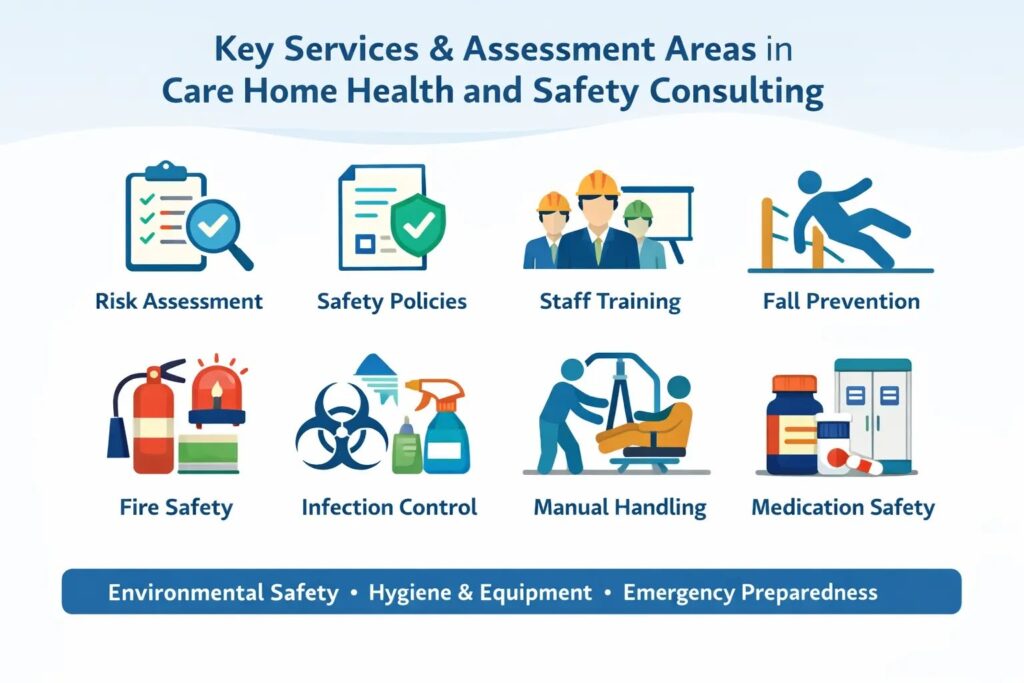
Below are the main areas of focus:
1. Risk Assessment and Environmental Safety
Consultants check for things like slips, trips, and falls, blocked walkways, poor lighting, or unsafe furniture arrangements.
They also assess risks from lifting or moving residents and make sure emergency exits and evacuation routes are safe and clear.
2. Health and Safety Policy Development
Custom policies cover important areas like reporting incidents, controlling infections, handling fires and emergencies, and managing medications or chemicals.
Good policies turn these rules into clear, simple steps that staff can follow every day.
3. Staff Training and Certification
Care home consultants offer training programs that include learning how to lift and move residents safely, use hoists properly, respond to emergencies and fire drills, and prevent infections by using protective equipment.
4. Fall Prevention and Mobility Safety
Consultants check things like floors, grab bars, and bathroom safety to make sure residents are safe.
They also look at how people move from beds, walk around, and use stairs or mobility aids.
5. Fire Safety and Emergency Preparedness
Care homes must be prepared for emergencies. First, having clear evacuation plans and alarms helps everyone know what to do.
Second, fire exits should be easy to find, and regular fire drills make sure staff and residents can leave safely. Finally, it’s important to consider the specific needs of each resident.
6. Infection Control and Hygiene Management
Care home consultants check that cleaning is done regularly, ensure that staff use protective gear like masks and gloves correctly, and make sure waste is handled safely.
7. Manual Handling and Equipment Safety
Staff should use correct lifting techniques and know how to operate hoists safely. Using bed rails, wheelchairs, and transfer aids properly also keeps residents secure.
8. Medication, Storage, and Environmental Safety
Consultants look at how medicines are stored and handled, and make sure chemicals and other dangerous substances are managed properly.
They check everyday risks like hot water, sharp objects, and general hazards around the home.
Care Home Health and Safety Regulations You Must Follow
Health and safety consultants guide care providers through complex compliance requirements.
1. UK Regulations: CQC & HSE Guidance
In the UK, care homes must meet the standards of the Care Quality Commission (CQC) and the Health and Safety Executive (HSE):
CQC Requirements: Safe care delivery, safeguarding residents, infection control, and proper staff training. Regular inspections ensure adherence.
HSE Guidance: Focus on workplace safety, manual handling, risk assessments, fire safety, and accident reporting.
Practical Actions for Compliance: Fire drills, risk assessments, incident logs, hygiene checks, and staff competency monitoring.
2. US Regulations: OSHA & CDC Standards
In the US, care homes and home health agencies must follow OSHA standards and CDC guidelines:
OSHA Standards: Workplace safety, hazard communication, manual handling, resident lifting, and incident reporting.
CDC Guidelines: Infection prevention, PPE protocols, vaccination policies, outbreak management, and sanitation.
Practical Compliance Steps: Risk assessments, emergency preparedness drills, staff training, infection control audits, and chemical safety (HazCom).
Step-by-Step: Care Home Health and Safety Consulting Process
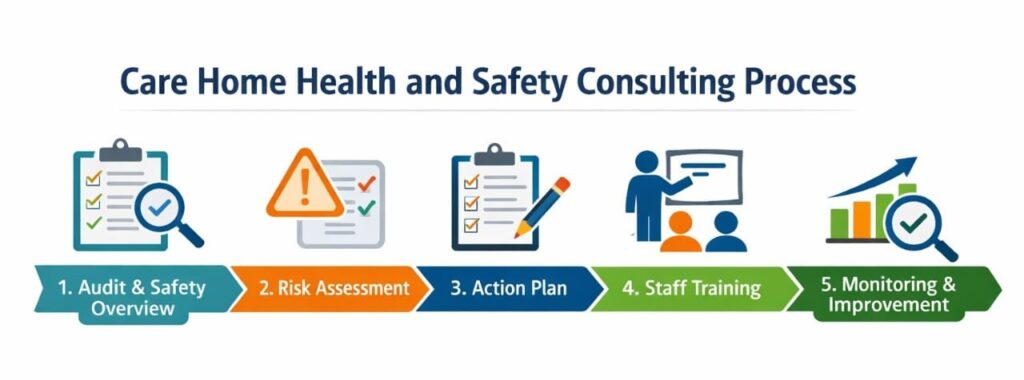
Here are the steps to improve care quality, safety compliance, and daily operations in a practical, manageable way.
Step 1: Initial Audit and Safety Overview
The process starts with a full review of the care environment. This means looking closely at existing policies, procedures, and all important documents to understand how things are managed.
It also includes checking the facilities, equipment, and daily routines to make sure everything is safe and working properly.
Step 2: Risk Assessment and Prioritisation
After the initial overview, a more detailed risk assessment is carried out. This includes checking for common risks such as falls, fire hazards, infections, and manual handling issues.
At the same time, staff practices and the overall safety of the environment are carefully reviewed.
Step 3: Action Plan and Policy Implementation
Next, the findings are distilled into a clear, practical action plan.
This includes creating or updating health and safety policies, setting simple step-by-step procedures for daily care and emergencies, and making sure everything follows current regulations.
Step 4: Staff Training and Practical Support
Policies only work when staff clearly understand them and use them in their daily work.
Staff should be trained in key areas like safe lifting and moving (manual handling), infection control, and how to respond in emergencies. They also need support to use equipment safely and follow proper care techniques.
Step 5: Ongoing Monitoring and Continuous Improvement
Carry out regular safety checks and audits to make sure everything is working properly. It is also important to review any incidents and update procedures when needed.
How to Choose the Best Care Home Health and Safety Consulting Service
To make the right choice, focus on two key areas: expertise and fit for your care setting.
1. Relevant Certifications and Credentials
Look for recognised qualifications in health and safety (such as NEBOSH, IOSH, or OSHA-based training). These indicate a solid foundation in risk assessment, compliance, and safety systems.
2. Experience in Care Settings
Prior work in care homes, nursing homes, assisted living, or home health agencies is essential. This ensures they understand practical challenges like infection control, manual handling, and resident safety.
3. Up-to-Date Regulatory Knowledge
The consultant should be familiar with current standards (CQC, HSE, OSHA, CDC, or local regulations) to keep your service compliant and inspection-ready.
4. Practical, Action-Oriented Approach
The best consultants offer clear, usable solutions, so your team can apply safety practices confidently in daily care.
FAQs
1. What does a care home health and safety consultant do?
A care home health and safety consultant helps identify risks, improve safety systems, and ensure compliance with regulations. Their role includes risk assessments, policy development, staff training, and ongoing safety monitoring.
2. Is health and safety consulting mandatory for care homes?
Hiring a consultant is not always legally required, but meeting health and safety regulations is mandatory. Many care homes choose consulting services to stay compliant with standards (such as CQC, HSE, OSHA, or local authorities).
3. How often should care homes conduct risk assessments?
Risk assessments should be carried out regularly and reviewed at least annually, or sooner if there are changes in the care environment, staffing, equipment, or resident needs.
4. How much does care home health and safety consulting cost?
Care home health and safety consulting costs between $60 and $180 per hour, or around $400 to $1,200 per day for onsite assessments. Full safety audit packages can range from $700 to $3,000+, based on the size of the care home and the level of support required.
Conclusion
Care home health and safety consulting is essential for protecting residents, supporting staff, and meeting strict regulatory standards.
It helps identify risks early, improve daily safety practices, and ensure full compliance in a high-responsibility care environment.
In short, it reduces preventable incidents and builds a safer, more confident care setting. If your systems aren’t fully reliable, seeking expert support is a practical step toward stronger, safer care.
Alongside consulting services that improve safety systems, many families and care providers also choose Gracious Hearts Inc for trusted caregiver support. Their caregivers are trained to assist with daily living needs while prioritising dignity and safety.
All the best!