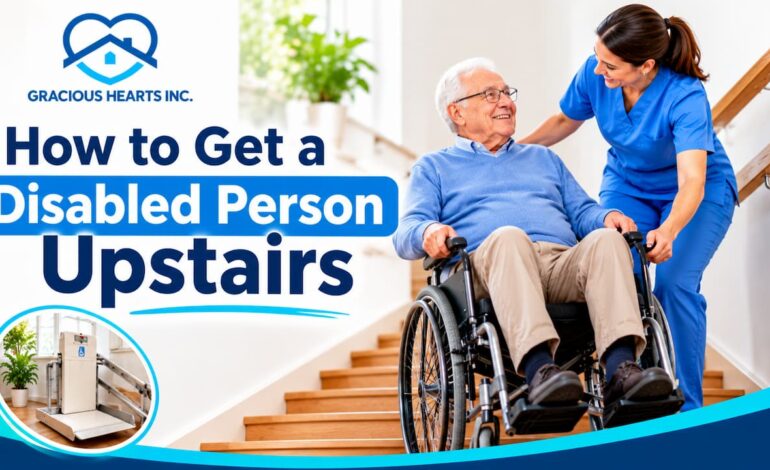
How to Get a Disabled Person Upstairs Safely: Options That Work at Home
The safest way to get a disabled person upstairs is with equipment, like a stair lift, platform lift, or ramp, instead of lifting them by hand. If they can still walk, a gait belt, a sturdy handrail, and a trained helper can make a short flight safe. Carrying someone, or lifting a wheelchair with a person in it, should be a last resort.
Stairs are one of the hardest parts of caring for someone with a mobility problem. One slip can hurt both of you.
This guide walks through your options, from small changes to lifts, plus safety tips and ways to pay. It is general information, so an occupational therapist or physical therapist should check your situation.
How Do You Get a Disabled Person Upstairs?
To get a disabled person upstairs safely, use a stair lift, platform lift, or ramp whenever you can. If the person can walk, use a gait belt and a handrail, with a trained helper beside them. Avoid carrying them or lifting their wheelchair by hand.
The right choice depends on what the person can do. The sections below explain each option.
Start With What the Person Can Do
Before you pick a method, look at the person’s abilities. A few questions help you narrow it down.
- Can they walk, even a little, and hold a handrail?
- Can they move from a wheelchair to another seat without help?
- Do they have steady balance and a good grip?
- Do dizziness, confusion, or sudden movements make stairs risky?
An occupational therapist or physical therapist can assess this for you. They can also show you safe techniques and suggest the right equipment.
Option One: Live on One Level
The simplest fix may be to avoid the stairs. If the home has space, moving the bedroom and a bathroom downstairs can remove the problem.
This is often the most practical and affordable answer. It also lowers the risk of falls, which are a leading reason older adults end up in the hospital.
Some families decide a move makes more sense. Gracious Hearts, a Phoenix assisted living home, offers daily personal care help and round-the-clock emergency help. You can read the full list of assisted living services, and this comparison of personal care vs assisted living can help you weigh the choices.
Equipment That Gets a Person Upstairs
If the stairs are needed, equipment is usually the safest answer. The Living Made Easy factsheet on stair equipment from a UK disability charity explains the main types in detail.
Stair Lifts
A stair lift is a powered seat that follows the line of the stairs. Most are seated, and others let the person stand or perch.
The person needs enough strength and stability to get on and off and stay secure. A stair lift may not suit someone with severe uncontrolled movements, dizziness, or confusion who might try to climb off mid-ride. Most also need a staircase about 29 inches wide, and they have weight limits.
Straight tracks cost less than curved ones. A stair lift can usually be installed in about a day and removed later if it is not needed.
Wheelchair Platform Lifts
A platform stair lift lets a person stay in their wheelchair. They roll onto the platform and ride up.
These take up a lot of room on the stairs, and many home staircases are too narrow. They work best where space allows.
Vertical Lifts
A vertical lift, sometimes called a through-floor lift, moves a person straight between floors. It can carry someone in a wheelchair without any transfer.
These need more space than a stair lift and some building work. A qualified engineer should install them, and they need regular inspections.
Ramps and Short-Rise Lifts
For a few steps, such as at a front door, a ramp or short-rise lift may work better. Short-rise lifts help where there is no room for a ramp.
Stair Climbers
A stair climber is a carer-operated device that carries a person up and down a flight of stairs. Some are seated devices, and others attach to a wheelchair.
The carer must be trained before using one. Some people also feel uneasy facing down the stairs with no control over the movement.
How to Help Someone Who Can Still Walk Up Stairs
If the person can walk and hold a handrail, you can help them climb safely. Ask a physical therapist to show you the technique first.
- Check the stairs. Clear clutter, turn on good lighting, and make sure the handrail is secure.
- Have them wear sturdy, well-fitting shoes.
- Put a gait belt on them. It should sit snug over their clothing, with room to slide two fingers underneath.
- Have them hold the handrail with one hand. If they use a walker, keep a second one upstairs instead of carrying it.
- Stand behind them and slightly to the side, holding the gait belt with one hand and supporting them with the other.
- Go one step at a time. Going up, they usually lead with the stronger leg, and going down, with the weaker leg.
- Rest when they need it, and stop right away if they feel dizzy, weak, or in pain.
A gait belt gives you a secure handle without gripping their arms or clothing. It is a tool for guiding and steadying, not for lifting their full weight.
What About Carrying Someone or Lifting a Wheelchair?
Carrying a person, or lifting a wheelchair with someone in it, is risky for both of you. A person who is heavy, unsteady, or unpredictable can be too much for one helper.
If someone has to be moved up a step or two in an emergency, use at least two trained people. The person should wear a safety belt, and you should never try it on wet, broken, or slippery steps. Do not try to do it alone.
For a regular routine, a lift, ramp, or climber is much safer. If the person falls, do not try to lift them yourself. Call for help if they may be hurt.
Make the Stairs Safer First
Even with the right equipment, safer stairs help everyone. A few small changes lower the chance of a fall.
- Handrails on both sides, running past the top and bottom steps
- Bright lighting with a switch at the top and bottom
- Stairs clear of clutter and loose rugs
- Good stair covering with grip, and highlighted step edges for people with poor eyesight
- A walking aid kept upstairs and another downstairs
Keep one hand free on the rail, and avoid the stairs when the person feels unwell or dizzy.
How to Pay for Stairs Help
Equipment can be expensive, and Original Medicare does not cover stair lifts. WTOP explains that Medicare does not cover stair lifts because they count as home modifications, not medical equipment.
Other help may be available, depending on the person’s situation.
- Some Medicare Advantage plans offer limited home modification benefits
- State Medicaid programs may cover home changes, so ask AHCCCS about Arizona’s ALTCS program
- Veterans may qualify for VA home improvement grants
- Your local Area Agency on Aging can point you to nonprofits and local programs
- Rentals can help with short-term needs
This explanation of the difference between Medicare and Medicaid can help you sort out what applies. Get more than one quote before you buy anything, and be careful with pushy sales tactics.
When Stairs Mean It May Be Time to Rethink the Setup
Stairs that keep getting harder can be a sign that the home no longer fits the person’s needs. Repeated falls, a worn-out caregiver, and fear of the stairs are common signals.
You do not have to decide alone. This guide on how to care for the elderly has more ideas for caregivers. A doctor or therapist can also help you think through next steps.
Frequently Asked Questions
What is the easiest way to get a disabled person upstairs?
The easiest way to get a disabled person upstairs is usually a stair lift or platform lift. Equipment does the lifting, so the helper does not have to. It is also safer for the person than being carried.
How do you get a wheelchair user upstairs?
Getting a wheelchair user upstairs safely usually takes a lift, ramp, or carer-operated stair climber. Lifting a wheelchair with someone in it is risky and should be a last resort. If it is unavoidable, use at least two trained people and a safety belt.
How do you help someone upstairs who can walk but is weak?
Helping someone upstairs who can walk but is weak works best with a gait belt and a sturdy handrail. Stand behind them and slightly to the side, and go one step at a time. A physical therapist can show you the technique for their needs.
Does Medicare pay for a stair lift?
Medicare does not pay for a stair lift under Original Medicare. It treats stair lifts as home modifications instead of medical equipment. Some Medicaid programs, VA grants, and Medicare Advantage plans may help in certain cases.
Can you carry a disabled person up the stairs?
Carrying a disabled person up the stairs is risky and should only be a last resort. A fall can hurt both of you, especially if the person is heavy or unsteady. For regular use, choose a lift, ramp, or climber instead.
Getting It Right
The safest answer is almost always equipment and a plan, not muscle. Start with what the person can do, ask a therapist for advice, and make the stairs as safe as you can.
Families in Phoenix who want to talk through assisted living options can reach out to the Gracious Hearts team.