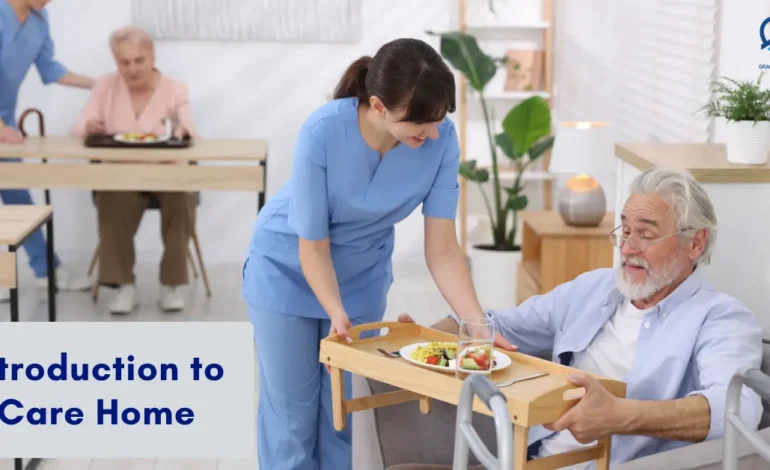
Introduction to a Care Home: A Complete Beginner’s Guide
When daily living becomes difficult due to aging, illness, or mobility challenges, families are left searching for the right care solution.
A care home provides accommodation and personal care for individuals who cannot live independently due to age, illness, or disability.
An introduction to a care home explains how these places provide safe, supportive living for people who can no longer manage daily tasks on their own.
Care homes offer daily help with things like meals, personal care, medication, and mobility, along with trained staff available for supervision and support.
Families exploring care solutions can also consider professional in-home caregiver support through Gracious Hearts Inc., which provides personalized elderly care tailored to individual needs.
In this article, you can learn what a care home is, how daily care and support work, the services provided, and how care homes compare with other elder care options such as assisted living and nursing homes.
Here’s what you need to know!
What is a Care Home?
A Care Home (also known as a Residential Care Home or Adult Care Home) is a specialized residential setting that provides accommodation, personal care, and round-the-clock supervision for seniors who are no longer able to live independently due to age, illness, or disability.
At its core, a care home provides a safe and supportive place where residents get help with daily tasks like personal care and everyday routines.
The focus is not only on safety and supervision but also on maintaining comfort, dignity, and a more homelike atmosphere.
In broader terms, care homes are part of the wider spectrum of elder care services and are closely associated with concepts such as elder care facility, assisted living definition, long-term care facility, senior housing, and residential care setting.
Overall, a care home serves as a long-term residential care solution for individuals who require ongoing personal assistance but do not need intensive medical treatment.
For families who are not yet ready for residential care, in-home support services such as Gracious Hearts Inc may offer an alternative way to provide daily assistance while remaining in a familiar environment.
How Care Homes Work in Daily Life?
Care homes are designed for individuals who need assistance with daily living activities, but still benefit from a stable, homelike environment.
1. Morning Routine: Personal Care
The day begins with care staff assisting residents with morning routines, including waking up, washing, dressing, grooming, and mobility support.
Breakfast is then served in a calm, communal setting, often customized for dietary needs to ensure proper nutrition and well-being.
2. Daytime Care: Supervision, Assistance & Engagement
During the day, residents receive 24-hour supervision and daily living assistance from trained caregivers. This includes support with movement, medication reminders, hydration, and general health monitoring.
Alongside care support, residents may take part in simple, structured activities such as conversations, light exercise, reading, or social interaction.
3. Meals & Daily Nutrition: Structured and Support-Focused
Residents are provided with balanced, home-style meals throughout the day, often including breakfast, lunch, dinner, and snacks as required.
4. Evening Routine: Wind-Down, Comfort & Rest Preparation
In the evening, care staff support residents with personal care tasks such as changing, hygiene routines, and preparing for bedtime.
Supervision continues throughout the night. They ensure residents are safe and supported at all times, and reinforce the importance of round-the-clock care and monitoring.
Introduction to a Care Home: Key Features
Care homes’ core features focus on balancing comfort, independence, and continuous care.
1. Small, Homelike Living Environment
A care home is a small-scale residential setting, designed to feel more like a family home than an institution.
With fewer residents in one place, the environment is quieter, more personal, and easier to adjust to compared to larger care facilities.
The setting also allows care staff to build closer relationships with residents, improving trust and overall well-being.
2. Personalized Care Based on Daily Living Needs (ADLs)
Care homes deliver individualized care plans customized for each resident’s specific needs, especially support with Activities of Daily Living (ADLs) such as bathing, dressing, grooming, eating, and mobility.
Instead of a one-size-fits-all approach, caregivers assess each resident’s condition and provide structured assistance that adapts over time.
3. 24/7 Supervision and Resident Safety
A defining feature of care homes is continuous, round-the-clock supervision provided by trained care staff.
Caregivers monitor health, support medication routines, respond to emergencies, and assist with mobility or safety concerns as needed.
Services Provided in a Care Home
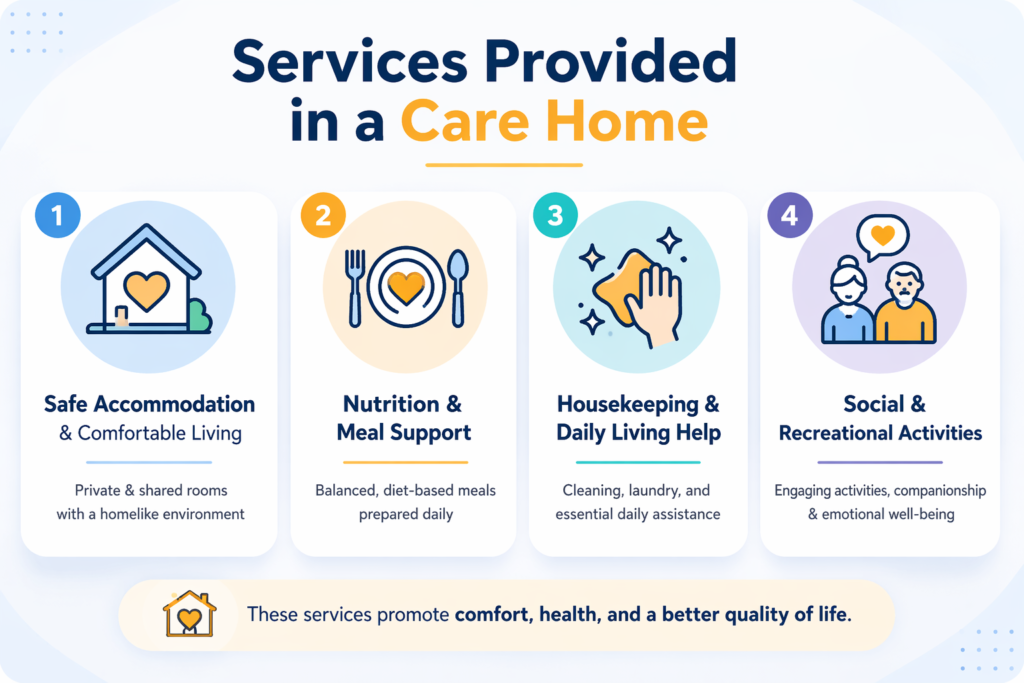
Care home services are not limited to accommodation alone but extend to nutrition, household support, and social wellbeing.
1. Safe Accommodation & Comfortable Living Environment
At the foundation of care home services is safe and structured accommodation, offered in private or shared rooms within a residential-style setting.
The environment is designed to feel homelike rather than institutional. Shared spaces such as lounges and dining areas encourage interaction, while private rooms provide rest and privacy when needed.
2. Nutrition, Meals & Dietary Care Support
Care homes provide structured meal services designed to maintain health, consistency, and nutritional balance.
Residents receive regular meals throughout the day, often prepared in-house and adapted to individual dietary requirements.
3. Housekeeping & Essential Daily Living Support
To reduce physical burden and maintain a safe environment, care homes provide full housekeeping and daily maintenance services.
This includes cleaning, laundry, room upkeep, and general facility maintenance.
4. Social Engagement & Recreational Wellbeing
Care homes also prioritize emotional health and social connection through structured recreational and group activities.
These may include light exercise, games, arts and crafts, music sessions, group discussions, or organized outings based on the facility.
Some of these services, including personal care assistance, meal support, companionship, and housekeeping help, are also available through professional caregiver services such as Gracious Hearts Inc. for families preferring in-home care solutions.
Care Home vs Assisted Living vs Nursing Homes
The table below gives a quick side-by-side comparison to help you understand the key differences at a glance.
| Factor | Care Home | Assisted Living Facility | Nursing Home |
| Purpose | Personal care + homelike support | Independent living with some help | Full medical care + supervision |
| Medical Support | Limited medical care | Basic health monitoring | 24/7 skilled nursing care |
| Environment | Small, homelike setting | Apartment-style community | Clinical, hospital-like setting |
| Staff Focus | Close caregiver support | Daily assistance staff | Medical professionals & nurses |
| Care Level | Moderate daily support (ADLs) | Low-moderate assistance | High-level medical care |
| Best For | Seniors needing regular help | Mostly independent seniors | Serious health or complex needs |
How to Choose the Right Care Home?
To make an informed choice, it is important to evaluate care homes through a few essential criteria.
1. Location and Accessibility
A nearby facility allows regular family visits, which helps maintain emotional connection and reduces feelings of isolation for the resident.
It is also beneficial to consider access to healthcare services, transport options, and surrounding community facilities.
2. Cost and Financial Transparency
Monthly charges often vary based on room type, level of care, and additional services.
A reliable care home should offer clear and transparent pricing, including details about any extra costs for specialized care or optional services.
3. Services and Level of Care
The quality of a care home is largely defined by the range and consistency of services provided. This includes personal care assistance, meals, housekeeping, medical coordination, and social activities.
4. Staff Quality and Care Standards
Families should look for trained, experienced, and compassionate caregivers who can provide safe and respectful assistance with daily living needs.
Equally important is the staff-to-resident ratio, as this directly affects response time, attention levels, and overall care quality.
FAQs
1. What is the purpose of a care home?
A care home is designed to provide safe accommodation, personal care, and daily living support for individuals who can no longer live independently. Its main purpose is to ensure comfort, safety, supervision, and dignity.
2. How do care homes differ from nursing homes?
Care homes mainly focus on personal care and daily assistance, such as help with bathing, dressing, meals, and mobility. Nursing homes, on the other hand, provide a higher level of medical care and skilled nursing supervision for individuals with more complex health conditions.
3. Are care homes expensive?
On average, monthly fees can range from about $2,000 – $6,000 in some regions and £4,000 – £7,000 in the UK, with higher costs for specialized or nursing-level care. These fees usually include accommodation, meals, supervision, and daily support services.
4. Can residents leave a care home anytime?
In most cases, care homes are non-restrictive living environments, which means residents are generally free to leave unless there are specific medical, safety, or legal reasons that limit mobility.
5. What services are included in a care home?
Care homes include personal care assistance, accommodation, meals, housekeeping, medication support, and social activities.
Conclusion
The care homes are designed to provide personal care, daily assistance, accommodation, and 24-hour supervision in a comfortable and homelike environment.
Throughout this article, we explored what a care home is, who it is meant for, and how it supports residents in their daily lives.
We also looked at the key features such as personalized care plans, structured routines, meals and nutrition support, housekeeping services, and social activities that help improve quality of life.
In simple terms, care homes offer safety, comfort, and dignity for seniors while giving families peace of mind knowing their loved ones are well cared for.
Finding the right care home is a meaningful decision, and understanding these basics is the first step toward making the best choice for long-term well-being.
If you want flexible alternatives, in-home caregiver support services like Gracious Hearts Inc. can also help maintain comfort and dignity while allowing seniors to stay in familiar surroundings.