Red Flags in Assisted Living Facilities You Must Not Ignore
What if the assisted living facility you trust hides warning signs you can’t immediately see?
Red flags in assisted living facilities often go unnoticed during quick tours, yet they can signal serious issues like poor care, safety hazards, and even financial exploitation.
Critical warning signs can include understaffing ratios below 1 caregiver per 10 – 15 residents, poor hygiene, unexplained injuries, delayed medical care beyond 24 – 48 hours, frequent staff turnover exceeding 40% annually, and the absence of proper care plans.
This guide uncovers the 10 red flags in assisted living facilities to watch closely, helping you identify hidden risks, evaluate caregiver performance, and assess safety standards.
With that said, let’s take a look!
10 Red Flags in Assisted Living Facilities
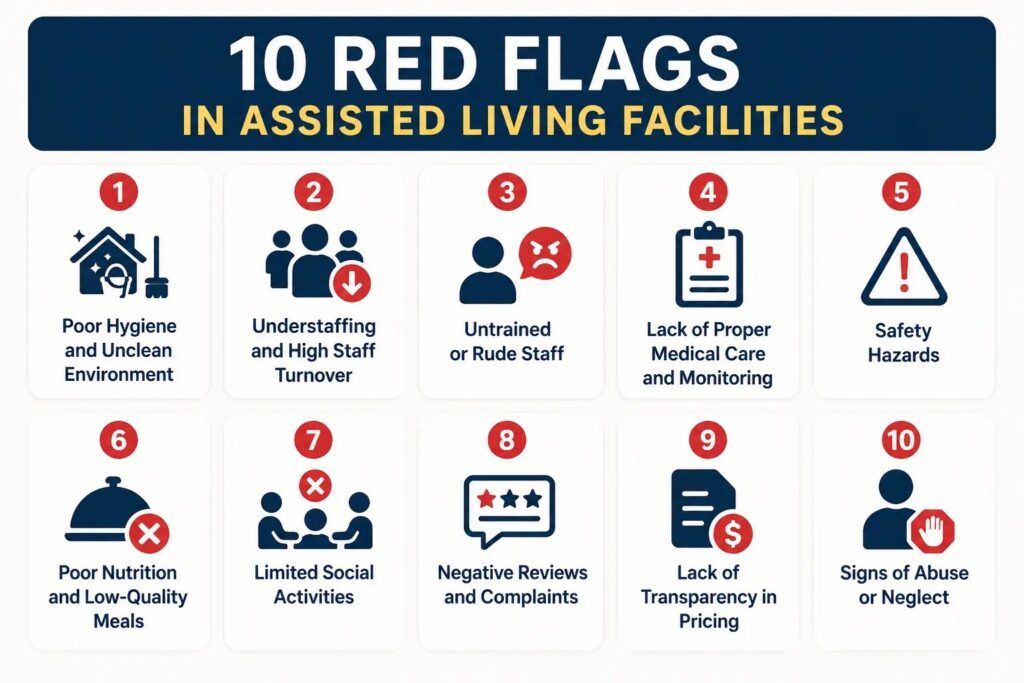
Spotting early warning signs in assisted living facilities can help you avoid poor care, safety risks, and financial mistakes before it’s too late.
Red Flag #1: Poor Hygiene and Unclean Environment
When you walk through a facility, pay close attention to persistent odors, especially those of urine, mildew, or overly strong cleaning agents that may be masking deeper hygiene issues.
Dirty floors, stained carpets, cluttered hallways, and unwashed linens often point to deeper systemic neglect.
Residents appearing unbathed, wearing soiled clothing, or lacking basic grooming can indicate that daily personal care is not being consistently provided.
Red Flag #2: Understaffing and High Staff Turnover
When an assisted living facility is understaffed, residents often experience delayed assistance, unanswered call buttons, and rushed caregiving.
Another major concern is high staff turnover. If employees frequently change, it signals instability, poor management, or burnout.
A turnover rate above average often leads to inconsistent care, as new staff may not be fully familiar with residents’ needs.
Red Flag #3: Untrained or Rude Staff
When staff cannot confidently answer basic questions about care routines, medications, or emergency procedures, it raises serious concerns about competency.
Communication is equally important. Staff should speak respectfully, patiently, and clearly with both residents and family members.
If you notice dismissive attitudes, impatience, or vague responses, it may indicate deeper cultural or training issues within the facility.
Red Flag #4: Lack of Proper Medical Care and Monitoring
Residents who do not receive medications on time or at all are at risk of serious health complications.
Another concern is the absence of clear, individualized care plans. Every resident should have a documented plan outlining medical needs, daily routines, dietary requirements, and emergency procedures.
You should also evaluate how the facility responds to emergencies. A lack of readiness, such as unclear protocols, slow response times, or insufficient medical coordination.
Red Flag #5: Safety Hazards
One of the clearest red flags is the presence of preventable hazards such as broken railings, unstable furniture, or slippery floors without proper warning signs.
Lighting is another key factor. Poorly lit hallways, staircases, or bathrooms significantly increase the risk of falls, especially for elderly residents with mobility challenges or vision impairments.
Facilities must have functioning emergency call systems, fire alarms, and clear evacuation procedures.
Red Flag #6: Poor Nutrition and Low-Quality Meals
If residents are consistently served the same foods with little nutritional balance, it may indicate cost-cutting or poor dietary planning.
Another concern is the lack of dietary accommodations. Residents with diabetes, heart conditions, or swallowing difficulties should have clearly customized meal options.
Watch closely for signs of malnutrition, such as weight loss, fatigue, or residents appearing weak or disengaged during meals.
Red Flag #7: Limited Social Activities
When residents are left with little to do, it often signals neglect in social and mental stimulation.
Limited or absent activity programs can lead to isolation, boredom, and a gradual decline in cognitive and emotional health.
Strong facilities encourage group activities, hobbies, exercise sessions, and social interaction. Without these, residents can feel disconnected and withdrawn.
Red Flag #8: Negative Reviews and Complaints
Online platforms like Google reviews can reveal recurring concerns from families and residents.
One negative review may not be significant, but repeated mentions of the same issues, such as poor staffing, neglect, or hygiene problems, should raise concern.
In addition to online reviews, check official government inspection reports. These documents often highlight violations related to safety, care quality, or regulatory compliance. Consistent negative findings indicate deeper systemic problems.
Red Flag #9: Lack of Transparency in Pricing
Watch for hidden fees related to services such as medication management, personal care assistance, transportation, or activity participation.
Another concern is overly complex contracts filled with unclear terms, fine print, or vague service descriptions.
If staff rush you to sign or avoid answering detailed financial questions, it may indicate poor transparency.
Understanding unclear pricing structures also connects to broader financial concerns, including long-term operational expenses such as assisted living facility insurance costs, which often influence how facilities structure their fees.
Red Flag #10: Signs of Abuse or Neglect
Indicators of abuse or neglect can appear in both physical and emotional forms and should never be ignored.
Physical signs may include unexplained bruises, frequent falls, untreated injuries, sudden weight loss, or poor personal hygiene.
Emotional warning signs can be just as important, such as withdrawal, fearfulness around staff, sudden mood changes, or unusual anxiety.
From a legal perspective, abuse and neglect in assisted living facilities are serious violations and may require reporting to regulatory authorities or elder protection services.
Families should act quickly if they suspect harm, as early intervention can prevent further damage.
How to Evaluate an Assisted Living Facility Properly
A structured evaluation helps you move beyond first impressions and understand the true quality of care, safety, and management.
Tour Checklist: What to Observe During a Visit
Pay attention to how residents are treated and how the environment functions on a normal day.
The facility should feel clean, well-maintained, and calm, not chaotic or unusually quiet. Look closely at residents: are they engaged, comfortable, and appropriately dressed, or do they appear withdrawn or unkempt?
Observe staff interactions. Caregivers should be attentive, respectful, and responsive without appearing rushed or overwhelmed.
Check key areas such as dining rooms, bathrooms, hallways, and common spaces. Cleanliness, lighting, safety features, and accessibility all reflect operational quality.
Questions to Ask Before Making a Decision
Asking the right questions helps uncover details that are not always visible during a tour.
- What is the staff-to-resident ratio?
- How often do staff members change?
- Are caregivers trained for medical emergencies?
- How are medications managed and monitored?
- What happens in case of a medical emergency?
- What activities are available for residents?
- How do you support residents with mobility or cognitive challenges?
- Are there restrictions on visitation or involvement?
Documents to Review Before Finalizing
Begin with the licensing and inspection reports. These documents show whether the facility complies with state regulations and highlight any past violations or unresolved issues.
Review the service agreement carefully. It should clearly outline what services are included, what costs apply, and under what conditions fees may change.
Look for the resident care plan format. A strong facility provides individualized care plans tailored to each resident’s medical and personal needs.
Also, check policies related to medication management, emergency procedures, and discharge conditions.
FAQs
What are the biggest red flags in assisted living facilities?
The most serious red flags in assisted living facilities include poor hygiene, understaffing, untrained or rude staff, lack of medical care, and safety hazards. Other major concerns are negative inspection reports, hidden fees, and residents showing signs of neglect such as poor grooming or withdrawal.
How do I know if an assisted living facility is safe?
A safe facility is clean, well-organized, and properly staffed with trained caregivers. Residents should appear comfortable, engaged, and well cared for. Key safety indicators include quick emergency response systems, clear care plans, proper medication management, and visible safety features like handrails and good lighting.
What questions should I ask when touring assisted living facilities?
Ask about staff-to-resident ratios, staff training, and emergency procedures. You should also ask how care plans are created, how medications are managed, and what activities are offered daily. It’s important to clarify pricing, hidden fees, and visitation policies.
Are negative reviews always a deal breaker?
Not always. One or two negative reviews may reflect individual experiences, but repeated complaints about the same issues, such as neglect, poor staffing, or hygiene problems are more concerning.
What are the signs of elder neglect in assisted living?
Signs of elder neglect include unexplained weight loss, poor hygiene, untreated medical issues, frequent falls, and sudden behavioral changes like withdrawal or fearfulness. Residents may also appear unkempt, disoriented, or emotionally distressed.
Final Thoughts
Understanding red flags in assisted living facilities is essential to protecting your loved one’s safety, health, and dignity.
Issues like poor hygiene, understaffing, weak medical care, or lack of transparency often signal deeper problems in overall care quality.
Taking time to ask questions, review inspection reports, and observe interactions can help you avoid costly mistakes.
Best wishes!