
How to Talk to Parents About Assisted Living: Easy Guide
Why does talking about assisted living feel harder than any other family conversation?
Knowing how to talk to parents about assisted living is essential because this topic blends deep emotions with real-life safety concerns.
Families often struggle because parents feel attached to their home, while children worry about health, safety, and long-term care needs.
A practical way to approach this is to talk to parents about assisted living by choosing a calm time, stating specific safety or health concerns, and asking for their preferences.
Use clear examples like missed medications or falls. Involve them in decisions, compare 2 – 3 facilities, and set a timeline of 30 – 60 days for follow-up discussions.
This guide walks you through a simple step-by-step approach to communicate with empathy, reduce resistance, and involve your parents in making informed care decisions.
Therefore, let’s explore this!
Signs It’s Time to Talk About Assisted Living
Below is a clear breakdown of the most important signs that indicate it may be time to start a conversation about assisted living.
1. Frequent falls or injuries
Repeated falls, bruises, or unexplained injuries can signal declining balance, muscle weakness, or medication side effects.
2. Chronic illness worsening
Conditions such as diabetes, heart disease, or arthritis becoming harder to manage may indicate that daily medical supervision or structured care is needed.
3. Poor hygiene or self-care decline
Noticeable changes in grooming, clothing cleanliness, or general appearance may suggest difficulty managing routine self-care tasks like bathing or dressing..
4. Memory loss or forgetfulness
Frequent forgetfulness, such as repeating questions, missing appointments, or misplacing important items, can indicate cognitive decline that may require closer supervision.
5. Confusion or disorientation
Getting confused about time, places, or familiar routines can create safety risks, especially when it affects medication use, cooking, or mobility outside the home.
6. Unsafe living conditions
Cluttered spaces, poor lighting, or difficulty navigating stairs can increase the risk of accidents.
7. Missed medications
Forgetting doses, double-taking medication, or confusion about prescriptions is a serious concern.
In many caregiving systems, organizations like Gracious Hearts Inc operate assisted living services through dedicated facilities and home care networks
How to Prepare for the Conversation About Assisted Living
When you come in informed, calm, and aligned with other family members, the discussion of assisted living feels less like pressure and more like a thoughtful planning step.
1. Assisted living options
Take time to understand the different types of assisted living communities, such as small assisted living home & large facilities.
Some focus on independent lifestyles with light support, while others offer more structured daily assistance, memory care, or medical supervision.
Organizations such as Gracious Hearts Inc operate assisted living services through multiple caregiving arms, which provide structured support such as daily living assistance, meals, housekeeping, and 24/7 caregiver availability.
2. Costs and financial planning
Research monthly costs in your area, what services are included, and possible payment options such as savings, insurance coverage, or family contributions.
For example, Gracious Hearts Inc. provides care through a network model. It means families may find both in-home support and assisted living solutions within the same care ecosystem based on needs and progression of care.
3. Align with siblings or close relatives
Try to reach an agreement on the main concerns, such as safety risks, health changes, or daily struggles. A unified understanding helps prevent mixed messages that can confuse or frustrate your parents.
4. Safety
The primary goal is to ensure your parents are living in an environment where risks like falls, medication errors, or isolation are reduced.
5. Comfort
Assisted living should be framed as a way to improve daily comfort, reduce stress with chores, provide better meals, and offer easier access to support when needed.
6. Independence
Most importantly, clarify that the goal is not to remove independence, but to preserve it for longer by adding the right level of support at the right time.
Step-by-Step: How to Talk to Parents About Assisted Living?
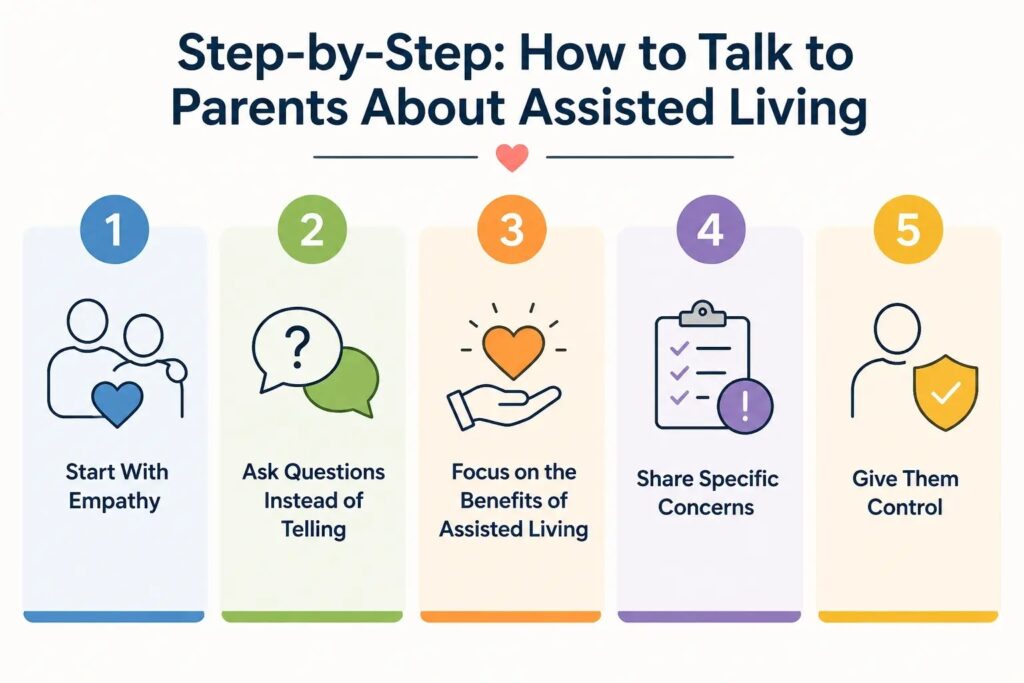
Each step below helps reduce resistance while keeping the focus on dignity, safety, and independence.
Step 1: Start With Empathy
If the opening feels supportive, parents are far more likely to stay open to the conversation.
Recognize that leaving a long-time home or changing routines can feel emotional and even frightening.
Do not frame concerns as mistakes or failures. Instead of pointing out problems harshly, approach them as shared concerns about well-being and safety.
Step 2: Ask Questions Instead of Telling
A conversation feels less like pressure when your parents are part of the thinking process. Ask questions that invite reflection, such as:
- “How have you been feeling about managing things at home lately?”
- “What parts of daily life feel most tiring for you?”
Step 3: Focus on the Benefits of Assisted Living
Instead of framing assisted living as a loss of independence, highlight what it adds to daily life.
Many seniors experience loneliness at home. Assisted living communities offer opportunities for interaction, activities, and companionship.
Ensuring them with 24/7 support, fall prevention, and emergency assistance significantly reduces health risks in daily living.
Access to medication management and regular health monitoring helps prevent complications and improve overall well-being.
Step 4: Share Specific Concerns
Specific examples make the conversation more grounded and easier to understand.
Mention observed situations such as missed medications, recent falls, difficulty cooking, or signs of forgetfulness. These examples help connect concerns to real-life situations.
Step 5: Give Them Control
One of the most important elements in this discussion is preserving your parents’ sense of autonomy.
Instead of presenting a single solution, provide options. Compare a few assisted living communities so they feel involved in shaping the decision.
Visiting places in person helps reduce fear and misconceptions. It allows parents to see that assisted living often feels more like a home or community, not a hospital.
How to Handle Resistance From Parents
Understanding these responses helps you stay calm, respond thoughtfully, and keep the conversation from turning into conflict.
1. Recognize emotional denial
Parents may insist they are “fine” even when signs suggest otherwise. This denial is often rooted in fear of aging and losing independence, not logic.
2. Expect anger or defensiveness
Statements like “I don’t need help” are usually emotional reactions, not final decisions. Responding calmly instead of arguing prevents the conversation from escalating into conflict.
3. Address fear of losing control
Many parents resist because they feel assisted living means losing independence. Reassure them that the goal is support and safety, not taking away their choices or freedom.
4. Stay calm and validate feelings
Acknowledge emotions without agreeing or disagreeing immediately. Simple responses like “I understand this feels difficult” help reduce tension and keep communication open.
5. Don’t force the conversation
If emotions are high, pause and revisit later. Pressuring too hard can increase resistance, while patience allows time for reflection and gradual acceptance.
Alternatives to Assisted Living to Discuss
Below is a clear overview of practical alternatives to assisted living that families can consider when planning care for aging parents.
In-Home Care
In-home care allows seniors to stay in their familiar environment while receiving help with daily tasks.
This option can include assistance with bathing, dressing, meal preparation, medication reminders, and light housekeeping.
Independent Living Communities
Independent living communities are designed for older adults who are still active but want a simpler, maintenance-free lifestyle.
These communities provide private apartments along with services like meals, housekeeping, transportation, and social activities.
Adult Day Care
Adult day care programs offer structured daytime support in a supervised setting.
They often include meals, social activities, basic health monitoring, and sometimes therapeutic programs.
Family Caregiving
In some cases, families choose to provide care directly at home, either alone or with limited external support.
This approach relies on coordination among family members to assist with daily needs such as meals, transportation, and medical appointments.
FAQs
How do I convince my parents to move to assisted living?
Instead of “convincing,” focus on open, respectful communication. Share specific concerns like safety risks or missed medications, and highlight benefits such as social activities, medical support, and reduced daily stress.
What if my parents refuse assisted living?
Resistance is common and often driven by fear or emotional attachment to home. Stay calm, avoid arguments, and revisit the conversation later. Sometimes, gradual steps like in-home care or facility tours can help ease acceptance over time.
When should I start the conversation?
The best time is before a crisis happens. Early signs like falls, memory issues, or difficulty managing daily tasks are good indicators. Starting early allows more time for discussion without urgency or emotional pressure.
Is assisted living better than home care?
Assisted living offers structured support, social interaction, and safety monitoring, while home care allows seniors to stay in familiar surroundings. The best choice depends on health condition, independence level, and family support.
Conclusion
Talking to parents about assisted living is challenging, but it becomes easier with empathy, preparation, and patience.
Focus on safety, health, and quality of life rather than pressure or control, and keep the conversation collaborative by involving your parents in decisions and exploring alternatives when needed.
The goal is not to take independence away, but to support it more safely and comfortably.
All the best!