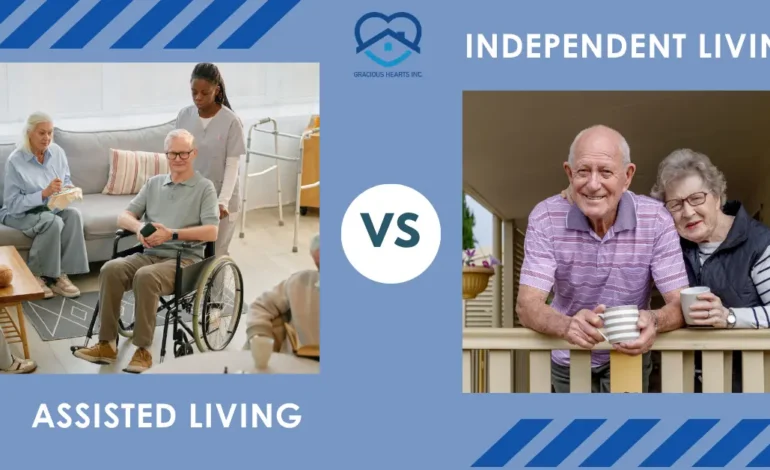
Assisted Living vs Independent Living: A Simple Guide
Are you trying to decide between freedom and support as you age or for someone you love?
Understanding assisted living vs independent living is essential. Both options offer comfort and community, but they differ significantly in care level, cost, safety, and daily support.
The main difference between assisted living vs independent living is that assisted living provides daily personal care support, while independent living offers housing with minimal assistance.
Assisted living includes help with bathing, medication management, meals, and 24/7 supervision, whereas independent living focuses on convenience services like housekeeping, social activities, and maintenance for active seniors.
This guide is created for seniors, caregivers, and families looking for clarity. We are breaking down everything from services and amenities to cost comparison, care differences, and when to choose each option.
Therefore, let’s walk through it!
What Is Assisted Living?
Assisted living is a type of senior housing designed for older adults who value independence but need regular support with daily routines and personal care.
It offers a safe, community-based environment where residents receive help as needed, without losing their sense of independence.
Assisted living communities are built to support both daily comfort and health needs. It combines housing, care, and lifestyle services in one place. They provide services such as
1. Help with Daily Activities (ADLs)
Residents get help with daily tasks, including support with bathing and personal hygiene, getting dressed and grooming, moving safely from one place to another (like from a bed to a chair), and using the toilet.
Gracious Hearts Inc. provides comprehensive, compassionate care services designed to replicate the support offered in assisted living.
Their services include assistance with Activities of Daily Living (ADLs) such as bathing, dressing, grooming, and mobility support, along with medication reminders, meal preparation and assistance, companionship, and homemaking tasks like cleaning and laundry.
2. Medication Management
One of the most important services is medication support, which helps people take their medicines correctly and on time.
This may include simple reminders so they don’t forget their doses, guidance on the right dosage and timing, and careful monitoring.
3. Meals, Housekeeping, and Daily Support
Meals are provided regularly and are usually nutritious, with options that match different dietary requirements.
Housekeeping and laundry are also handled, so there is no need to worry about cleaning or household chores. In addition, transportation is often arranged for medical appointments, shopping, or other errands
Who Is Assisted Living Best For?
Assisted living is best suited for seniors who:
- Need help with daily activities, but do not require full-time medical care
- Have mobility challenges, memory concerns, or safety risks
- Struggle with managing medications independently
- Want a structured, supportive environment
What Is Independent Living?
Independent living refers to a type of senior housing community designed for older adults who are fully self-sufficient but want a more convenient, social, and maintenance-free lifestyle.
Independent living communities are residential environments, often in the form of apartments, condominiums, or private cottages.
The main purpose is to simplify life by removing the burden of home maintenance while encouraging an active and socially connected lifestyle.
Residents live independently in their own private space but have access to shared community facilities and organized activities.
Independent living communities provide services such as
1. Housing and Maintenance-Free Living
Residents in independent living communities enjoy their own private living spaces, along with helpful services.
These usually include housekeeping and cleaning support, so residents don’t have to worry about regular chores.
The community also takes care of outdoor areas through landscaping and general property maintenance. In addition, repair and upkeep services are provided, so any maintenance issues in the home are handled quickly and professionally.
2. Social Activities and Community Life
Residents are encouraged to take part in group events, recreational activities, and regular community gatherings. There are also fitness and wellness programs that help people stay active and healthy.
In addition, shared dining areas make it easier to meet and interact with others during meals. Many communities also offer hobby clubs and entertainment options.
3. Minimal or No Medical Care
Independent living communities are not meant for people who need regular medical or personal care support.
In most cases, they do not offer daily help with personal activities, assistance with taking medications, or any form of nursing care or ongoing health monitoring.
Ideal Residents for Independent Living
Independent living is best suited for:
- Active seniors who can manage daily tasks independently
- Individuals looking to simplify their lifestyle
- Older adults who want a social environment without healthcare dependency
Key Differences: Assisted Living vs Independent Living
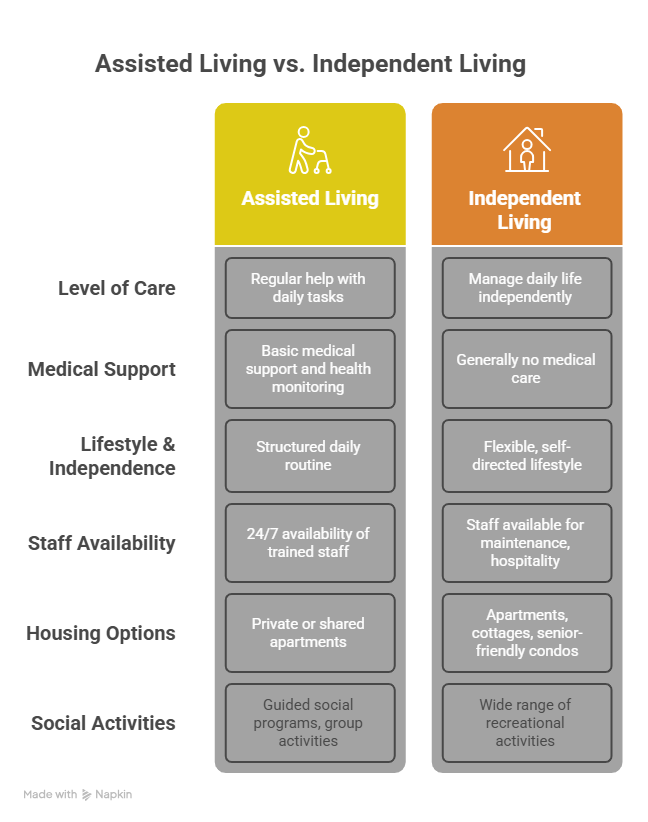
Below is a clear breakdown of the most important distinctions.
1. Level of Care
The biggest difference between these two options is the level of daily care and assistance provided.
Assisted Living: Designed for seniors who need regular help with everyday tasks. This includes support with bathing, dressing, mobility, eating, and personal hygiene.
Independent Living: Best suited for seniors who can manage daily life on their own without medical or personal care assistance.
2. Medical vs Non-Medical Support
Assisted Living: Offers basic medical support and health monitoring, including medication management, routine wellness checks, and coordination with healthcare providers.
Independent Living: Generally does not include medical care or health monitoring. Residents are expected to manage their own healthcare needs.
3. Lifestyle & Independence
Assisted Living: Provides a more structured daily routine, especially for residents who benefit from guided support, scheduled meals, daily activities, and assistance throughout the day.
Independent Living: Offers a flexible, self-directed lifestyle. Seniors enjoy the freedom to spend their day as they wish.
4. Staff Availability
Assisted Living: Features 24/7 availability of trained staff. This is especially important for emergencies, mobility issues, or sudden health needs.
Independent Living: Staff are generally available for maintenance, hospitality services, or emergency response, but not for daily personal care.
5. Housing Options
Assisted Living: Normally includes private or shared apartments designed for safety and accessibility.
Independent Living: Often includes apartments, cottages, or senior-friendly condos.
6. Social Activities & Community Engagement
Assisted Living: Offers guided social programs, group activities, and structured engagement to encourage interaction and reduce isolation.
Independent Living: Provides a wide range of recreational and community activities, but participation is fully optional.
Cost of Assisted Living vs Independent Living
Below is a clear, updated breakdown of real 2026 average costs so you can understand what families pay in real life.
Assisted Living (Higher Care Support)
- Average range: $4,500 – $6,500 per month
- National median: around $5,400 – $6,300 per month
- In high-cost cities: can reach $7,000 – $9,000+ per month
Independent Living (Lifestyle Housing)
- Average range: $2,000 – $4,000 per month
- National median: around $3,000 per month
- Lower-cost areas: can start around $1,200 – $2,500 per month
Cost Comparison Table
| Feature | Assisted Living | Independent Living |
| Avg Monthly Cost | $4,500 – $6,500 (up to $9,000+) | $2,000 – $4,000 (avg ~$3,000) |
| Housekeeping | Included | Included |
| Medication | Included | Not included |
| Meals | Included | Optional or add-on |
| Medical / Personal Care | Yes (ADLs + supervision) | No |
| Lifestyle Focus | Care + safety + support | Independence + convenience |
When to Choose Assisted Living vs Independent Living
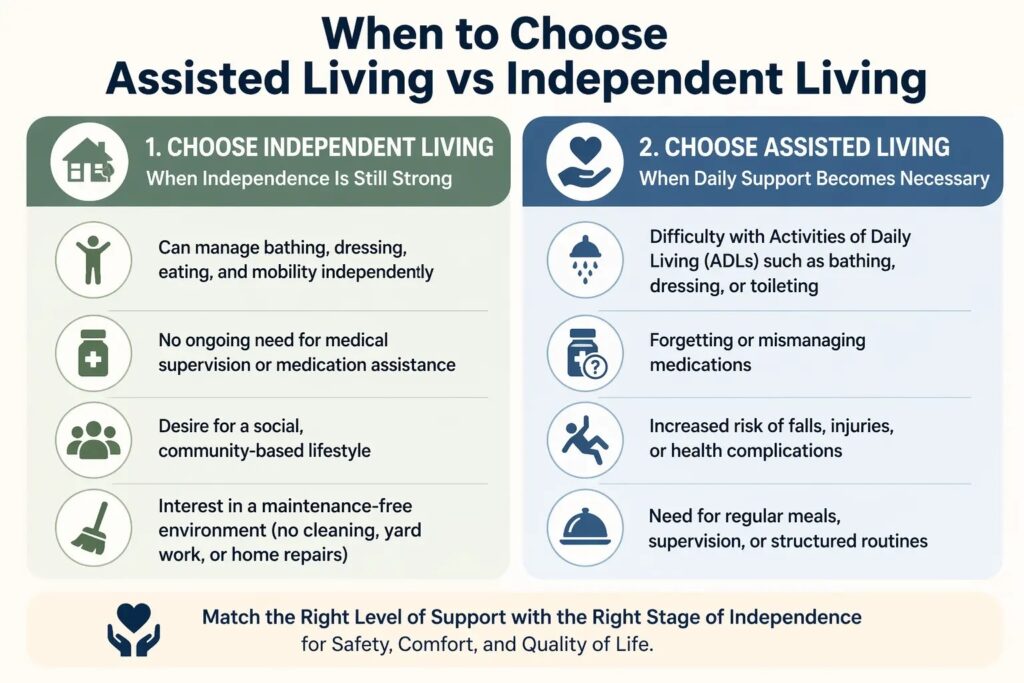
Understanding these clearly helps families and seniors avoid premature transitions or delayed care decisions.
1. Choose Independent Living When Independence Is Still Strong
Independent living is best suited for seniors who are still fully capable of managing daily life without hands-on assistance.
Key indicators this is the right choice:
- The person can manage bathing, dressing, eating, and mobility independently
- No ongoing need for medical supervision or medication assistance
- Desire for a social, community-based lifestyle
- Interest in a maintenance-free environment (no cleaning, yard work, or home repairs)
2. Choose Assisted Living When Daily Support Becomes Necessary
Assisted living becomes the right choice when a senior begins to need regular help with everyday tasks or safety monitoring.
Key indicators this is the right choice:
- Difficulty with Activities of Daily Living (ADLs) such as bathing, dressing, or toileting
- Forgetting or mismanaging medications
- Increased risk of falls, injuries, or health complications
- Need for regular meals, supervision, or structured routines
FAQs
1. Is assisted living better than independent living?
It depends on individual needs. Assisted living vs independent living comes down to the level of support required. Assisted living is better for seniors who need help with daily activities like bathing, medication, or meals, while independent living is ideal for active seniors who can manage life on their own and want a maintenance-free lifestyle.
2. What is the cost difference between assisted living and independent living?
Assisted living is generally more expensive than independent living. On average, independent living costs about $1,500 – $4,000 per month, while assisted living typically ranges from $3,500 – $7,000+ per month, depending on location and level of care.
3. Can you move from independent living to assisted living?
Yes, many seniors transition from independent living to assisted living over time. As health needs change, facilities often allow a smooth move within the same community or network. It’s easier to adjust without major disruption.
4. Does Medicare cover assisted living?
In most cases, Medicare does not cover assisted living costs such as rent, meals, or personal care services. However, it may cover certain medical services like doctor visits, hospital care, or prescriptions separately.
5. Which is safer: assisted living vs independent living?
Assisted living is generally considered safer for seniors who need support because it offers 24/7 staff availability, emergency response, and help with daily tasks. Independent living is safe for active seniors.
Conclusion
The key difference in assisted living vs independent living is simple: independent living supports active seniors with a maintenance-free lifestyle, while assisted living provides daily personal care, safety, and 24/7 support for those who need help with everyday tasks.
Choosing the right option should depend on health, safety needs, and lifestyle preferences, not just age.
Before deciding, families may also explore supportive home care options like Gracious Hearts Inc., which can provide flexible, compassionate in-home assistance as needs evolve.
So, best of luck!